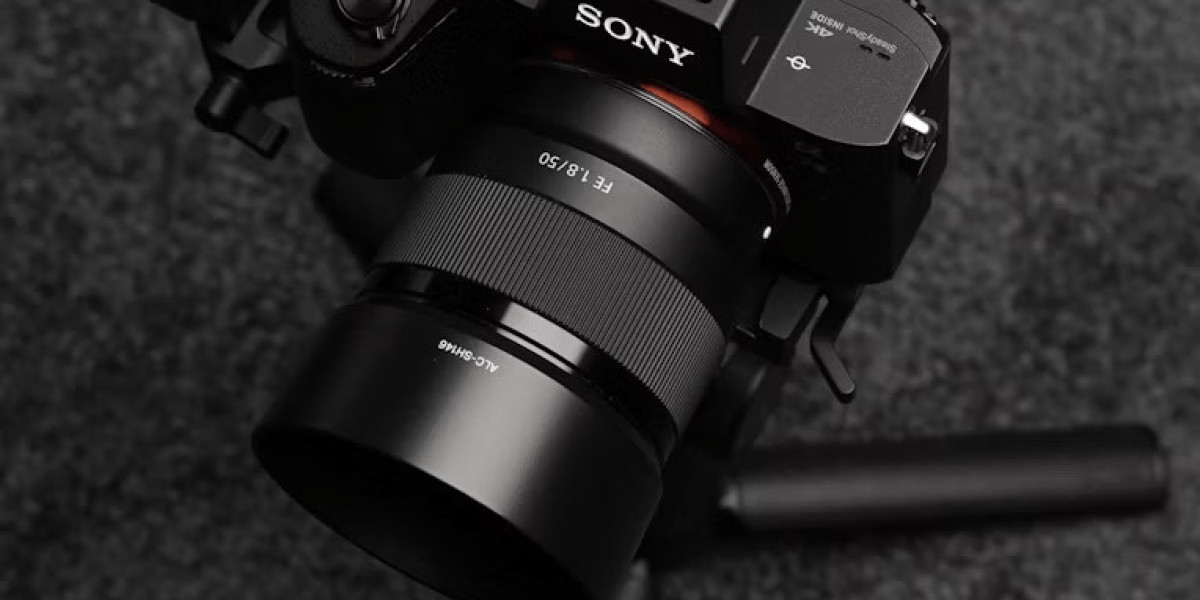

Choosing a camera for a professional video project involves more than comparing resolution and specifications. The production environment, shooting style, available crew, lighting conditions, lens requirements, and post-production workflow all influence which camera is appropriate for a particular job.
Compact cinema cameras have become increasingly useful for productions that need professional video capabilities in a smaller and more mobile form. A compact system can be easier to carry between locations, configure for handheld work, mount on a gimbal, or operate in confined spaces. These advantages can be especially useful for documentary filmmakers, commercial crews, independent filmmakers, content producers, and small production teams.
The Sony FX3 is designed around this type of workflow. It combines a full-frame sensor with video-focused features and a compact body. Sony lists the camera as part of its Cinema Line and highlights full-frame performance, high sensitivity, 4K high-frame-rate recording, S-Cinetone, and mobility among its key features.
The Sony FX3 Cinema Camera can be configured as a lightweight camera for mobile shooting or expanded into a more complete cinema package with lenses, monitoring equipment, focus accessories, matte boxes, wireless video, and camera support.
This article looks at the main benefits of the FX3 for video production. It also explains how the camera can fit different workflows, what to consider when selecting lenses and accessories, and why renting can be useful when a production needs the camera for a specific project.
What Makes the Sony FX3 Different?
The FX3 sits between several types of camera systems. It has the compact body of a mirrorless-style camera while being designed specifically with Cinema Line video production in mind.
The camera uses a 35 mm full-frame Exmor R CMOS sensor. Sony lists approximately 10.3 megapixels as the effective movie resolution and supports 4K recording at frame rates up to 120p in applicable recording modes.
This combination gives filmmakers a camera that can be used in several different ways. A documentary operator can keep the setup relatively small. A commercial crew can build the camera into a larger rig. A cinematographer can use it on a tripod, shoulder setup, or gimbal depending on the requirements of a scene.
The flexibility is important because modern productions do not always follow a single shooting style.
Full-Frame Imaging for Video
One of the primary advantages of the FX3 is its full-frame sensor.
Sensor format affects field of view and depth of field, which in turn influence how filmmakers approach composition. A full-frame system can provide a broad field of view with suitable wide lenses and can support shallow depth-of-field compositions when the lens, aperture, and subject distance are appropriate.
A sony fx3 full-frame cinema camera setup can therefore work well for productions that want flexibility in framing and lens selection.
For example, a cinematographer shooting an interview may choose a moderate focal length with a wide aperture to separate the subject from the background. For an interior location, a wider lens can capture more of the surrounding environment.
The sensor does not determine the final appearance by itself. Lens design, lighting, exposure, camera movement, and color grading remain equally important. The value of the full-frame format comes from the additional creative choices it provides.
High-Sensitivity Shooting
Lighting conditions can change significantly during a production.
A crew may begin filming in a controlled studio and later move outdoors. A documentary team may work with available light. A narrative production may need to capture a night scene while preserving a particular atmosphere.
Sony lists a movie ISO range of 80 to 102400, with an expanded range reaching ISO 409600.
High sensitivity can provide additional flexibility when working in challenging lighting conditions. However, it should not be treated as a substitute for good lighting.
Even when the camera can record at high sensitivity, additional lighting may still be useful for shaping the subject, controlling contrast, separating foreground and background elements, and maintaining consistent exposure.
For productions that need lighting equipment alongside the camera, Scheimpflug offers a range of professional lighting rental options for film and video projects.
Wide Dynamic Range
Dynamic range is important when a scene contains significant differences between bright and dark areas.
Outdoor locations are a common example. A scene may contain a brightly lit sky alongside a darker subject. Interior scenes can create similar challenges when windows are significantly brighter than the room.
Sony specifies more than 15 stops of latitude for S-Log3 under its stated measurement conditions.
A wide dynamic range can give cinematographers more flexibility when managing difficult exposures and grading footage later.
However, the practical result still depends on exposure technique and lighting. A camera with a broad dynamic range cannot recover every detail from an incorrectly exposed shot. Proper monitoring remains important during production.
4K Recording and High Frame Rates
High-resolution recording provides flexibility during editing and finishing.
The FX3 supports 4K recording in several formats and can record 4K at up to 120p in applicable modes. Sony's specifications list XAVC S, XAVC S-I, and XAVC HS recording options.
High frame rates are useful when a production requires slow-motion footage.
For example, a commercial may use slow motion to emphasize product movement. A music video may use it to create a different rhythm between shots. A sports production may use high frame rates to analyze or stylize fast movement.
The production team should select frame rates according to the final delivery requirements. Higher recording rates can increase storage demands, so media capacity and data management should be planned before the shoot.
S-Cinetone and Color Workflow
Color plays an important role in the way viewers perceive a video.
Sony includes S-Cinetone as one of the camera's cinematic color options. The camera also provides S-Log3 and other gamma settings for productions that want a more extensive grading workflow.
S-Cinetone can be useful when the production wants a more finished-looking image directly from the camera. A log workflow may be more appropriate when the cinematographer and colorist want greater control over the final appearance.
Neither approach is automatically better for every project.
A fast-turnaround production may prioritize an efficient workflow. A narrative film or commercial campaign may invest more time in color management and grading.
The important consideration is to establish the desired workflow before recording begins.
Autofocus for Moving Subjects
Keeping the subject in focus can become difficult when the camera or subject is moving.
The FX3 uses a hybrid autofocus system with phase-detection and contrast-detection technology. Sony lists movie autofocus modes and subject-recognition functions among its focus features.
This can be useful for documentary work, interviews, events, branded content, and other situations where subjects may move unpredictably.
Manual focus remains valuable for controlled filmmaking. On a narrative set, a focus puller may want to determine exactly when focus changes between actors or objects.
The ability to work with either approach allows the camera to adapt to different production environments.
In-Body Image Stabilization
Camera movement is another important consideration.
The FX3 uses a sensor-shift image stabilization system with five-axis compensation. Sony provides different stabilization modes for movie recording, including Active and Standard options.
Stabilization can help when shooting handheld footage, especially when the production needs to remain mobile.
It does not replace a tripod, shoulder rig, dolly, or gimbal in every situation. Each support method creates a different type of camera movement.
For controlled interviews, a tripod may be preferable. For a walking sequence, a gimbal may provide smoother movement. For documentary work, handheld operation with stabilization can offer a balance between mobility and control.
Compact Design for Mobile Productions
The physical size of a camera can affect how a production operates.
The FX3's body is considerably smaller than many traditional cinema camera configurations. Sony lists the body dimensions at approximately 129.7 by 77.8 by 84.5 mm and the body weight at approximately 630 g without protrusions and accessories.
A compact body can be useful when shooting in narrow locations, vehicles, crowded environments, or places where a larger cinema package would be difficult to operate.
It can also help reduce the physical demands placed on a camera operator during long handheld shoots.
However, the body weight should not be confused with the weight of the final camera package. Once a cinema lens, cage, monitor, matte box, wireless transmitter, and focus system are added, the complete setup can become much heavier.
Benefits for Solo Operators
Small production teams often require equipment that can be operated with limited crew.
A compact camera can make it easier for one operator to move between locations, monitor the image, manage camera settings, and reposition quickly.
Sony specifically describes the FX3 as supporting solo operation and enhanced mobility.
This can be useful for documentary filmmakers, independent creators, interview crews, travel productions, and small commercial teams.
However, a compact camera does not eliminate the need for good planning. Audio, lighting, camera support, batteries, media, and monitoring still need to be considered.
The advantage is that the camera can be configured without requiring the same physical footprint as a larger cinema system.
Lens Selection and Creative Control
A camera body is only part of the imaging system.
The lens affects perspective, depth of field, distortion, contrast, flare characteristics, and the overall visual appearance of a shot.
A production using the FX3 can choose lenses based on the visual requirements of each scene.
Wide-angle lenses can be useful for establishing shots and interiors. Standard focal lengths can provide a natural perspective for interviews and narrative coverage. Longer lenses can isolate subjects and compress backgrounds.
Prime lenses offer fixed focal lengths, while zoom lenses provide the ability to change framing without switching lenses.
The right choice depends on the production rather than the camera alone.
Using the FX3 for Narrative Projects
Narrative filmmaking often requires deliberate control over composition, lighting, focus, and camera movement.
The FX3 can be configured as part of a larger cinema system for this type of production.
A narrative package might include a cinema lens, external monitor, follow-focus system, matte box, filters, tripod, and wireless video equipment.
The camera's compact body can be particularly useful for scenes in vehicles, apartments, staircases, hallways, and other locations where space is limited.
It can also serve as a B-camera when a production needs a smaller system for specific shots.
The key is to test the camera and lenses together before production so the cinematography team understands how the system will behave.
Documentary and Unscripted Video
Documentary filmmaking presents different challenges.
Subjects may move without warning. Locations can change quickly. Lighting may not be fully controllable. The crew may need to work without attracting attention.
A compact camera can be valuable in these situations.
The FX3 can be configured with a lightweight lens and minimal accessories for greater mobility. Autofocus can help when subjects move, while image stabilization can assist with handheld operation.
Audio should also be considered carefully. A documentary setup may use wireless microphones, shotgun microphones, or an external recorder depending on the production.
The camera package should remain practical enough for the crew to carry and operate throughout the shooting day.
Commercial Video Production
Commercial productions often demand consistency and control.
The camera may need to capture interviews, product shots, lifestyle footage, and moving sequences within the same project.
A compact cinema system can be useful because it can be reconfigured quickly.
For example, a production may use a tripod for an interview, then move the same camera to a gimbal for a lifestyle sequence. A different lens can be selected for product close-ups.
Lighting is equally important. Commercial imagery often requires precise control over highlights, shadows, reflections, and skin tones.
Scheimpflug's lighting and grip department provides equipment that can be combined with a camera package for these controlled production environments.
Music Videos and Creative Projects
Music videos frequently require a combination of controlled and mobile camera work.
The camera may move around performers, follow choreography, or be mounted on a stabilization system.
The compact form of the FX3 can make these configurations easier to manage than a much larger camera package.
High frame rates can also provide creative options for selected sequences. Slow motion can change the perceived movement and rhythm of a performance.
The camera should be configured according to the specific shot. A lightweight gimbal package may be appropriate for moving sequences, while a more complete cinema rig may be better for controlled performance shots.
Gimbal Production
Gimbals can provide smooth camera movement, but the complete camera configuration determines whether a particular setup is suitable.
The body itself is relatively compact, but adding a large lens, cage, matte box, follow-focus motor, monitor, and wireless transmitter increases the overall weight.
Before a shoot, the complete system should be balanced and tested on the selected gimbal.
The camera operator should also consider battery life and shooting duration. Long moving shots can become physically demanding, particularly when the camera is held away from the body.
A carefully designed configuration can make gimbal work more manageable.
External Monitoring
Monitoring is an important part of professional video production.
The FX3 includes a built-in LCD screen, but an external monitor can provide a larger viewing area and additional monitoring tools. Sony lists a 3-inch LCD with approximately 1.44 million dots.
An external monitor can be useful when the camera is mounted on a rig or when the director, cinematographer, or focus puller needs a larger image.
Professional monitors may provide waveform, false color, focus assistance, and other tools.
The production should select monitoring equipment based on who needs to see the image and where the monitor will be positioned.
Media and Recording Considerations
The FX3 supports CFexpress Type A and SD card media, with two card slots and recording options that include simultaneous recording and automatic media switching.
Media selection should be based on the recording mode used during production.
Higher-quality recording settings can generate larger files, so the crew should calculate storage requirements before shooting.
A production should also establish a backup procedure. Footage should be transferred to reliable storage and backed up before media cards are formatted for reuse.
This becomes especially important during multi-day productions.
Audio Options
Although the FX3 is primarily discussed as a camera, sound should be part of the production plan from the beginning.
The camera provides audio input options through its interfaces and XLR handle system. Sony's specifications list XLR/TRS inputs through the supplied handle configuration.
For interviews and documentary work, external microphones can provide better results than relying only on the camera's built-in microphone.
Narrative productions may use a dedicated sound department and recorder, with audio synchronized during post-production.
The appropriate workflow depends on the scale and requirements of the production.
Power Planning
Battery management becomes more important when a camera is used for long production days.
Sony lists approximately 95 minutes of actual recording time and approximately 135 minutes of continuous recording under its stated CIPA conditions. Actual operating time will vary depending on settings, accessories, temperature, and shooting conditions.
A production should carry sufficient batteries and have a charging strategy.
External accessories can also consume power. Monitors, wireless transmitters, follow-focus motors, and other equipment may require separate power sources.
A complete power plan prevents avoidable interruptions during production.
Camera Accessories
The camera can be configured with different accessories depending on the production.
A simple setup may use the camera, lens, batteries, media, and tripod. A larger cinema configuration can include additional equipment.
The most useful accessory choices are those that solve a specific production requirement rather than simply adding equipment.
For example, a focus system can be valuable for controlled narrative work. A wireless video transmitter can help when a director or client needs to monitor the camera remotely. A matte box can provide filtration and lens control.
Each addition should be evaluated in terms of weight, power, workflow, and necessity.
Renting the Camera for a Project
Not every production needs to purchase a camera.
Rental can be useful when a filmmaker requires a particular camera for one project, a short production period, or a specialized shooting situation.
A rental package can also be customized with lenses and accessories.
For example, a production may need the camera for a documentary one month and a gimbal-heavy commercial the next. The lens and accessory requirements for those two projects may be completely different.
Renting allows the production team to select equipment based on the actual project instead of maintaining a permanent inventory of every possible configuration.
Scheimpflug provides professional camera and lighting rental services in NYC for productions that need access to a range of equipment.
Buying New or Considering a Used Camera
Some filmmakers may consider purchasing a camera rather than renting one.
A sony fx3 used purchase can potentially reduce the initial cost compared with buying new equipment. However, used equipment should be inspected carefully before purchase.
The buyer should check the camera body, sensor, ports, buttons, display, media slots, battery compartment, mounting points, and overall operating condition.
The number of previous owners and the camera's production history may also be relevant when available.
For occasional productions, renting may still be more practical because the production can obtain the camera when needed without taking on long-term ownership responsibilities.
What to Check When Evaluating Used Equipment
A used sony fx3 should be evaluated as a complete working system rather than judged only by external appearance.
The camera should be tested for recording, playback, autofocus, manual focus, stabilization, media writing, HDMI output, audio input, USB connection, and other functions relevant to the buyer's workflow.
The condition of the sensor and lens mount should also be examined.
A camera that looks clean externally may still have operational issues, so testing is important.
For professional production companies, rental can offer a different approach by providing access to equipment that has already been prepared for production use.
Why Production Testing Matters
Regardless of whether a camera is rented or purchased, testing should be completed before an important shoot.
The production team should test the camera with the selected lens, recording format, media, monitor, power system, and stabilization equipment.
A short test can identify problems that might otherwise appear on the shooting day.
This is particularly important when the camera will be used as part of a multi-camera production. The team should compare exposure, color, frame rates, and lens characteristics before production.
Testing also gives the cinematographer an opportunity to evaluate the visual appearance of the camera under the actual lighting conditions expected during the shoot.
Combining Camera and Lighting
Camera performance is closely connected to lighting.
A full-frame sensor and high sensitivity can provide flexibility, but controlled lighting remains essential for professional images.
Lighting determines where attention falls within a frame. It can separate a subject from the background, create depth, control contrast, and establish the visual atmosphere of a scene.
For productions using the FX3, lighting should be planned around the camera's intended exposure and color workflow.
Scheimpflug offers LED, HMI, tungsten, modifiers, grip equipment, and other lighting resources through its lighting department.
Production Gear Beyond the Camera
A video production may require equipment beyond the camera and lens.
Depending on the project, crews may need tripods, dollies, jibs, lighting, grip equipment, generators, communications equipment, monitors, and other production resources.
Scheimpflug's production gear rental department includes categories covering communication, shelter, safety, generators, production equipment, and other location resources.
Planning these requirements together can help the production avoid gaps in its equipment package.
Preparing the Camera for Different Shooting Styles
The same camera can serve very different purposes depending on its configuration.
For an interview, the camera may be placed on a tripod with a controlled lighting setup. For a documentary, the same body may be configured with a lightweight lens and minimal accessories.
For a commercial, it may be built into a cinema rig with an external monitor, follow focus, matte box, and wireless video. For a music video, the camera may be balanced on a gimbal.
The important point is that the camera should be configured around the shot.
Adding unnecessary equipment can make the system heavier and more complicated without improving the final image.
Conclusion
The Sony FX3 Cinema Camera offers a combination of full-frame imaging, high sensitivity, high-frame-rate recording, autofocus, stabilization, and compact physical design. These characteristics make it a flexible option for filmmakers working across documentaries, narrative projects, commercials, interviews, music videos, branded content, and other professional video applications.
Its full-frame sensor gives cinematographers flexibility with field of view and depth of field, while its recording options provide choices for standard footage and slow-motion work. Sony also provides S-Cinetone and S-Log3 options that can support different color workflows.
The camera's compact body can be particularly useful for mobile productions. It can be used handheld, on a tripod, or with a gimbal and can be expanded with accessories when the production requires a more traditional cinema configuration.
For filmmakers deciding between purchasing and renting, the choice should be based on how frequently the camera will be used and what type of production it needs to support. A fx3 used purchase may be worth considering for frequent users who want ownership, while rental can provide flexibility for individual projects.
The overall production package is just as important as the camera itself. Lenses, lighting, monitoring, audio, power, media, and camera support all contribute to an efficient workflow.
Scheimpflug provides professional camera, lighting, grip, and production equipment for filmmakers and production teams. Its focus on quality, reliability, and service helps crews prepare equipment packages that match the practical and creative requirements of each project.
FAQs
Q: What are the main benefits of the Sony FX3 for video production?
A: The camera combines a full-frame sensor, high sensitivity, 4K recording, high frame rates, autofocus, image stabilization, and a compact design. These features make it suitable for filmmakers who need professional video capabilities while maintaining a mobile and adaptable production setup.
Q: Is the Sony FX3 a full-frame cinema camera?
A: Yes. The FX3 uses a 35 mm full-frame sensor and belongs to Sony's Cinema Line. Its full-frame design provides flexibility with field of view and depth of field, while its video-focused features support professional production and post-production workflows.
Q: Is a used Sony FX3 worth considering?
A: A used camera may be worth considering for filmmakers who plan to use it regularly and want to reduce the initial purchase cost. Buyers should carefully inspect the body, sensor, ports, media slots, stabilization, recording functions, and overall operating condition.
Q: Can the FX3 be used for professional film production?
A: Yes. The FX3 can support narrative films, documentaries, commercials, branded content, interviews, and music videos. Its suitability depends on the complete production package, including lenses, lighting, monitoring, audio, camera support, recording settings, and the project's post-production workflow.
Q: Is renting the FX3 better than buying one?
A: Renting can be useful when the camera is needed for a specific project or occasional production. Buying may make more sense for frequent users. The decision should consider usage frequency, equipment ownership costs, storage, maintenance, and the camera configurations required.