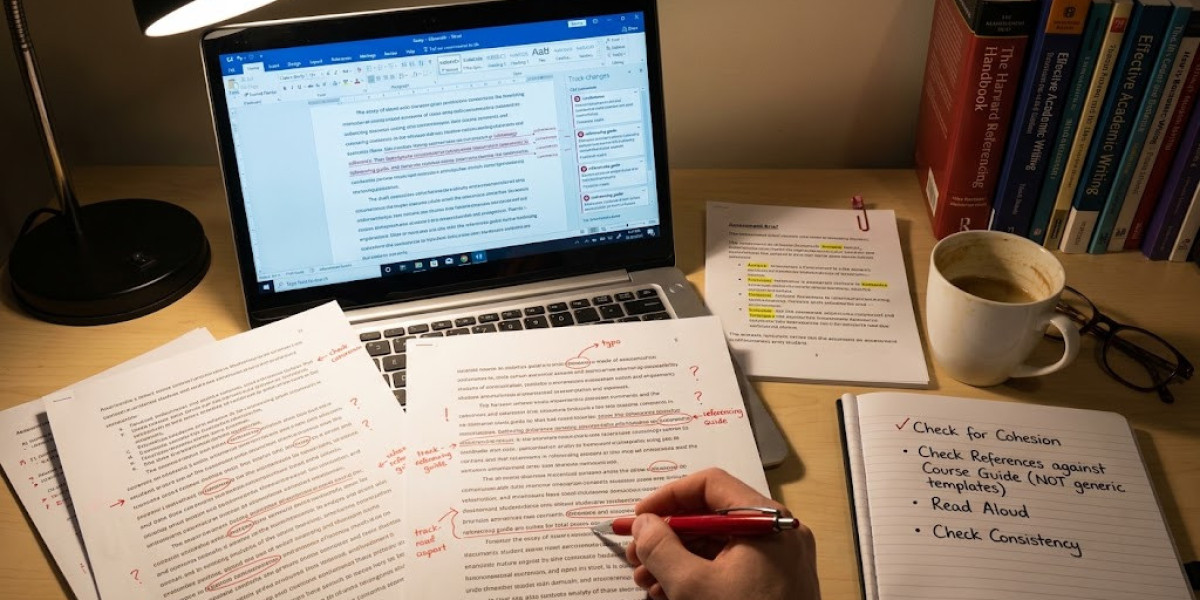

You finish your assignment, read it once, fix a few spelling mistakes and think, “Done.” Then you notice the missing citation, repeated paragraph or inconsistent heading after submission. The frustrating part is that you may have read the work several times and still missed it.
That is because you already know what you meant to say. Your brain fills in gaps that a new reader has to work through. A useful final edit changes the way you read the assignment rather than simply reading it again.
Understanding the Topic
Self-editing is the stage between completing the main draft and submitting it. The focus shifts from generating ideas to checking whether the work is clear, connected, supported and presented according to the assignment requirements.
At university level, the depth required varies. A first-year essay may need a clear argument, logical paragraphs and accurate referencing. A final-year dissertation or postgraduate assignment usually demands closer attention to critical evaluation, limitations and how evidence supports the conclusions.
Formatting also varies between institutions. Harvard, APA and IEEE follow different conventions, and departments may adapt them. Your module guidance should therefore take priority over online examples.
Common Problems or Concerns
One of the hardest things about editing your own work is seeing what the reader sees rather than what you remember writing. You know why you included a particular study or moved from one point to another. Your marker only has the finished paragraph.
Imagine an essay about remote working. A paragraph begins with productivity, moves into employee wellbeing and ends with management costs. All three may be relevant, but without explaining their relationship, the reader has to make the connection.
Repetition is another common issue. A student may repeat an argument because they want to reinforce it, yet repetition without development can make the assignment feel as though it has stopped moving.
Key Theories or Concepts to Know
Two useful ideas for checking written flow are coherence and cohesion.
Coherence concerns whether the overall argument makes sense. An assignment evaluating a leadership theory might explain the theory, discuss motivation and then suddenly move to recruitment. Unless the relationship is explained, the information can feel scattered even when each section is accurate.
Cohesion concerns the connections between sentences and paragraphs. Transitions can help, but adding “however” or “therefore” cannot create a logical relationship that is not already there.
It also helps to separate editing from proofreading. Editing asks whether the argument works and whether the evidence is relevant. Proofreading deals with spelling, punctuation, grammar and presentation. A grammatically perfect paragraph can still fail to answer the question.
Key Factors to Consider
Start with the assessment question. Words such as analyse, compare and evaluate require different approaches. If you are asked to evaluate a theory, simply describing its advantages and disadvantages may not be enough. You need to consider the evidence and explain what it suggests.
Then examine paragraph purpose. Read only the first sentence of each main paragraph. Does the argument move forward? If several paragraphs make almost the same point, one may need combining. If a paragraph introduces research but never explains why it matters, the missing element is probably interpretation.
Referencing needs a separate check. Students sometimes compare their work with Cheap Coursework Editing Services, online templates or another student's assignment and assume the formatting must be correct. That can be misleading because conventions vary. The better question is whether your references match the guidance for your own course.
Consistency matters as well. Check technical terms, headings, dates, author names and punctuation. Small inconsistencies rarely destroy an argument, but several of them can make a finished assignment look rushed.
Practical Guidance
Do not try to find everything in one reading. Give each pass a particular purpose.
Check the argument first. Keep the assessment brief beside you and ask what each section contributes. If you cannot explain a section's purpose, work that out before changing its wording.
Check the paragraphs next. Identify what each paragraph is doing: explaining, comparing, presenting evidence or evaluating. If several ideas are fighting for space, restructure rather than simply adding another sentence.
Read important sections aloud. This can reveal sentences that looked fine on screen but sound awkward when spoken. Long sentences, repeated words and sudden changes in tense are easier to notice this way.
Audit the references separately. Follow each in-text citation to its matching reference. Then scan the reference list and make sure every entry is actually used. Check the details against the required referencing guidance.
Finish with formatting. Open the actual file you intend to submit. Check headings, page numbers, spacing, figures, appendices and page breaks. If you are submitting a PDF, inspect the PDF itself rather than assuming the export is identical to your working document.
Mistakes to Avoid
Do not treat the spellchecker as an academic editor. It can catch surface errors, but it cannot tell you that 300 words of your assignment describe a theory when the question asked you to evaluate it.
There is also little benefit in making every sentence sound complicated. Clear academic writing does not require impressive vocabulary. If a simple sentence expresses a precise idea, changing it merely to sound more formal may make it weaker.
Over-editing causes problems too. After reading the same paragraph repeatedly, you may start changing sentences simply because they no longer feel fresh. Before rewriting, ask what is actually wrong with the sentence. If it is accurate and clear, leave it alone.
Leaving references until the final five minutes is another avoidable mistake. A missing publication detail can take much longer to locate than expected, particularly when you need to reopen an old source.
Bringing the Main Lessons Together
A good final edit is not about changing the greatest number of words. It is about finding the problems that matter.
Begin with the assessment question, then check the argument, paragraph flow, evidence, wording, references and presentation. This order matters because a formatting error can be fixed quickly, while discovering that an entire section does not answer the question may require substantial rewriting.
If you have time, leave the draft alone before the final check. Even a short break can make familiar sentences easier to question. If the deadline is close, change your reading method instead: start from the conclusion, read aloud or look only at the topic sentences.
The finished assignment does not need artificial vocabulary or endless polishing. It needs to answer the question clearly, develop its ideas logically, use evidence carefully and meet the requirements of the particular course. That is the standard worth checking before you finally press submit.