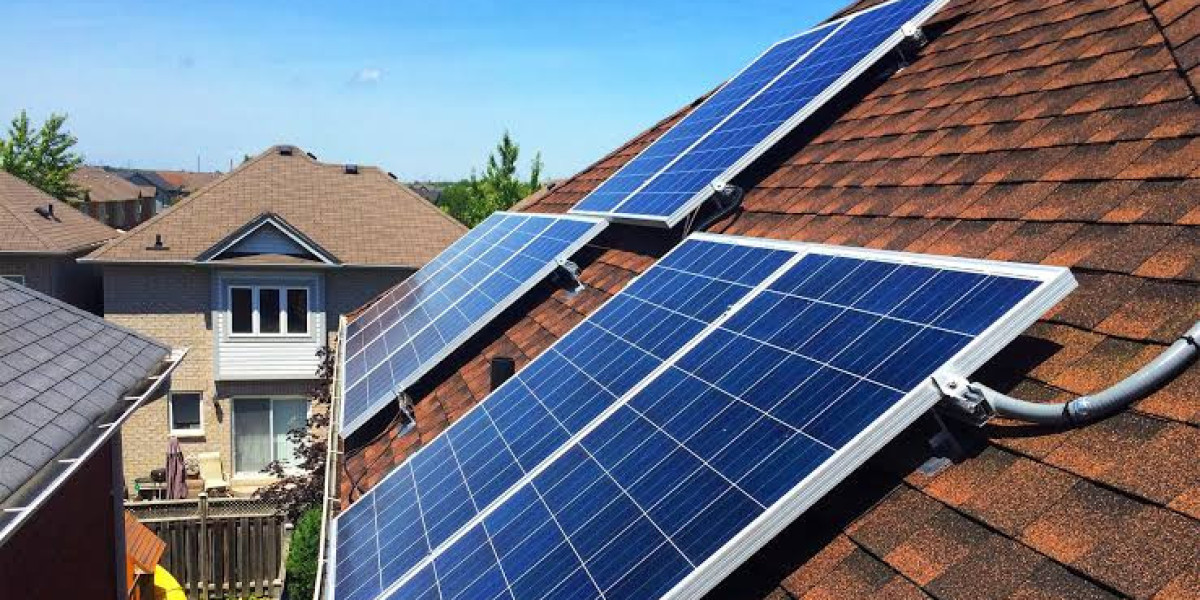

Choosing solar panels for a house is not really a competition between panel brands. The better question is: which type of solar system will make the best use of this particular roof and the way the household uses electricity?
A small roof may benefit from high-efficiency panels that produce more power from limited space. A larger roof gives you more freedom to compare panel prices and specifications. A home with afternoon electricity demand may also benefit from a different layout from one where most electricity is used in the morning.
Modern solar PV gives homeowners plenty of equipment choices, but the panel itself is only one part of the decision.
What Type Of Solar Panel Is Best For A House?
Most domestic solar systems use crystalline silicon panels. Within this category, manufacturers now offer several cell designs, including TOPCon, heterojunction (HJT) and back-contact technology.
Monocrystalline panels are widely used because they can provide a relatively high output from a manageable roof area. Newer n-type designs have become particularly important in the wider PV market. IEA PVPS reported that n-type technologies accounted for about 70% of global PV production in 2024.
That does not mean every homeowner needs the newest panel available.
A newer cell technology may cost more, and the extra output may have little practical value if the property has plenty of unused roof space. Conversely, paying more for efficiency can make sense where the roof is small and every square metre matters.
Start With The Roof, Not The Panel
Before comparing manufacturers, look at the roof itself.
Three things deserve particular attention:
- Available roof area
- Direction and angle
- Shading throughout the day
A south-facing roof without significant shade is generally favourable for solar generation. East- and west-facing roofs can also work well, although they tend to produce electricity at different times of the day.
That timing can matter more than it first appears.
Imagine a household that uses very little electricity before lunchtime but runs appliances, cooks and charges an electric vehicle during the afternoon. A west-facing array may produce more of its electricity closer to those periods of demand.
The system producing the highest annual output on paper is not automatically the system that gives that household the highest level of direct solar use.
Is A South-Facing Roof Always Better?
South-facing roofs generally receive strong sunlight over the course of the day, but orientation should not be considered on its own.
A clear east-facing roof can outperform a heavily shaded south-facing roof during some periods. Energy Saving Trust specifically notes that shading can have a bigger effect on generation than roof direction in some situations.
Common sources of shading include:
- Mature trees
- Chimneys
- Dormer windows
- Nearby buildings
- Roof structures
- Other parts of the property
Shading also changes as the sun moves across the sky and as seasons change. A roof that looks clear at midday in summer may have substantially different conditions during winter mornings.
This is why a proper site assessment is more useful than choosing panels from a specification sheet alone.
How Much Does Panel Efficiency Matter?
Panel efficiency describes how effectively a panel converts available sunlight into electricity.
It becomes particularly useful when roof space is restricted.
For example, suppose two panels have similar physical dimensions but one has a higher rated output. The higher-output panel could allow a homeowner to reach the desired system size without covering additional roof area.
There is a trade-off, though. Paying considerably more for a small efficiency improvement may not make financial sense on a large roof where additional panels could be installed instead.
Look at power per square metre, not just the percentage efficiency printed on the product specification.
That gives you a better idea of how effectively the available roof can be used.
Are TOPCon Solar Panels A Good Choice?
TOPCon is one of the main newer silicon technologies now used in commercial solar panels.
The technology belongs to the n-type family and has grown rapidly as manufacturers have moved away from older PERC production. Its attraction is the combination of high efficiency and continued development within established silicon manufacturing.
For a homeowner, though, “TOPCon” should be the beginning of the comparison rather than the end.
Check the individual panel's:
- Rated power
- Efficiency
- Dimensions
- Product warranty
- Performance warranty
- Degradation specification
- Temperature characteristics
- Manufacturer support
Two TOPCon panels can have noticeably different specifications and prices.
What About HJT And Back-Contact Panels?
Heterojunction (HJT) is another n-type technology designed for high efficiency. It combines different semiconductor layers within the cell and can perform well under changing operating temperatures.
Back-contact panels take a different approach by moving electrical contacts towards the rear of the cell. This leaves more of the front surface available to receive sunlight and can support very high efficiency.
Both technologies are relevant when roof space is limited.
They are not automatically better purchases for every home, though. If a property has a large roof and the additional cost does not produce a useful increase in system output, a less expensive panel may make more sense.
Does The Inverter Matter As Much As The Panel?
It should be part of the comparison.
The panels generate DC electricity, while household appliances use AC electricity. The inverter performs the conversion between the two.
A solar quotation should therefore show more than the panel brand and wattage. Ask which inverter is being proposed and why it suits the array.
This becomes particularly relevant when the roof has multiple orientations or partial shading. Depending on the design, a system may use a string inverter, microinverters or power optimisers.
Energy Saving Trust notes that microinverters and power optimisers can help where shading affects individual panels because they allow affected modules to operate more independently.
A well-planned solar system installation service should explain this design choice rather than simply adding the most expensive equipment to the quotation.
Should You Choose Solar Panels Based On Wattage?
Wattage alone can be misleading. A 450W panel sounds more powerful than a 400W panel, but the physical size of each module matters. If the 450W panel occupies substantially more roof area, its advantage may be smaller when comparing power per square metre.
The same applies to the number of panels.
A homeowner should compare the proposed system's:
Total kWp + roof area used + expected annual generation
rather than simply counting panels.
Energy Saving Trust's solar calculator uses property characteristics, energy use, and location to estimate suitable system size and potential savings, which illustrates why the right number of panels depends on the individual property.
Does A Battery Change Which Solar Panels You Should Buy?
A battery does not require a particular panel technology, but it can influence the way the overall system should be designed.
Without storage, electricity generated during the day has to be used immediately, exported or otherwise managed. A battery allows some surplus generation to be saved for later.
This can be useful when household demand rises after the sun has gone down.
The battery should not simply be sized as large as possible. A household that rarely produces much surplus solar electricity may not make good use of a very large battery.
The more useful question is how much surplus the solar array is likely to produce and when the household normally needs electricity.
What About Solar Panel Degradation?
A panel's output gradually declines over its working life. This is why performance warranties matter when comparing equipment.
Do not focus solely on the initial efficiency figure. Look at the manufacturer's expected degradation and the amount of power the panel is warranted to retain over time.
A slightly more expensive panel with strong long-term performance characteristics may have a different value proposition from a cheaper panel with a lower specification.
This is especially relevant because solar panels are long-life equipment. Energy Saving Trust says panels should last 25 years or more.
What Does UK VAT Mean When Comparing Solar Quotes?
The phrase UK VAT on solar panels can cause confusion because the VAT treatment depends on the type of supply and where the property is located.
For qualifying energy-saving materials installed in residential accommodation in Great Britain, solar panels currently benefit from a 0% VAT rate. GOV.UK lists solar panels among the products covered by the relief.
HMRC's VAT Notice 708/6 specifically includes photovoltaic panels together with the cabling, control panel and AC/DC inverter required for the installation.
The current zero rate applies until 31 March 2027 under the relevant energy-saving materials relief. The rules differ for Northern Ireland, so homeowners there should check the treatment applicable to their installation.
It is worth checking the VAT line on a quotation rather than assuming that every item associated with solar will receive the same treatment.
Is The Most Efficient Panel The Best One?
Not necessarily.
Efficiency is only one part of the equation. A sensible comparison should consider:
- How much suitable roof space is available
- Whether the roof is shaded
- When the household uses electricity
- Panel output per square metre
- Inverter design
- Warranty terms
- Expected degradation
- Battery requirements
- Total installed cost
- Expected annual generation
A high-efficiency panel on a poorly positioned roof can produce less useful energy than a more modest panel on a well-designed, unshaded array.
The same principle applies to expensive batteries and premium inverters. Extra features are worthwhile when they solve a real problem on the property.
What Is The Best Solar Setup For Different Homes?
- Small roof: Prioritise high power density and efficiency so the available area produces as much electricity as practical.
- Large, unshaded roof: Compare total system cost and expected annual generation rather than paying heavily for small efficiency gains.
- East-facing roof: Consider how much electricity the household uses during the morning and whether that generation profile suits the property.
- West-facing roof: Afternoon and early-evening generation can align well with households that use more electricity later in the day.
- Partly shaded roof: Pay close attention to the system architecture. Microinverters or optimisers may be worth considering where shading cannot be avoided.
- Home with high evening demand: Battery storage may have more relevance because solar generation and electricity consumption occur at different times.
So, Which Solar Is Best For A Home?
The strongest choice is the system that makes sensible use of the roof rather than the panel carrying the most impressive specification.
For many UK homes, modern high-efficiency n-type panels are worth comparing. TOPCon has become a major commercial technology, while HJT and back-contact designs provide other high-efficiency options.
But panel technology cannot compensate for poor system design.
Before choosing, look at the roof, shading, electricity-use pattern, inverter, battery requirements, warranties and complete installation price together. That approach gives you a much clearer basis for comparing solar quotations than simply asking which panel is the “best”.