
Every child develops communication skills at their own pace. Some children may need extra support with pronunciation, vocabulary, understanding instructions, forming sentences, or expressing their thoughts. The right tools can make practice more engaging and help children participate actively during therapy and everyday learning.
However, choosing a suitable resource is not simply about finding the most colorful or popular option. A useful tool should match the child’s age, communication needs, interests, and learning level. Parents, teachers, and therapists can consider a few important factors before selecting Speech Therapy Tools.
Understand the Child’s Communication Needs
The first step is to identify what the child needs help with. Speech and language development includes several different skills, so one tool may not work equally well for every child.
For example, a child working on pronunciation may benefit from activities that provide repeated practice with specific sounds. Another child may need resources focused on vocabulary, sentence formation, listening comprehension, or social communication.
A speech-language pathologist can help identify the child’s specific goals and suggest activities that support those goals. When resources are connected to therapy objectives, practice becomes more purposeful.
Choose Tools That Match the Child’s Age and Level
A resource should be challenging enough to encourage learning but not so difficult that the child becomes frustrated. Consider the child’s current communication level rather than choosing a tool based only on their age.
Younger children may respond well to pictures, matching activities, simple questions, and play-based tasks. Older children may benefit from activities involving storytelling, problem-solving, conversation, reading, or more complex language.
The best Speech Therapy Tools can also be adjusted as a child develops new skills. This allows parents and therapists to gradually increase the level of difficulty instead of introducing completely new resources for every stage.
Look for Engaging and Interactive Activities
Children are more likely to participate when learning feels enjoyable. Repetition is important in speech and language practice, but repeating the same worksheet or question can quickly become boring.
Interactive activities can provide variety while encouraging children to listen, respond, think, and communicate. Therapy games for children can be especially useful because they can turn skill practice into an enjoyable experience.
For example, a simple picture-based game can encourage a child to name objects, describe pictures, answer questions, or create sentences. A sorting activity can support vocabulary while also encouraging attention and reasoning.
Consider the Child’s Individual Interests
A child’s interests can be a powerful way to encourage communication. If a child enjoys animals, vehicles, food, cartoons, or sports, resources connected to those interests may capture their attention more easily.
Parents and therapists can use familiar topics to introduce new vocabulary and encourage conversations. The goal is not just to keep the child occupied but to create opportunities for meaningful communication.
Resources should also allow adults to adapt questions and prompts according to the child’s responses. This makes practice more natural and personalized.
Consider Digital and Online Resources
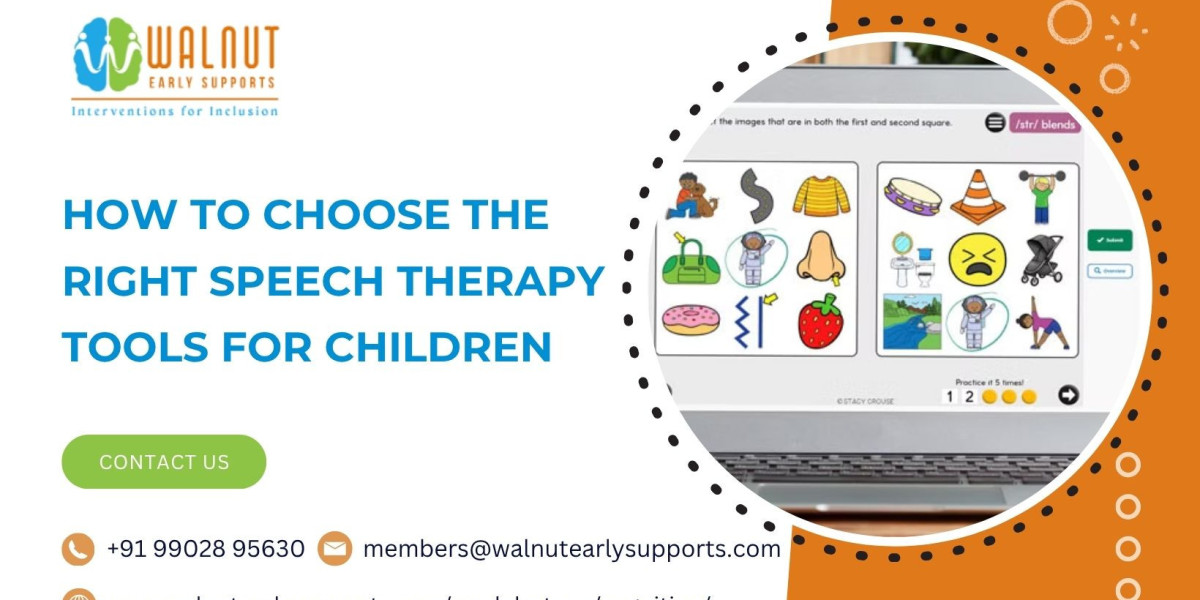
Digital resources can be convenient for families and professionals who want flexible access to activities. Online speech therapy materials can provide visual activities, language exercises, games, and practice resources that can be used during therapy sessions or guided home practice.
When selecting digital resources, check whether they are easy to navigate and suitable for the child’s learning level. It is also helpful to choose resources that encourage active participation rather than simply asking children to watch or tap through content.
Parents should remember that digital tools work best when they support interaction with an adult. Talking with the child, asking follow-up questions, giving feedback, and encouraging responses can make an activity much more meaningful.
Look for Professionally Designed Resources
Quality matters when selecting communication resources. Speech and language therapy resources should ideally be designed or reviewed by qualified professionals who understand child communication and developmental needs.
Look for clear information about who created the resources, what skills they target, and how they are intended to be used. Professional resources should also provide activities that have a clear purpose rather than simply offering entertainment.
For children with autism, communication needs can vary considerably. Speech therapy tools for autism should therefore be selected according to the individual child’s communication goals rather than assuming that one type of resource will work for every child.
Make Practice Consistent but Flexible
Children often benefit from regular opportunities to practice communication skills. Short, enjoyable activities may be easier to include in everyday routines than long practice sessions.
Parents can incorporate communication activities into mealtimes, play, reading, shopping, or travel. A therapist may also suggest specific activities for home practice based on the child’s goals.
The important thing is to keep practice positive. If a child becomes tired or frustrated, taking a break can be more productive than forcing them to continue.
Final Thoughts
Choosing the right resources starts with understanding the child rather than simply selecting the most attractive activity. Consider communication goals, developmental level, interests, engagement, flexibility, and professional guidance when evaluating Speech Therapy Tools.
The right resource can make practice more enjoyable while creating regular opportunities for children to listen, understand, express themselves, and build confidence. When parents and professionals use tools thoughtfully and combine them with meaningful interaction, speech and language practice can become a natural part of a child’s everyday learning.