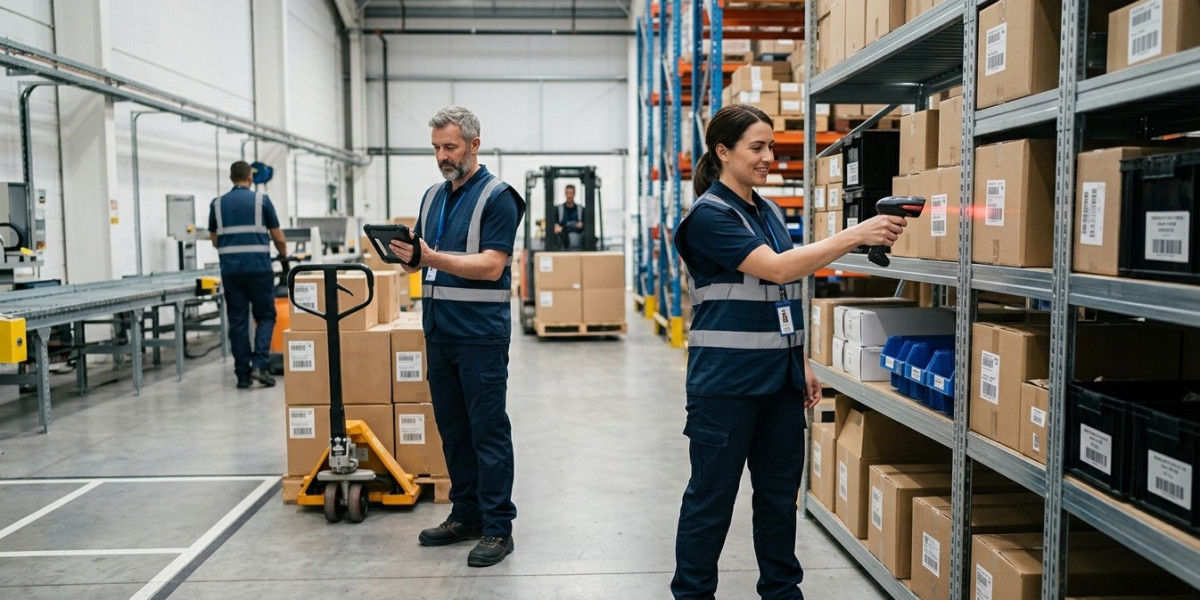

Warehouse operating costs can represent a significant part of a business's overall expenses. Labor, inventory handling, storage, picking, packing, shipping, equipment, and administrative activities all contribute to the cost of running a warehouse. As product volumes increase, businesses need efficient processes that can handle more transactions without creating unnecessary expenses.
Barcode technology provides a practical way to streamline many warehouse activities while improving the accuracy of inventory data. By using barcode labels, scanners, printers, mobile computers, and warehouse software, businesses can automate product identification and reduce the amount of manual work involved in everyday operations.
Pointus Solutions provides barcode and Auto-ID technology solutions that can help businesses improve warehouse workflows and inventory management. Organizations looking to Shop Barcode equipment can also find suitable Printing Products for product, carton, pallet, and warehouse-location labeling. When these technologies are implemented as part of a well-designed workflow, they can contribute to more efficient warehouse operations and better control over operating expenses.
What Are Warehouse Operating Costs?
Warehouse operating costs include the expenses associated with storing, managing, handling, and moving inventory through a warehouse.
Common warehouse costs include:
- Employee wages and labor
- Inventory handling
- Storage and facility expenses
- Picking and packing
- Shipping and dispatch
- Inventory counting
- Label printing
- Equipment maintenance
- Administrative work
- Returns processing
- Inventory losses and discrepancies
Not all of these costs can be eliminated through technology. However, barcode systems can help reduce unnecessary manual effort, improve process efficiency, and minimize errors that create additional work.
Why Warehouse Costs Increase as Businesses Grow
A growing business usually means more products, orders, suppliers, customers, and inventory transactions.
A process that works well for 500 daily transactions may become difficult to manage when the warehouse handles 5,000 or 10,000 transactions.
Without appropriate automation, businesses may experience:
- Longer processing times
- Increased staffing requirements
- More inventory discrepancies
- Higher picking and packing costs
- Greater administrative workload
- Delayed receiving and dispatch
- Increased product search time
Barcode technology provides a scalable method for capturing product and inventory information throughout the warehouse.
How Barcode Technology Helps Reduce Warehouse Costs
Barcode technology can influence warehouse costs in several areas. Its primary value comes from making identification and data capture faster and more consistent.
1. Reducing Manual Data Entry
Manual data entry requires employees to type product codes, quantities, locations, and other information into computer systems.
This takes time and creates opportunities for mistakes.
With barcode scanning, employees can scan the product instead of manually typing its identification number.
A basic process changes from:
Find Product Code → Type Code → Verify Information → Submit
to:
Scan Barcode → Confirm Information → Continue
The second workflow can reduce repetitive administrative work and allow employees to spend more time on physical warehouse activities.
2. Improving Employee Productivity
Warehouse employees perform many repetitive tasks throughout the day. Searching for products, entering information, verifying orders, and recording stock movements can consume considerable time.
Barcode scanners can accelerate these tasks.
For example, during receiving, employees can scan incoming products instead of manually recording each product code. During picking, employees can scan the product and location to confirm the correct item.
When individual tasks become faster, the warehouse may be able to process more work with the available workforce.
3. Reducing Inventory Errors
Inventory discrepancies can create hidden costs.
If the inventory system shows an incorrect quantity, employees may need to investigate the difference, recount products, search for missing stock, or correct records.
Barcode scanning helps reduce the risk of incorrect inventory transactions.
Products can be scanned during:
- Receiving
- Put-away
- Picking
- Packing
- Shipping
- Returns
- Transfers
- Cycle counting
Each scan can create a digital record of the inventory movement.
4. Lowering Picking Costs
Picking is often one of the most labor-intensive warehouse activities.
Employees need to locate the correct storage location, identify the correct product, and collect the required quantity.
Barcode scanning can simplify this process.
A mobile computer or scanner can display the required product and location. The employee scans the location and product to confirm the selection.
This can reduce time spent searching and help prevent picking errors.
Fewer picking errors can also reduce the cost of returns, re-shipping, customer complaints, and corrective work.
5. Improving Receiving Efficiency
Receiving delays can affect the entire warehouse.
When products remain in the receiving area for too long, they may not become available for picking or sale quickly enough.
Barcode technology can speed up receiving by allowing employees to scan products and compare them against expected shipment information.
A barcode-based receiving workflow can include:
- Identify the shipment.
- Scan the product.
- Verify product information.
- Confirm quantity.
- Record discrepancies.
- Assign the storage location.
- Complete the receiving transaction.
This can reduce administrative effort and help products move into storage more efficiently.
6. Reducing Product Search Time
Warehouse employees can waste considerable time searching for products when location records are inaccurate.
Barcode labels on storage locations can improve location tracking.
For example, businesses can assign barcodes to:
- Warehouse zones
- Aisles
- Racks
- Shelves
- Bins
- Picking locations
Employees can scan the product and location during put-away. The inventory system can then maintain a record of where the product should be stored.
Better location accuracy can reduce unnecessary walking and searching.
7. Supporting Faster Inventory Counting
Traditional physical inventory counts can require significant employee time.
Barcode scanning can make cycle counting more efficient.
Employees can scan the storage location and products while recording quantities electronically. The system can compare physical counts with recorded inventory.
Instead of manually writing product codes and later entering them into a spreadsheet, employees can capture the information directly.
This can reduce counting time and the administrative work associated with inventory reconciliation.
8. Reducing Shipping and Fulfillment Errors
Shipping the wrong product can generate additional expenses.
The business may need to arrange a return, process replacement inventory, pay additional shipping costs, and spend employee time resolving the issue.
Barcode scanning provides an additional verification step before shipment.
Employees can scan products during picking and again during packing. The system can compare the scanned items with the customer order.
This helps reduce the risk of incorrect shipments leaving the warehouse.
9. Improving Returns Processing
Returns can create additional operational costs because employees need to identify returned products, inspect them, update inventory, and determine their next destination.
Barcode scanning can make this process more systematic.
Employees can scan the returned product to retrieve its information and record the appropriate transaction.
The system can then classify the product according to the business process, such as:
- Return to stock
- Quality inspection
- Repair
- Damaged inventory
- Supplier return
- Disposal
Faster returns processing can reduce the time products spend outside the normal inventory cycle.
10. Supporting Better Inventory Planning
Barcode technology creates more accurate transaction data. This information can support purchasing and inventory planning.
When businesses have better information about inventory movement, they can make more informed decisions about replenishment.
Accurate inventory records can help reduce situations where businesses:
- Order unnecessary quantities
- Reorder products too early
- Run out of fast-moving products
- Hold excessive safety stock
- Transfer inventory unnecessarily
Barcode technology does not determine the correct purchasing strategy by itself, but reliable data provides a stronger foundation for planning.
The Role of Barcode Printers and Labels
Barcode scanners depend on readable barcodes. Therefore, printers and labels are an important part of the overall system.
Barcode printers can produce labels for products, cartons, pallets, shelves, racks, and shipping packages.
Businesses should select labels according to their operating environment.
Indoor warehouse labels may have different requirements from labels exposed to:
- Moisture
- Dust
- Chemicals
- Heat
- Cold temperatures
- Abrasion
- Outdoor conditions
High-quality printing helps ensure that barcodes remain readable throughout their intended use.
Barcode Scanners and Mobile Computers
Different warehouse operations may require different scanning devices.
Handheld Barcode Scanners
Suitable for general receiving, picking, packing, and inventory tasks.
Wireless Barcode Scanners
Useful when employees need to move freely throughout the warehouse.
Rugged Scanners
Designed for demanding industrial environments where devices may experience frequent drops, dust, or heavy use.
Mobile Computers
Combine barcode scanning with a display and computing capabilities, allowing workers to access warehouse applications while moving through the facility.
Selecting the appropriate equipment can help businesses avoid unnecessary technology expenses while ensuring that employees have the tools needed for their workflows.
Integrating Barcode Technology With Warehouse Software
Barcode systems become more effective when integrated with WMS, ERP, inventory management, and order processing software.
A connected workflow can look like:
Scan Product → Update WMS → Adjust Inventory → Process Order → Record Shipment
This reduces duplicate data entry and provides a more consistent flow of information.
Integration can also help managers monitor warehouse activity and identify process bottlenecks.
Measuring Cost Savings From Barcode Technology
Businesses should measure operational performance before and after implementing barcode systems.
Useful metrics include:
| Metric | What It Measures |
|---|---|
| Receiving time | Speed of processing incoming inventory |
| Picking time | Time required to fulfill orders |
| Picking accuracy | Frequency of correct product selections |
| Inventory accuracy | Difference between system and physical stock |
| Cycle count time | Efficiency of inventory verification |
| Shipping errors | Incorrect products or quantities dispatched |
| Labor hours | Time spent on inventory-related tasks |
| Order processing time | Overall fulfillment efficiency |
These measurements help businesses determine where barcode technology is improving operations and where additional process changes may be required.
Best Practices for Reducing Costs With Barcode Technology
Technology should be combined with effective warehouse processes.
Standardize Barcodes
Use consistent product identification throughout the warehouse and across multiple locations.
Label Locations
Barcode storage locations to improve put-away, picking, and inventory tracking.
Train Employees
Ensure workers understand scanning procedures and exception handling.
Maintain Equipment
Keep scanners and printers clean and operational, and replace damaged labels when necessary.
Integrate Systems
Connect scanning technology with the warehouse's inventory or WMS platform whenever possible.
Review Processes Regularly
Use warehouse performance data to identify repetitive tasks, bottlenecks, and opportunities for further automation.
Conclusion
Warehouse operating costs are influenced by labor, inventory handling, storage, picking, packing, shipping, counting, and administrative activities. Barcode technology can help businesses manage these costs by making product identification and data capture faster, more consistent, and less dependent on manual processes.
From receiving and put-away to picking, inventory counting, returns, and dispatch, barcode scanning can reduce repetitive work and help prevent errors that create additional operational expenses. When combined with barcode printers, quality labels, mobile computers, and integrated WMS or ERP software, barcode solutions can support a more efficient warehouse environment.
Pointus Solutions can help businesses explore barcode and Auto-ID technologies designed to improve warehouse productivity and inventory management. Companies can Shop Barcode scanners, printers, and related Printing Products to create barcode workflows suited to their operational requirements.
By selecting the right equipment, standardizing processes, training employees, and monitoring performance, businesses can use barcode technology as part of a broader strategy to improve warehouse efficiency, control operating costs, and build scalable inventory management processes.