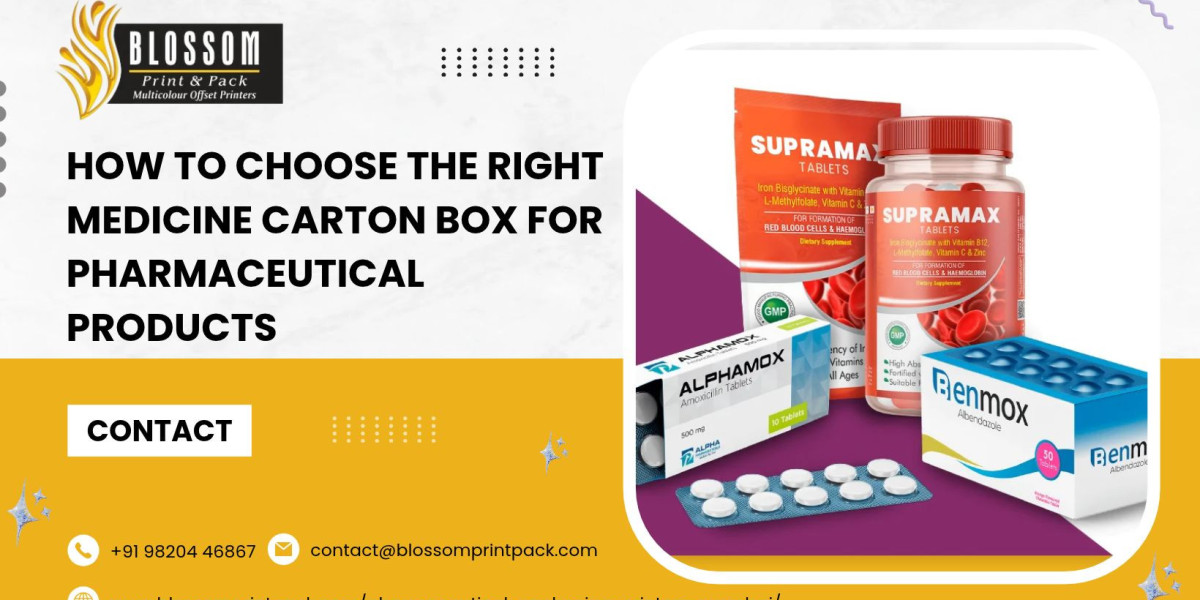

Pharmaceutical products need packaging that provides protection, clear information, and easy handling. The outer carton is often the first layer customers see, but its purpose goes beyond product presentation. It can help protect medicines during storage and transportation while providing important information about the product.
Choosing the right Medicine Carton Box requires attention to material, size, printing quality, structure, and the specific needs of the medicine. A suitable carton should balance durability with practical and professional design.
Consider the Product Size and Shape
The first step is to understand the dimensions and weight of the medicine being packed. Tablets, capsules, bottles, tubes, and other pharmaceutical products can have different packaging requirements.
The carton should fit the inner pack properly without leaving excessive empty space. At the same time, it should provide enough room for handling and suitable protection during transportation.
Accurate measurements are therefore important before finalising the carton structure. A properly sized Medicine Carton Box can also help pharmaceutical brands maintain a neat and consistent appearance across their product range.
Select Suitable Packaging Material
The material should be chosen according to the product, storage conditions, transportation requirements, and desired carton strength. Paperboard is commonly used for pharmaceutical cartons because it can be printed clearly and converted into different box structures.
The appropriate board thickness and quality depend on the product and packaging design. Businesses should discuss these requirements with an experienced packaging supplier instead of selecting material based only on appearance or price.
Good Pharmaceutical packaging should provide an appropriate balance between protection, usability, and presentation.
Pay Attention to Printing Quality
Pharmaceutical packaging often contains important product information. Text needs to be clear, sharp, and easy to read. Product names, dosage information, manufacturing details, batch information, and other required information should be reproduced accurately according to the approved artwork and applicable requirements.
Professional medicine box printing can help maintain consistent colours, sharp text, and clean graphics across production batches.
Before beginning large-scale production, it is useful to review a proof or physical sample to identify artwork or production issues.
Check Label and Information Requirements
Pharmaceutical cartons may need to communicate several details in a limited amount of space. The information should be organised clearly so that users can find relevant details without difficulty.
Along with the carton, labels may also play an important role in product identification. High-quality pharma label printing can support clear presentation of essential information on bottles, containers, or other inner packaging.
The final artwork should always be reviewed and approved by the appropriate pharmaceutical and regulatory teams before printing.
Think About Practical Box Structure
A carton should be easy to open, close, store, and handle. The structure may vary depending on the product and the type of inner packaging.
Folding cartons are commonly designed with features that support efficient packing and handling. For products requiring additional security or specific opening characteristics, the structure can be adapted accordingly.
A packaging supplier can help assess whether the proposed design is practical for production and filling operations.
Review Printing and Finishing Options
Finishing can improve the appearance and functionality of pharmaceutical cartons. Depending on the application, brands may consider suitable coatings, varnishes, or other finishing options.
However, pharmaceutical packaging does not need unnecessary decorative effects. The priority should remain on readability, consistency, product protection, and compliance with approved specifications.
Reliable pharma print packaging should maintain consistent production quality while meeting the brand's technical requirements.
Choose an Experienced Printing Partner
The printing company you select can have a major impact on the final result. Look for a supplier with relevant experience, suitable printing and finishing capabilities, quality-control processes, and the ability to handle your required order volume.
An established packaging and printing company should be able to discuss materials, carton structures, artwork preparation, proofing, production, and delivery clearly.
It is also useful to review samples and ask about quality checks before placing a production order. Comparing pharmaceutical printing companies based on capabilities and service can help businesses select a supplier that fits their specific requirements.
Conclusion
Choosing the right Medicine Carton Box involves more than selecting an attractive design. Size, material, printing accuracy, information layout, structure, and production quality all need to be considered.
By discussing these requirements carefully with an experienced packaging supplier and reviewing samples before production, pharmaceutical businesses can develop cartons that are practical, professional, and suitable for their products. A well-planned Medicine Carton Box can support product protection while providing a clear and consistent presentation for the pharmaceutical brand.