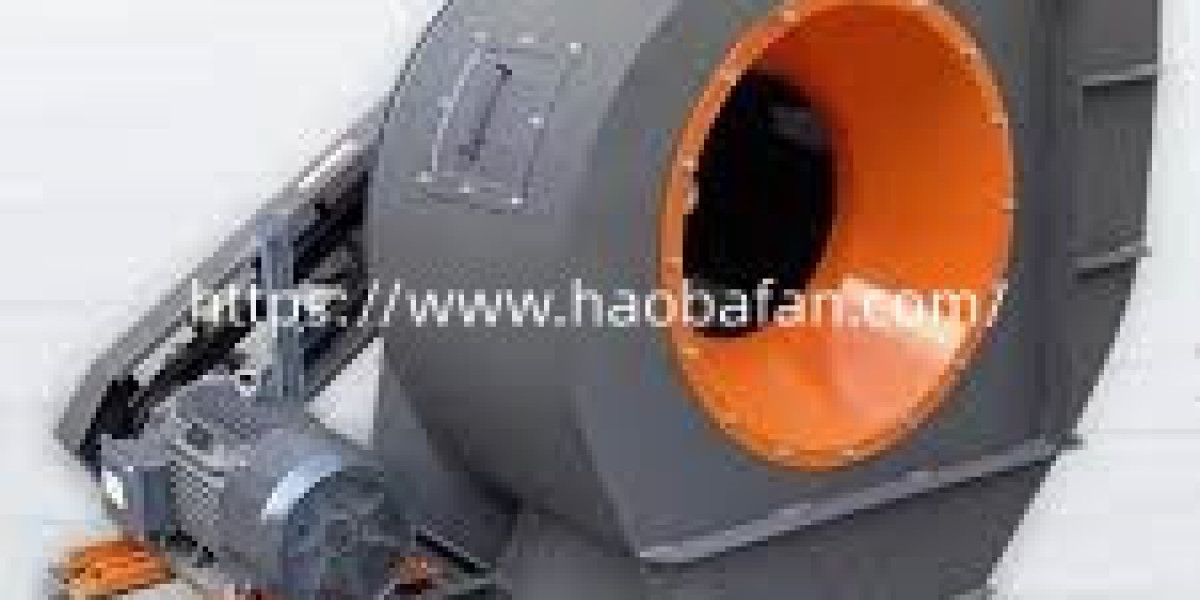

Industrial ventilation projects often involve repeated equipment purchases for factories, warehouses, workshops, commercial facilities, and distribution networks. When evaluating Wholesale Centrifugal Fan options, buyers need to consider more than purchase quantity or unit availability. Impeller construction, housing design, motor integration, balancing, material selection, packaging, maintenance requirements, and supplier consistency can all influence whether the equipment is suitable for a particular ventilation project.
Centrifugal fans are designed to draw air into the central area of a rotating impeller and redirect it outward before guiding it through a discharge housing. This operating principle allows the equipment to work effectively in systems where airflow needs to follow a defined direction. Compared with simple open-air circulation equipment, centrifugal designs can be integrated into more structured ventilation arrangements involving ducts and other components.
The impeller is one of the most important parts of the system. Blade shape, positioning, structural strength, and manufacturing consistency influence how air is accelerated and redirected. For buyers sourcing multiple units, consistency between impellers is especially important. Differences in component geometry can affect rotational balance and airflow behavior, making manufacturing quality an important procurement consideration.
Housing construction also deserves attention. The housing surrounds the impeller and helps guide air toward the discharge opening. Its structural strength and internal geometry can influence the stability of the airflow path. Depending on the intended application, materials may need to withstand humidity, dust, temperature changes, or other environmental conditions. Buyers should therefore consider the installation environment when comparing equipment from different suppliers.
Motor integration is another factor that affects overall equipment reliability. The motor provides the rotational energy required by the impeller and must remain properly aligned within the fan structure. Manufacturing processes should account for mounting stability, electrical connections, heat management, and mechanical coordination. These details can become particularly important when purchasing equipment for continuous industrial operation.
Balancing is critical for rotating components. An uneven impeller can create vibration, which may affect bearings, mounting structures, and surrounding equipment. For larger purchasing programs, consistent balancing procedures can help maintain similar operating characteristics across multiple units. Buyers may therefore consider whether a supplier has established inspection and quality-control processes rather than relying only on visual product evaluation.
Noise should also be considered during procurement. Fan noise can result from aerodynamic turbulence, blade movement, motor operation, mechanical vibration, and housing resonance. Installation conditions can further influence sound levels. Appropriate equipment selection combined with secure mounting and suitable system design can help create a more controlled operating environment.
Maintenance requirements should be reviewed before completing a large order. Industrial fans may collect dust or other airborne particles during operation. Regular cleaning and inspection can help maintain airflow pathways and identify signs of wear or abnormal vibration. Easy access to important components can also simplify routine service activities. Maintenance procedures should follow the equipment manufacturer's recommendations and relevant workplace safety practices.
Purchasing decisions should also consider logistics and supply consistency. For projects involving multiple facilities or repeated installation schedules, dependable production capacity can simplify procurement planning. Consistent component quality, organized packaging, clear documentation, and responsive communication can help reduce uncertainty during distribution and installation.
Application requirements remain central to equipment selection. Centrifugal fans may support factory ventilation, equipment cooling, workshop air movement, warehouse systems, agricultural facilities, and other applications requiring directed airflow. The appropriate design depends on the complete system, including airflow pathways, duct arrangements, environmental conditions, installation space, and operating objectives.
A supplier should therefore be evaluated from both manufacturing and application perspectives. A company capable of maintaining consistent fabrication, assembly, balancing, inspection, and technical communication can provide useful support for buyers handling repeated orders. For organizations sourcing Wholesale Centrifugal Fan equipment, these factors can help create a more structured purchasing process based on application requirements rather than price or appearance alone.
Taizhou Haoba Electromechanical Co Ltd. provides ventilation equipment for different industrial air movement applications, and buyers can explore further product information at https://www.haobafan.com/product/mixed-flow-fan/ when reviewing suitable solutions for distribution, replacement, or new ventilation projects.