
The production of grooming accessories requires attention to product structure, material consistency, assembly quality, and practical usability, and a well-organized Pet Brush Factory can coordinate these elements through a controlled manufacturing process. Although grooming tools are relatively compact products, their design may involve several components that need to work together consistently. From material preparation to final packaging, each stage can influence the finished product.
The manufacturing process generally begins with material preparation. Depending on the product design, manufacturers may work with plastics, elastomeric materials, metal components, fabric elements, or combinations of different materials. Incoming materials should be checked against established specifications before entering production. Consistent raw materials provide a more stable foundation for subsequent molding, forming, cutting, assembly, and finishing operations.
Product structure has a significant influence on manufacturing methods. A grooming accessory may include a handle, brushing surface, support structure, connecting components, and other functional parts. During product development, manufacturers can evaluate whether each component is suitable for efficient production and reliable assembly. Simplifying unnecessary structural complexity may also help improve process consistency and reduce avoidable production difficulties.
Molding and forming processes require appropriate process control. Plastic components, for example, may need consistent dimensions and surface finishing so that they can fit correctly during assembly. Production teams can monitor processing conditions and inspect molded parts for visible defects, deformation, incomplete forming, or other irregularities. Consistent inspection at this stage can prevent unsuitable components from moving into later operations.
Assembly is another important stage because different components must be positioned correctly. Automated or semi-automated equipment may be used where suitable, while manual operations can remain useful for specific product configurations. Regardless of the method, production procedures should define the required assembly sequence and inspection points. Workers can then follow standardized processes rather than relying solely on individual experience.
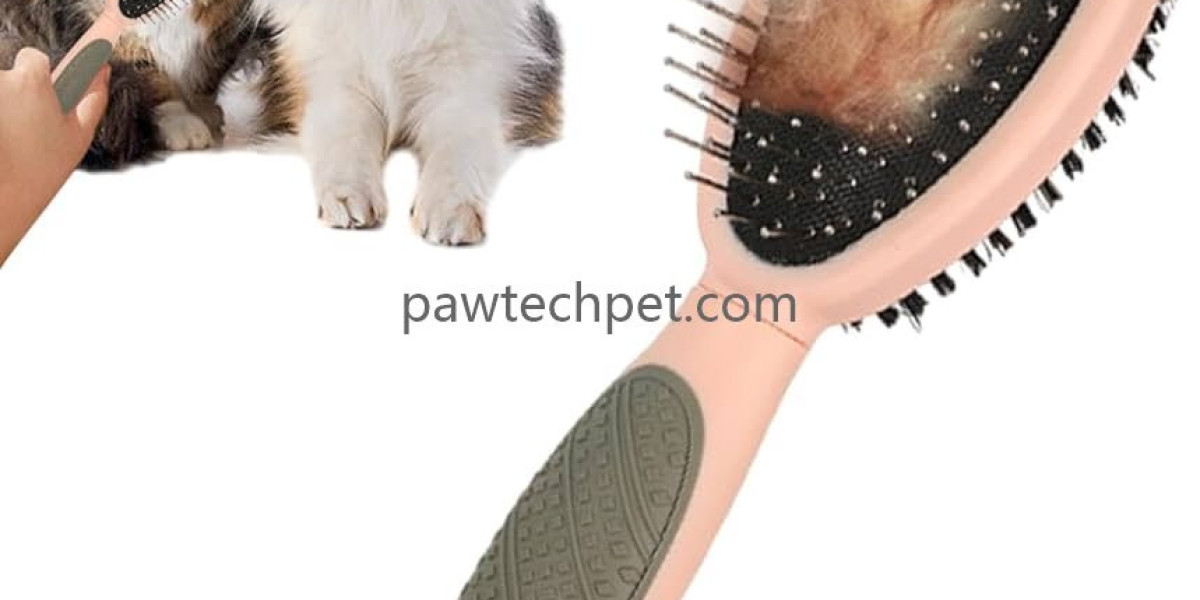
The brushing surface requires particular attention because it directly interacts with an animal's coat. Depending on the intended application, manufacturers may produce different structures for various coat conditions. The spacing, arrangement, flexibility, and finishing of contact elements can all influence how the product feels during use. Careful finishing is important because rough edges or inconsistent surfaces can affect product usability.
Quality inspection should continue after assembly. Finished products can be checked for appearance, component alignment, structural integrity, and other requirements established during product development. Sampling procedures may be used for larger production batches, while additional inspections can be introduced for specific components or higher-risk process stages. Maintaining documented inspection procedures helps create a more consistent quality-management system.
Packaging is closely connected with factory operations as well. After products pass inspection, they may need to be sorted, labeled, packed, and prepared for transportation. Export-oriented production may involve different packaging formats according to buyer requirements and sales channels. Retail packaging, bulk cartons, private-label packaging, and other configurations can be incorporated into production planning when clearly specified in advance.
Production planning also affects delivery coordination. Material availability, equipment scheduling, labor allocation, inspection capacity, and packaging preparation all need to be considered when organizing orders. A factory with established internal procedures can coordinate these stages more effectively and communicate production progress with business customers. Clear planning is especially useful when buyers manage recurring orders or several product variations.
Continuous process improvement can further support manufacturing stability. Production teams can review recurring defects, assembly difficulties, material waste, and customer feedback to identify opportunities for adjustment. Improvements may involve tooling, work instructions, inspection methods, packaging procedures, or production sequencing. The goal is to create a controlled process that remains practical as product volumes and market requirements change.
For businesses sourcing grooming accessories, evaluating a Pet Brush Factory involves looking at the complete production system rather than only the appearance of finished products. Material management, manufacturing processes, assembly control, inspection procedures, packaging coordination, and production planning all contribute to dependable B2B sourcing. Companies exploring related pet-care product categories can visit https://www.pawtechpet.com/product/pet-clothing/ for additional product information and application references.