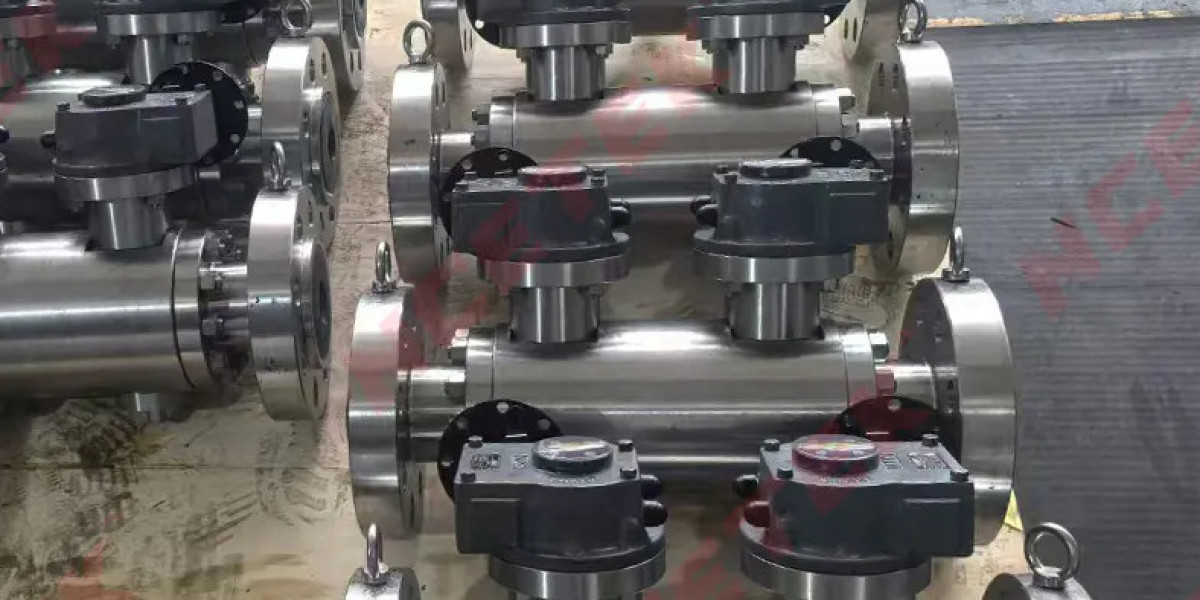

Cast steel ball valves are used across many industrial pipeline systems because their body construction can support complex geometries while maintaining a practical balance between strength, manufacturing flexibility, and cost. However, the performance of a valve depends on more than the material used for its body. Casting quality, internal passage accuracy, ball surface condition, seat compatibility, stem sealing, assembly control, and inspection procedures all influence the finished product. For companies evaluating a Cast Steel Floating Ball Valve, it is important to understand how these elements work together under actual operating conditions.
The valve body forms the primary pressure boundary and protects the internal components from external mechanical influences. Casting allows manufacturers to create internal flow passages, connection ends, and body shapes that may be difficult to produce through other methods. At the same time, casting requires strict control over mold design, molten metal quality, pouring temperature, cooling speed, and post-casting treatment. Poor control may create inclusions, porosity, shrinkage, dimensional variation, or uneven material properties. These issues can affect pressure containment and may become more significant when the valve experiences repeated pressure or temperature changes.
Material selection should be based on the fluid and the surrounding environment. Carbon steel is often considered for general industrial applications where strength and economic efficiency are important. Stainless steel may be selected for systems exposed to moisture, corrosive chemicals, or demanding atmospheric conditions. Alloy steel can be considered where temperature, mechanical stress, or specific chemical exposure creates additional requirements. The body material should always be evaluated together with the ball, stem, seats, fasteners, and other wetted parts.
A floating ball valve uses a ball that can move slightly under line pressure. When upstream pressure acts on the ball, it pushes the ball toward the downstream seat, helping create a sealing interface. This arrangement can provide effective isolation while keeping the structure relatively compact. Because the ball is not fixed by a lower trunnion support, the seat design must accommodate movement and maintain suitable contact without producing excessive friction.
The seat system is therefore one of the most important components. Seat materials must be compatible with the medium, temperature, pressure, and operating frequency. Polymer seats may be suitable for many conventional services, provided that the material remains stable under the actual operating conditions. Other seat materials may be required for higher temperatures, abrasive media, or chemical exposure. The seat must resist deformation, extrusion, swelling, and wear while maintaining contact with the ball during operation.
Ball finishing directly influences sealing performance. The ball must have suitable roundness and a smooth surface so that it can rotate without damaging the seats. Grinding, polishing, and dimensional inspection help reduce surface irregularities. Foreign particles must also be removed because contamination can become trapped between the ball and seat. Such particles may create leakage paths, increase operating torque, or accelerate wear during repeated opening and closing cycles.
The stem transfers operating force from the handle, gearbox, or actuator to the ball. It must provide sufficient strength while maintaining smooth movement. Stem seals should be selected according to the medium and temperature, and packing compression must be controlled carefully. Excessive compression may increase torque, while insufficient compression may allow external leakage. In applications where electrostatic charge is a concern, suitable anti-static features may also be incorporated into the design.
Manufacturing quality depends on coordinated control of machining, assembly, and testing. The body cavity, stem opening, seat pockets, and connection ends must be machined accurately. During assembly, the ball, seats, stem, and body sections must remain aligned. Uneven tightening of fasteners can create distortion or localized stress. Controlled cleaning is equally important because internal contamination may damage sealing surfaces.
Testing normally includes body pressure testing, seat leakage testing, and functional operation. Body testing evaluates pressure containment, while seat testing examines the ability of the valve to isolate the pipeline. Additional inspections may include visual examination, dimensional verification, material identification, hardness checks, and non-destructive testing. The appropriate inspection scope depends on the application and project requirements.
Installation conditions also influence service life. The pipeline should be aligned correctly so that external loads are not transferred unnecessarily to the valve body. Before commissioning, the line should be cleaned and the valve should be operated through its full travel. During service, maintenance teams should monitor external leakage, operating torque, actuator response, and visible corrosion. Abrasive or contaminated media may require additional filtration or cleaning measures.
A Cast Steel Floating Ball Valve should be selected by reviewing body material, casting quality, seat technology, ball finishing, stem sealing, testing procedures, and installation conditions as one complete system. Industrial users can examine suitable valve categories and product solutions through https://www.ncevalve.com/product/ when planning reliable pipeline and process control applications.