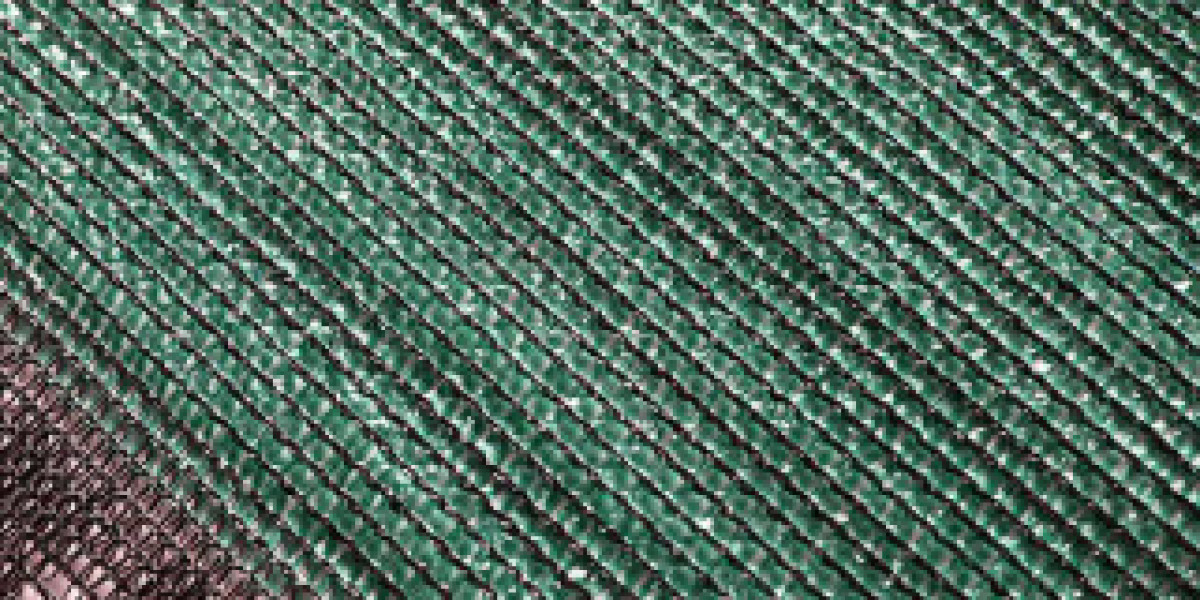

A Mesh Shade Screen can have the same stated GSM as another screen while producing a different level of light filtration. One reason is the cross-sectional shape of the knitted wire. Round and flat wires occupy space differently within the mesh, changing both the size of the openings and the amount of material presented across each area of the fabric.
Round wire construction generally leaves more open space around the knitted structure, allowing air to move through the screen relatively easily. This can be useful in greenhouses and nurseries where reducing solar radiation needs to be balanced against ventilation. A dense screen that blocks substantial light but restricts airflow may produce a different microclimate beneath the fabric than a more open structure.
Flat wire changes this balance by presenting a broader surface within the knitted mesh. More of the incoming light can be blocked across the same general area, making flat-wire construction suitable for applications where shade coverage is a higher priority. Combination structures using both round and flat wires provide another approach, allowing manufacturers to adjust the relationship between openness and coverage according to the intended application.
Material formulation also matters during long-term outdoor use. HDPE is widely used for knitted agricultural mesh, but the base polymer alone does not determine outdoor durability. UV stabilization is important because continuous exposure to sunlight can gradually affect plastic materials. A screen may look similar to another product when new but behave differently after extended outdoor exposure if their formulations and UV treatment are not equivalent.
GSM provides a useful reference for material weight, but it should be considered alongside knitting density and needle count. A 6-needle construction and a 12-needle construction can produce different mesh characteristics even when the listed weight appears similar. For buyers specifying shade materials, checking these parameters together provides a more precise description than requesting only a general shade percentage.
The perimeter also deserves attention, particularly when a Mesh Shade Screen will be rolled, removed, and installed repeatedly. Overlock stitching, reinforced borders, and correctly spaced eyelets can distribute tension around attachment points and reduce the likelihood of damage at the raw mesh edge.
For larger greenhouse or agricultural projects, wire type, GSM, needle count, color, roll width, and edge treatment can therefore be specified as a group. These details provide a clearer basis for matching a Mesh Shade Screen with the required balance of light control, airflow, installation method, and outdoor exposure.