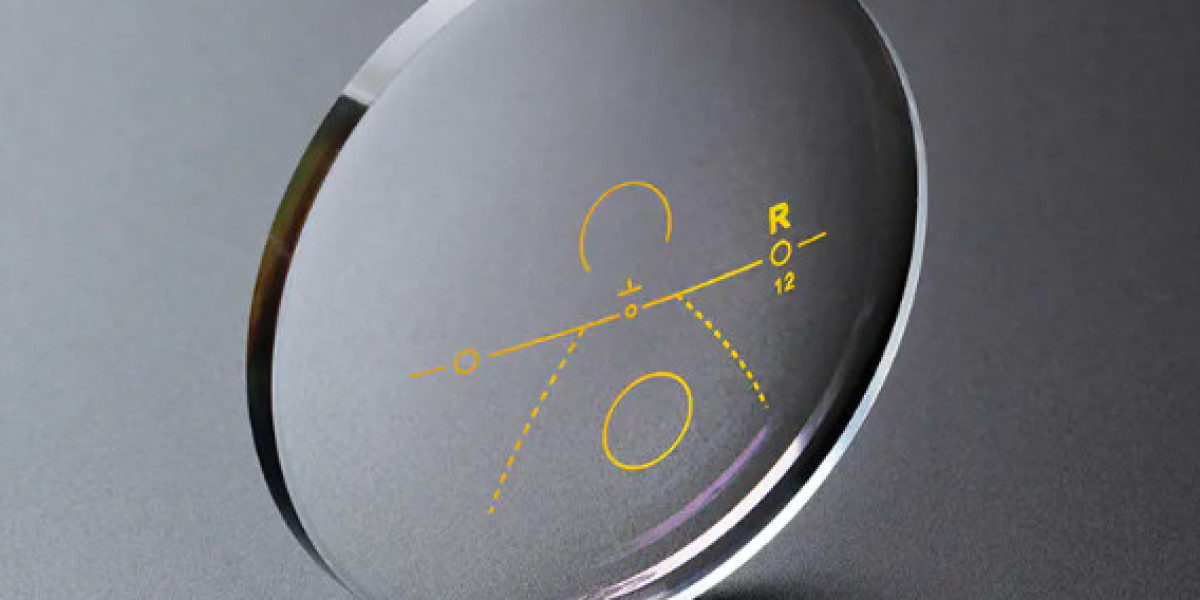

The development of Blue Light Blocking Photochromic lenses brings together two different approaches to light management within one optical product. One focuses on adapting lens transmission according to surrounding light conditions, while the other involves controlling selected portions of the visible spectrum. For optical manufacturers and B2B buyers, combining these technologies requires careful material selection, controlled processing, suitable surface treatments, and consistent quality management throughout production.
Modern eyewear materials are engineered to support specific combinations of optical and physical characteristics. Resin-based optical substrates are frequently used because they can accommodate different lens geometries and manufacturing processes. When a lens incorporates multiple optical functions, the substrate must also remain compatible with photochromic components and any additional treatment applied during production. Material consistency is therefore an important consideration before processing begins.
Photochromic technology relies on light-sensitive components that respond to environmental exposure. When the surrounding light conditions change, the active material can alter its optical state. This process is not simply a surface effect; depending on the manufacturing approach, the photochromic system may be integrated into the lens material or incorporated through a controlled treatment. The selected technology influences later production stages, including forming, polishing, coating, and inspection.
Light management introduces another technical consideration. Blue light is part of the broader visible spectrum, so any optical product designed to influence its transmission needs to be considered in relation to overall lens clarity and color perception. Manufacturers must balance the intended spectral effect with the visual characteristics expected from the finished lens. Consistent material composition and treatment conditions help maintain a predictable result between production batches.
Coating technology can complement the underlying lens material. Surface treatments may be used to support reflection control, improve surface protection, or provide other functional characteristics. However, multifunctional products require careful compatibility testing between the substrate and each treatment. A coating process that performs well on one material may require different preparation or curing conditions on another. Production teams should therefore establish suitable process controls before regular manufacturing.
Cleanliness is especially important during optical processing. Dust, particles, fingerprints, or other contaminants can affect the appearance of a finished lens and may become more visible after surface treatment. Controlled work areas, appropriate handling procedures, and inspection checkpoints can reduce these risks. Operators should also follow consistent procedures when moving lenses between production stages to prevent unnecessary surface contact or damage.
Lens forming and edging require additional precision. The optical surface must remain consistent while the lens is shaped for its intended frame application. If the geometry or edge profile is inconsistent, assembly may become more difficult. Manufacturers can address these challenges through controlled equipment operation, process verification, and final dimensional inspection. Clear product identification also helps prevent different lens specifications from becoming mixed during production or packaging.
Quality assurance should extend beyond visual inspection. Depending on the product design, manufacturers may evaluate optical appearance, surface condition, dimensional consistency, coating integrity, and adaptive behavior. Controlled testing environments can help production teams compare samples and identify variations. Documenting these checks provides useful information when investigating quality concerns and establishing repeat-order standards.
Environmental factors should also be considered when communicating adaptive lens behavior. Temperature, exposure conditions, and surrounding light can influence the transition between different optical states. Therefore, technical descriptions should explain the intended function without implying that adaptive behavior is completely independent of environmental conditions. Accurate communication supports better product positioning and helps distributors provide appropriate information to their customers.
For B2B buyers, supplier evaluation should include more than a review of finished samples. It can be useful to discuss raw material control, manufacturing workflows, coating processes, inspection procedures, packaging, and technical communication. A supplier with organized processes can provide clearer information when a buyer needs to modify a product or develop a new lens combination. This becomes particularly important for multifunctional optical products where several manufacturing variables interact.
Product development in this area is likely to remain closely connected with material science and optical engineering. Blue Light Blocking Photochromic technology demonstrates how different light-management functions can be incorporated into a single product concept while requiring careful coordination between materials and processes. Businesses evaluating optical manufacturing capabilities can learn more about Thinkey Optical Co.,Ltd and its product development approach through https://www.thinkeyoptical.com as part of their supplier research.