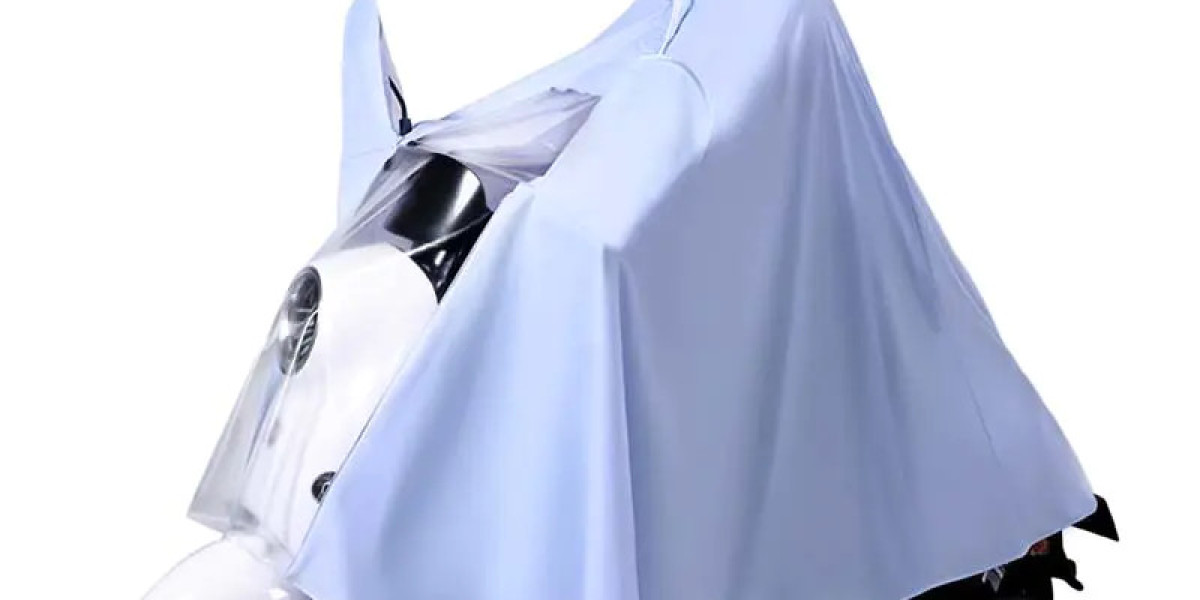

Rain can become an inconvenience surprisingly quickly during a short scooter trip. A journey of only twenty or thirty minutes may still involve wind, road spray, and water reaching areas that an ordinary jacket leaves uncovered. The Scooter Poncho Raincoat is designed around this open riding position, using a broader structure rather than relying on a close-fitting upper-body shell.
The difference becomes noticeable around the arms and lower body. When riding a scooter, both hands remain forward on the handlebars, while the legs are positioned separately from the protected upper torso. A loose poncho can extend over these areas and toward the front of the vehicle, creating a larger barrier between the rider and incoming rain.
Coverage over the vehicle is also worth considering. A longer front section can help shield the hands and parts of the scooter from direct rainfall, while an extended hem can reduce some exposure to splash-back from wet roads. This does not replace dedicated vehicle protection, but it changes how the outer garment interacts with the scooter itself.
A Scooter Poncho Raincoat is also often carried for situations when rain is uncertain. Someone may leave home under dry conditions and encounter rain halfway through the journey. For this reason, a garment that can be pulled on quickly has a practical advantage. Cape and pullover structures avoid the need to adjust multiple layers before getting back on the road.
Storage is closely related to the same requirement. Waterproof rainwear intended for scooters may spend most of the day folded inside a backpack, storage compartment, or other small space. Flexible materials make repeated folding easier to accommodate, although the material still needs to maintain its waterproof properties after regular handling.
Construction quality matters when the garment is used repeatedly. Fabric selection, seam structure, edge finishing, and sealing methods all influence how water is kept away from the rider. EVA and PVC-based materials can be used for different rainwear applications, with material thickness and flexibility affecting how the garment feels during movement.
Visibility is another detail that cannot be separated from scooter use. A hood needs to protect the head without obstructing the rider's forward view. Features such as transparent brim sections or openings around rearview mirrors can help maintain visibility while keeping rain away from the face and upper body.
For manufacturers and B2B buyers, these details provide several points for product development. Hood design, garment length, front coverage, material thickness, printing, and opening structure can be adjusted according to different scooter users. A Scooter Poncho Raincoat is therefore not simply an oversized raincoat; its proportions are shaped by the rider's posture, the scooter's open layout, and the need for quick protection during everyday urban travel.