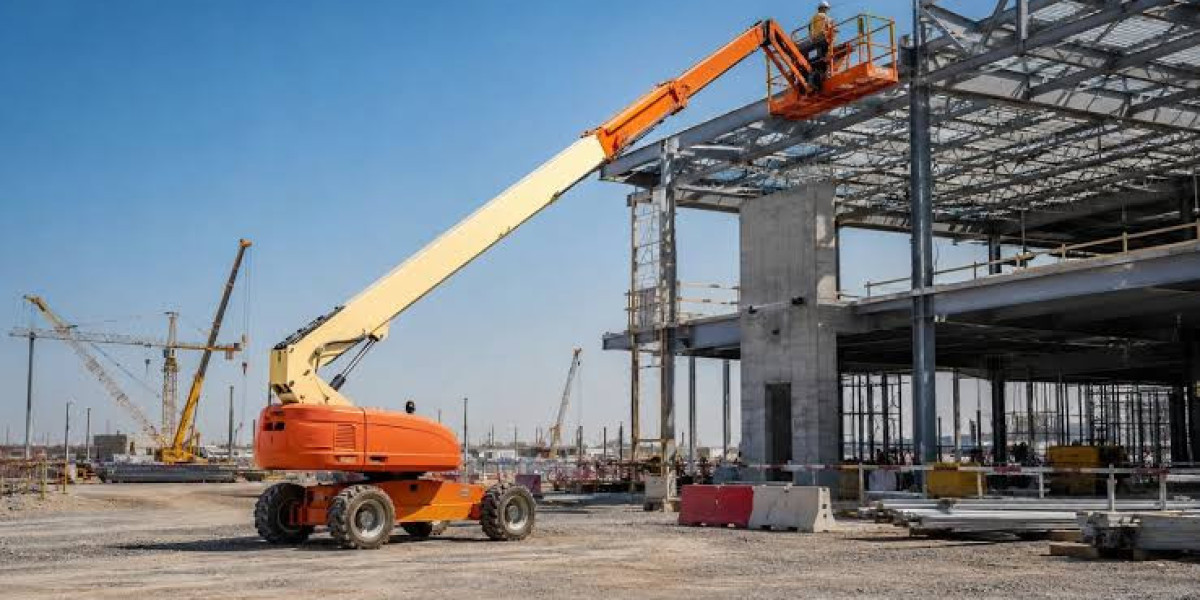

Boom lifts are useful machines for work that requires workers to reach high or difficult areas. They can be used for construction, building maintenance, painting, electrical installation, repairs, inspections, and many other elevated tasks. However, businesses often need to decide whether they should rent a boom lift or purchase one.
The better choice depends on the type of project, how often the machine will be used, available budget, storage space, maintenance responsibilities, and expected future needs. A company working on a short project may not need to own a machine for many years. On the other hand, a business that regularly performs elevated work may benefit from having its own equipment.
Boom Lift Rental provides access to equipment for a specific period without the same long-term commitment as purchasing. Renting can be useful when a project needs a machine for a few days, weeks, or months. Buying gives a company full ownership but also creates additional responsibilities.
Understanding both options can help businesses make a practical decision based on their actual work requirements.
When Boom Lift Rental Can Be the Better Option
Boom Lift Rental can be a practical choice for companies that need temporary access to lifting equipment. It allows businesses to use a suitable boom lift when required without making a large purchase.
Lower Initial Investment
Buying a boom lift requires a significant upfront investment. For a company that only needs the machine for a short project, this may not be the most practical use of its budget.
Rental allows the company to pay for the equipment during the period it is needed. This can make it easier to manage cash flow and avoid putting a large amount of money into equipment that may remain unused later.
Suitable for Short-Term Projects
Many construction and maintenance projects have a fixed start and finish date. If a boom lift is needed only for a specific stage of the project, renting can make more sense than buying.
For example, a company may need elevated access for exterior painting, lighting installation, building repairs, or structural inspection. Once the work is complete, the machine can be returned.
Access to Different Equipment
Different jobs require different boom lift specifications. One project may need greater height, while another may require more horizontal reach or a different machine size.
With Boom Lift Rental, businesses can choose equipment based on the requirements of each project. This provides flexibility when project needs change.
Less Long-Term Maintenance Responsibility
Equipment ownership comes with maintenance responsibilities. The owner usually has to arrange inspections, servicing, repairs, parts, and other equipment care.
When renting, maintenance arrangements may be handled as part of the rental service, depending on the agreement. This can reduce the amount of equipment management required by the customer.
No Long-Term Storage Problem
Boom lifts are large machines that require suitable storage when they are not being used. Businesses with limited space may find this difficult.
Renting avoids the need to keep the equipment permanently at the company's location. After the rental period, the machine can be collected according to the agreed arrangements.
Useful for Changing Project Needs
Construction work can change during a project. A machine that is useful today may not be required during the next stage.
Renting allows businesses to adjust their equipment choices according to current needs. This can be especially helpful for companies working on different types of projects.
Helps Avoid Equipment Depreciation
Purchased equipment loses value over time. Its resale value can also depend on age, condition, usage, and market demand.
A rental customer does not normally need to worry about selling the machine later. The business pays for the period of use and returns the equipment when the work is complete.
Better for Occasional Use
If a boom lift is used only a few times each year, purchasing may not provide good value. The equipment could spend long periods sitting unused.
Boom Lift Rental can be more suitable for occasional users because the company can arrange equipment only when a project requires it.
When Buying a Boom Lift May Be Better
Buying can also be a good option when a company has regular and long-term requirements for elevated access equipment. Ownership gives the business control over the machine but requires careful planning and ongoing costs.
Frequent Equipment Use
If a company uses a boom lift regularly throughout the year, purchasing may become more practical over time.
Businesses with continuous construction, maintenance, installation, or industrial work may benefit from having equipment available whenever needed.
Long-Term Projects
For projects that require a boom lift for a very long period, rental charges can accumulate. Depending on the expected usage, purchasing may provide better long-term value.
The company should compare the expected rental expense with the total cost of ownership before making a decision.
Complete Equipment Control
An owned boom lift is available to the company whenever it is required, subject to maintenance and operational conditions.
The business does not need to depend on equipment availability from a rental schedule. This can be useful when urgent work needs to be completed quickly.
Custom Equipment Selection
A company with specialized and repeated work requirements may prefer to purchase a boom lift that closely matches its regular operations.
The business can select the machine specifications, accessories, and features it needs for long-term use.
Potential Resale Value
A purchased boom lift may have resale value after several years of use. The amount depends on its age, condition, maintenance history, and market demand.
Although resale value should not be the only reason to buy, it can be considered when calculating the long-term cost of ownership.
Responsibility for Maintenance
Ownership also means the company must manage maintenance properly. Regular servicing, inspections, repairs, replacement parts, and equipment care all need to be planned.
Ignoring maintenance can reduce equipment performance and create unnecessary safety and repair problems.
Storage and Transportation
The owner must also consider where the boom lift will be stored when it is not working. Transportation between different project locations may also require planning.
These costs should be included when comparing buying with Boom Lift Rental.
Operator and Safety Requirements
Whether the machine is rented or purchased, proper operation remains important. Workers using the boom lift should have appropriate training and understand the equipment's operating limits.
The company should also establish suitable inspection and safety procedures for regular equipment use.
Compare the Total Cost
The best way to choose between renting and buying is to compare the complete costs of both options.
For renting, consider:
- Daily, weekly, or monthly rental charges
- Delivery and collection
- Operator requirements
- Additional equipment or accessories
- Rental extensions
- Maintenance arrangements
For buying, consider:
- Purchase price
- Financing costs if applicable
- Insurance
- Maintenance
- Repairs
- Storage
- Transportation
- Depreciation
- Resale value
- Operator and safety requirements
Looking at the complete cost gives a clearer picture than comparing only the rental rate with the purchase price.
Consider How Often the Machine Will Be Used
Usage frequency is one of the most important factors in the decision. A company that needs a boom lift once or twice may find renting more convenient.
A company that needs the equipment every week may find ownership more useful. Estimate the expected number of working days each year and compare this with the long-term cost of ownership.
Think About Future Projects
Do not base the decision only on the current project. Consider whether similar work is expected in the future.
If the company has several upcoming projects that require the same type of boom lift, buying may be worth considering. If future work is uncertain, renting can provide greater flexibility.
Check Equipment Availability
Availability is another important factor. When renting, make sure the required boom lift is available for the planned project dates.
For companies that need equipment at short notice, owning a machine can provide greater control. However, rental can still work well when projects are planned in advance.
Which Option Is Right for Your Business?
There is no single answer for every business. Boom Lift Rental may be the better choice when:
- The project is short-term.
- Equipment is needed occasionally.
- The business wants a lower initial cost.
- Storage space is limited.
- Equipment requirements change between projects.
- Long-term maintenance responsibilities are not desirable.
Buying may be more suitable when:
- The machine will be used frequently.
- The company has regular elevated work.
- Long-term equipment demand is predictable.
- The business has suitable storage facilities.
- It wants complete control over equipment availability.
- Long-term ownership costs make financial sense.
Conclusion
The choice between Boom Lift Rental and buying depends on how often the equipment is needed, how long it will be used, and how much responsibility the business wants to take on.