
A sofa can be perfectly good and still look slightly unfinished. Often, the issue is not the furniture at all—it is the cushions. Covers that are faded, poorly fitted, or unrelated to the room's colour palette can make an otherwise considered interior feel disconnected.
The right Cushion Covers work differently. They introduce colour, texture and pattern at eye level while allowing you to refresh the room without replacing large pieces of furniture. They can also be changed seasonally, making them particularly useful in homes where everyday comfort and festive decorating need to coexist.
Choosing them well, however, involves more than finding a pattern you like. Fabric, dimensions, insert fullness, sofa proportions, lighting, existing colours and maintenance all affect how a cushion actually looks once it is on the sofa.
What are cushion covers?
Cushion covers are removable fabric coverings designed to fit over cushion inserts. They protect the insert while also providing the visible colour, texture and decorative character of the cushion.
Because the cover can be removed independently, homeowners can keep the same inserts while changing the room's look for everyday use, entertaining or festive occasions.
That distinction is useful when shopping: a cushion cover is not necessarily sold with a cushion insert. Always check the product description before ordering.
Why Cushion Covers Matter in Home Décor
Cushions occupy a relatively small amount of physical space, but they sit prominently within a seating arrangement. This makes them useful for connecting different elements of a room.
For example, a beige sofa could take on a warmer character with rust, olive or ochre accents, while a charcoal sofa could be softened with ivory, muted blue or textured neutral covers. The objective is not necessarily to match every item, but to create a visual relationship between the sofa and the surrounding room.
Cushion covers are also practical for homes with changing needs. A simpler arrangement may suit everyday family use, while embroidered or more decorative covers can be brought out when guests are expected.
A useful decorating rule: if your sofa or rug already has a strong pattern, let at least some of the cushions provide visual breathing space through solid colours or restrained textures.
Which Fabric Is Best for Cushion Covers?
There is no single fabric that works best for every home. The right choice depends on how often the cushion will be used, how much maintenance you are comfortable with and the atmosphere you want to create.
| Fabric | Look | Comfort | Maintenance | Suited to |
|---|---|---|---|---|
| Cotton | Natural, relaxed | Comfortable | Generally practical | Everyday seating |
| Velvet | Rich, soft, luxurious | Soft to touch | Needs fabric-appropriate care | Accent and formal spaces |
| Linen | Airy, understated | Cool, natural feel | Can require more careful handling | Contemporary, relaxed interiors |
| Blends | Varies by composition | Depends on blend | Usually depends on fibres | Flexible everyday use |
| Embroidered fabrics | Decorative, detailed | Depends on base fabric | Often needs extra care | Accent and festive styling |
| Textured fabrics | Visually dimensional | Depends on weave | Check care instructions | Layering and understated luxury |
Cotton
Cotton works well where comfort and regular use are priorities. Its visual character can range from crisp and contemporary to richly textured, depending on the weave and finish.
Velvet
Velvet adds depth because its surface responds noticeably to light. It can be particularly effective on a neutral sofa, but its care requirements should be checked before washing.
Linen
Linen has a relaxed, naturally refined appearance and can work particularly well in understated interiors. Its tendency to develop a more lived-in appearance may be desirable rather than a flaw.
Blended fabrics
A blend can combine characteristics of different fibres, but the word "blend" alone does not tell you how a fabric will behave. Check the actual composition and care instructions.
Embroidered and textured fabrics
These are excellent for introducing detail without relying entirely on colour. Embroidery, raised patterns, quilting and woven textures can make a neutral cushion arrangement more interesting.
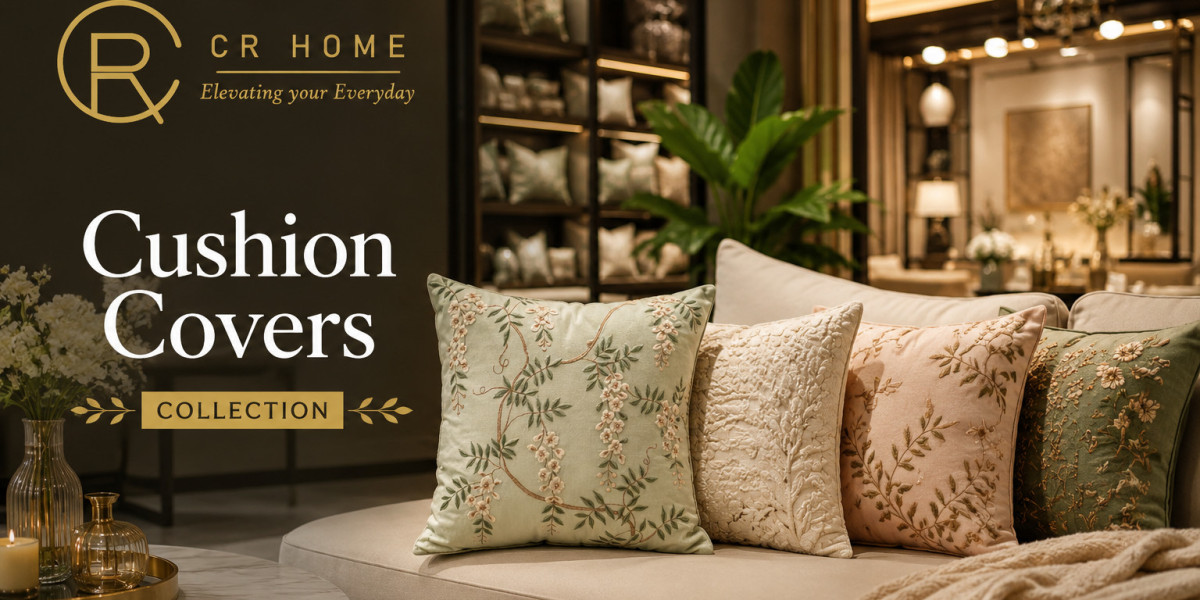
CR Home's current cushion collection, for example, includes embroidered, velvet, textured and patterned designs in several proportions, illustrating why fabric and finish should be considered alongside colour.
How Do You Choose the Right Cushion Cover Size?
Measure the cushion insert before buying the cover. Check its width and height, then compare those measurements with the product's stated dimensions. The cover should suit the insert rather than being selected based only on the size of the sofa.
Common proportions include:
- 16 × 16 inches: useful for smaller seating, accent chairs and layered arrangements.
- 18 × 18 inches: a versatile square proportion for many sofas.
- 12 × 18 or 12 × 20 inches: useful as lumbar-style cushions and for adding variation to a row of square cushions.
- Larger cushions can work on generously proportioned sofas, provided they do not crowd the seating area.
A slightly fuller insert can create a more substantial appearance, but do not assume that every cover should automatically be smaller than its insert. Follow the manufacturer's sizing guidance, particularly for structured or decorative covers.
Cover size vs insert size
Before purchasing, check whether the listed measurement refers to the finished cover or the recommended insert. Product descriptions are not always presented in exactly the same way.
If you already own the insert, measure it from seam to seam and compare that measurement with the product specifications.
How Should Cushion Colours Be Chosen?
Start with the colours already present in the room rather than choosing the cushions in isolation.
Look at:
- Sofa upholstery
- Curtains
- Rug
- Walls
- Flooring
- Artwork
- Accent furniture
- Natural and artificial lighting
A useful approach is the 60–30–10 principle as a styling guide, not a strict formula: let the dominant room colour occupy most of the visual field, introduce a secondary tone through furniture and textiles, and use cushions for smaller accents.
For example, a living room with cream walls, a taupe sofa and a wooden floor could use olive and muted terracotta cushions. The colours do not need to appear in exactly the same shades elsewhere; a related tone in artwork, a rug or decorative object can make the combination feel intentional.
In a compact apartment, very dark or highly contrasting cushions can become visually dominant. Lighter tones and restrained patterns may help maintain an open feeling. In a larger living room, stronger colour contrasts can be easier to balance.
Also check the cushions in daylight and evening light. Warm indoor lighting can make beige, yellow, terracotta and red tones appear quite different from their appearance during the day.
How Do You Mix Cushion Patterns and Textures?
The easiest way to combine patterns is to vary scale, visual weight and texture rather than selecting several equally dominant designs.
Try this three-part formula:
- Begin with a solid or subtle texture.
- Add one medium-scale pattern, such as a geometric or restrained floral.
- Finish with one detailed accent, such as embroidery or a smaller print.
For example, an ivory textured cushion can sit behind a muted geometric design, with a smaller embroidered cushion in front.
If every cushion has an elaborate print, there is nowhere for the eye to rest. Conversely, several plain cushions in almost identical textures can look flat.
The same principle works for traditional and festive interiors. Rich embroidery or jewel-toned fabrics can provide the decorative focus while simpler cushions prevent the arrangement from becoming visually heavy.
How Many Cushions Should a Sofa Have?
There is no fixed number. The correct quantity depends on sofa width, cushion depth and how much seating space you want to preserve.
Minimal styling
Use one or two cushions on a compact sofa or accent chair. Keep the colours closely related to the existing upholstery.
Balanced styling
A three-seater sofa can often accommodate a small group of cushions arranged with some symmetry. This works particularly well in formal living rooms.
Layered styling
Use larger cushions at the back, followed by smaller square or lumbar cushions toward the front. Varying dimensions creates depth without requiring every cushion to have a different pattern.
Asymmetrical styling
Place a larger group at one end and a smaller accent at the other. This can feel more relaxed and contemporary, particularly when the room already has an informal aesthetic.
The practical test is simple: the sofa should remain comfortable to sit on. If cushions have to be moved every time someone sits down, the arrangement may be too elaborate for the way the room is actually used.
How to Choose Sofa Cushion Covers for Different Interiors
Sofa Cushion Covers should complement the character of the room rather than compete with it. Modern interiors often benefit from clean geometry and controlled colour, while traditional spaces can accommodate richer textures, embroidery and more decorative motifs.
For a modern interior, consider:
- Tonal neutrals
- Geometric patterns
- Fine textures
- Controlled contrasts
- A limited colour palette
For a traditional or classic interior, consider:
- Embroidery
- Botanical or heritage-inspired motifs
- Richer fabrics
- Deeper accent colours
- Layered textures
For a contemporary Indian interior, a useful middle ground is to pair restrained furniture with one or two distinctly detailed cushions. This allows craftsmanship, colour or pattern to provide character without making the room feel overly themed.
For festive decorating, decorative covers can be introduced temporarily while keeping everyday cushions relatively simple.
What Should You Check Before Buying Cushion Covers Online?
Shopping for Cushion Covers Online gives you a wider range of styles to compare, but photographs alone cannot tell you everything.
Before placing an order, check:
- Exact dimensions — Confirm width, height and any alternate size options.
- Fabric composition — Look for the actual fibre or material description.
- Insert inclusion — Do not assume the cushion filler is included.
- Closure — Check whether the cover has a zip, envelope closure, buttons or another construction.
- Care instructions — Particularly important for velvet, embroidery and embellished fabrics.
- Colour information — Screen settings and lighting can affect how colours appear online.
- Product photography — Look for close-up views that show texture and detailing.
- Quantity sold — Confirm whether the listed price is for one cover or a set.
- Stitching and finish — Examine visible seams, borders and decorative work where photographs allow.
- Returns and exchanges — Read the applicable policy before ordering.
A product page can reveal details that a catalogue image cannot. For instance, individual CR Home product listings specify dimensions, materials, care instructions and whether the filler is included; these are exactly the details shoppers should look for when comparing products online.
How Should Cushion Covers Be Cleaned and Maintained?
Care should always follow the manufacturer's instructions because decorative fabrics can respond differently to water, heat and agitation.
For everyday maintenance:
- Remove dust regularly using a gentle method suitable for the fabric.
- Treat spills promptly rather than allowing them to set.
- Read the care label before washing.
- Avoid bleach unless the manufacturer explicitly permits it.
- Do not assume that a delicate embroidered cover is machine washable.
- Keep decorative covers completely dry before seasonal storage.
- Store them away from dampness and direct sunlight.
For embroidered cushion covers, avoid aggressive rubbing over the decorative work. Raised embroidery, beads and embellishments can catch or distort if handled roughly.
For velvet, the correct cleaning method depends on the particular fibre and construction. Some velvet products require professional or gentle surface cleaning rather than conventional washing. A CR Home velvet cushion listing, for example, recommends dry cleaning or gentle sponge cleaning and specifically advises against warm-water washing, bleach and tumble drying.
In Indian homes where dust and frequent use are everyday considerations, having a small rotation of covers can also be practical: keep the decorative ones for occasions when needed and use more easily maintained styles for high-use seating.
Common Cushion Cover Mistakes to Avoid
Choosing colour before measuring
A beautiful cover that does not fit correctly will still look untidy. Establish the required dimensions first.
Matching everything too closely
Matching the cushions exactly to the curtains, sofa and rug can make a room feel overly coordinated. Repeating a colour is usually more effective than duplicating every pattern.
Using too many statement cushions
If every cushion is embroidered, heavily patterned or embellished, the arrangement loses hierarchy.
Ignoring the insert
The same cover can look completely different with a flat insert versus a full, well-proportioned one.
Buying based only on photographs
Texture, thickness and colour can be difficult to judge on a screen. Product specifications and care details matter.
Prioritising appearance over everyday use
A formal decorative cushion may look excellent but be unsuitable for a sofa used heavily by the family. Choose according to how the room functions.
A Practical Way to Build a Cushion Arrangement
If you are starting from scratch, use this sequence:
First, assess the sofa. Note its colour, size and whether its upholstery is plain or patterned.
Second, identify two or three existing room colours. Look at the rug, curtains, artwork and furniture.
Third, select your base texture. This might be cotton, linen, velvet or another fabric appropriate to the room's use.
Fourth, introduce pattern carefully. Choose one dominant pattern and support it with quieter designs.
Fifth, vary proportions. Combine square cushions with a lumbar shape where the sofa allows it.
Finally, edit. Remove one cushion if the arrangement feels crowded. Good styling often comes from restraint rather than adding another decorative element.
CR Home's approach to its cushion collection similarly spans embroidered, textured, velvet and patterned pieces, showing how different finishes can serve different styling roles rather than every cushion needing to make the same visual statement.
The most useful principle is to choose Cushion Covers as part of the room, not as isolated accessories. Measure first, consider how the sofa is used, build a restrained colour palette, then add texture and pattern. That sequence makes both online shopping and in-store selection considerably easier.
FAQ Section
1. How do I choose the right Cushion Covers for my sofa?
Start by measuring the cushion inserts and checking the cover dimensions. Then consider how frequently the sofa is used, followed by fabric, colour and pattern. A plain sofa gives you more freedom with pattern, while a patterned sofa usually benefits from simpler supporting cushions.
2. Which fabric is best for Cushion Covers?
There is no universally best fabric. Cotton can suit frequent everyday use, velvet offers a richer decorative appearance, linen gives a relaxed natural character, and embroidered or textured fabrics work well as accents. Your choice should reflect both the room's appearance and the level of maintenance you can manage.
3. What size should Sofa Cushion Covers be?
Common sofa proportions include 16 × 16 and 18 × 18 inches, while rectangular 12 × 18 or 12 × 20 inch cushions can add variation. Always measure your existing insert and check the manufacturer's sizing guidance rather than choosing purely by sofa size.
4. Are Cushion Covers Online worth buying?
Yes, provided you evaluate more than the photograph. Check dimensions, fabric composition, closure, care instructions, insert inclusion, quantity, colour information and return policies. Online shopping is particularly useful for comparing several styles and sizes before making a coordinated selection.
5. How do I mix different cushion cover patterns?
Use different scales rather than several equally strong patterns. Start with a solid or subtle texture, add a medium-scale print, then introduce one detailed accent such as embroidery. Repeating one colour across the group helps connect different designs.
6. How often should cushion covers be washed?
There is no universal schedule because frequency depends on usage, fabric and household conditions. High-use cushions generally need attention more often than decorative cushions. Follow the care instructions and clean promptly after spills rather than waiting for a routine wash.
7. Should the cushion cover be the same size as the insert?
Not necessarily. The appropriate relationship depends on the cover construction, insert type and manufacturer's recommendation. A cover that is too loose can look baggy, while one that is too tight may distort the seams. Check the product's recommended insert dimensions whenever available.
8. How many cushions should I put on my sofa?
Use as many as create visual balance without compromising comfortable seating. A compact sofa may need only a few cushions, while a larger sofa can support a layered arrangement. If people regularly have to remove half the cushions before sitting down, simplify the arrangement.