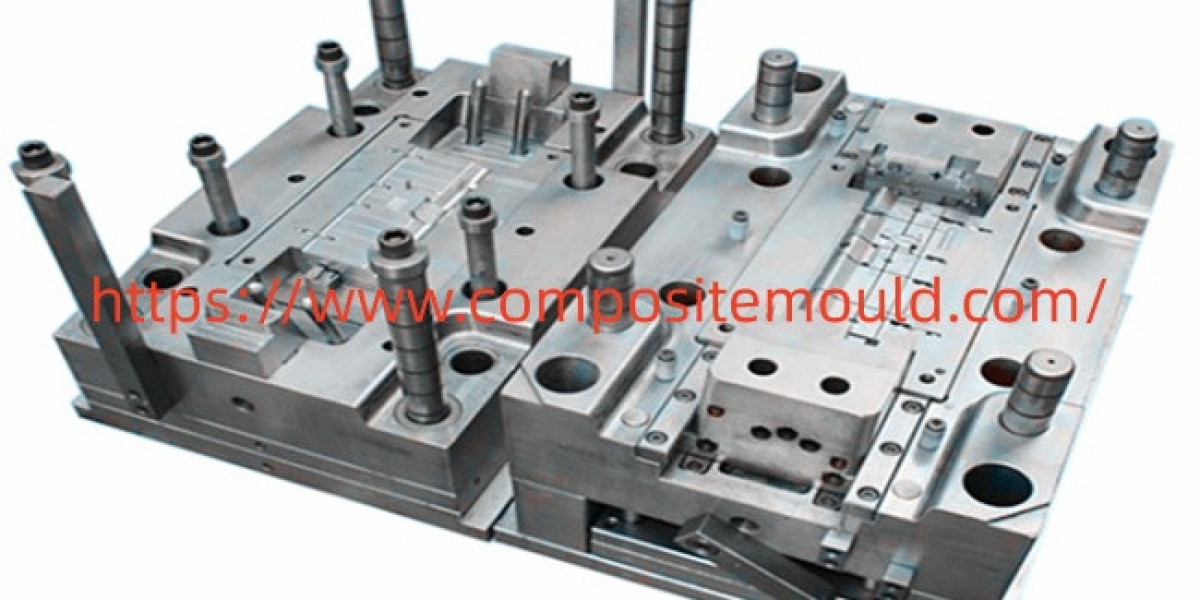

SMC Mould is a tooling solution used with sheet molding compound during compression forming. The material commonly combines thermosetting resin, reinforcing fibers, fillers, and other additives before being shaped under controlled heat and pressure. During production, prepared material is placed into a cavity, compressed, cured, and then removed as a finished component. This approach is used across several industrial fields where composite parts require defined shapes, integrated features, and repeatable production processes.
How The Process Works
The process begins with material preparation. Sheet molding compound is generally produced by combining resin paste with reinforcing fibers and forming it into a sheet. After a maturation stage, suitable sections are cut and arranged according to the intended component.
The prepared charge is then positioned inside the forming cavity. When the tool closes, heat and pressure cause the material to flow through the cavity before curing. Once the curing stage is completed, the component can be removed and sent to subsequent operations.
This process means tooling design has a direct relationship with the final product. Cavity geometry, material flow, venting, temperature management, and release conditions all need to be considered during development.
Why Tooling Design Matters
Composite materials behave differently from conventional metals during forming. The material changes its viscosity as temperature rises and flows through the cavity before becoming a cured structure.
A well-planned cavity needs to accommodate this movement. Poorly considered geometry can contribute to incomplete filling, trapped air, surface problems, or dimensional variation.
Fiber movement is another consideration. Research into compression forming shows that fiber orientation can change according to material placement and cavity geometry. This makes the relationship between product design and tooling particularly important for composite components.
Product Geometry And Functional Features
One reason composite forming is useful in industrial manufacturing is the ability to create shaped components with integrated features.
Depending on the application, a component may require mounting areas, ribs, openings, curved sections, reinforcing structures, or other details. These elements can be incorporated into the cavity design rather than being treated as separate pieces.
For designers, this can provide greater flexibility when developing components for electrical equipment, transportation products, automotive applications, enclosures, and other industrial uses. SMC materials are used in several of these fields because they can be compression formed into relatively complex shapes.
Surface Quality And Finishing
Surface appearance can also influence tooling decisions. Industrial components may require smooth visible surfaces, defined edges, consistent textures, or specific finishing arrangements.
The cavity surface therefore needs to correspond with the intended appearance of the finished part. Tool surface preparation, release considerations, and maintenance can all influence production results.
For products that will remain visible after assembly, surface consistency can be particularly important. Manufacturers should establish the desired finish during the development stage instead of treating it as a final production adjustment.
Supporting Production Efficiency
Tooling is also connected with production planning. When the same component is manufactured repeatedly, stable forming conditions can help production teams maintain a consistent process.
The material charge, cavity temperature, pressure, curing time, and demolding procedure may all require coordination. Changes in one area can influence other stages of production.
For this reason, tooling development should consider not only whether a component can be formed, but also how the forming process will operate during repeated manufacturing cycles.
Applications Across Different Industries
SMC composite components can be found in electrical and electronic equipment, automotive parts, transportation products, industrial enclosures, and other applications.
Electrical applications can include housings, junction boxes, switchgear components, insulating parts, and related structures. Automotive applications can involve body panels and other shaped composite components.
The exact material formulation and tooling arrangement depend on the product requirements. Factors such as mechanical loading, electrical conditions, environmental exposure, appearance, and dimensional requirements should be considered before production begins.
Product Development Starts Before Tool Production
A successful tooling project begins with a clear product concept. Engineers should provide accurate drawings, three dimensional models, material information, dimensional tolerances, surface requirements, and intended production conditions whenever possible.
These details allow tooling designers to consider parting lines, draft angles, cavity depth, inserts, vents, cooling arrangements, and demolding requirements.
Early communication can also reduce unnecessary modifications after manufacturing begins. When product requirements change late in development, the cavity may require additional adjustments that could affect both scheduling and production preparation.
Maintenance Also Has A Role
A forming tool is used repeatedly, so maintenance should be included in the production plan. Cleaning, surface inspection, checking moving elements, and reviewing wear areas can help manufacturers keep the tooling in usable condition.
Particularly important areas may include cavity surfaces, vents, alignment components, inserts, and demolding mechanisms.
A practical maintenance routine can also help identify small issues before they become larger production interruptions.
Working With A Suitable Manufacturing Partner
For buyers, selecting a tooling partner involves more than checking whether a cavity can be produced. Experience with composite forming, communication during design, engineering support, manufacturing coordination, inspection procedures, and after production assistance can all influence the overall project experience.
Compositemould focuses on composite tooling projects and can work with customers around product geometry, material requirements, cavity design, production considerations, and application needs.
Why SMC Tooling Remains Relevant
Modern manufacturing continues to use composite materials where their combination of design flexibility, forming characteristics, and application requirements fits the intended product. The tooling remains an important part of converting a composite sheet into a finished component with defined geometry.
For manufacturers considering composite production, the right approach begins with understanding the relationship between material behavior, product design, cavity structure, forming conditions, and production goals.
Businesses preparing a new composite project can review the available solutions at https://www.compositemould.com/ and use their product requirements as the starting point for a detailed tooling discussion.