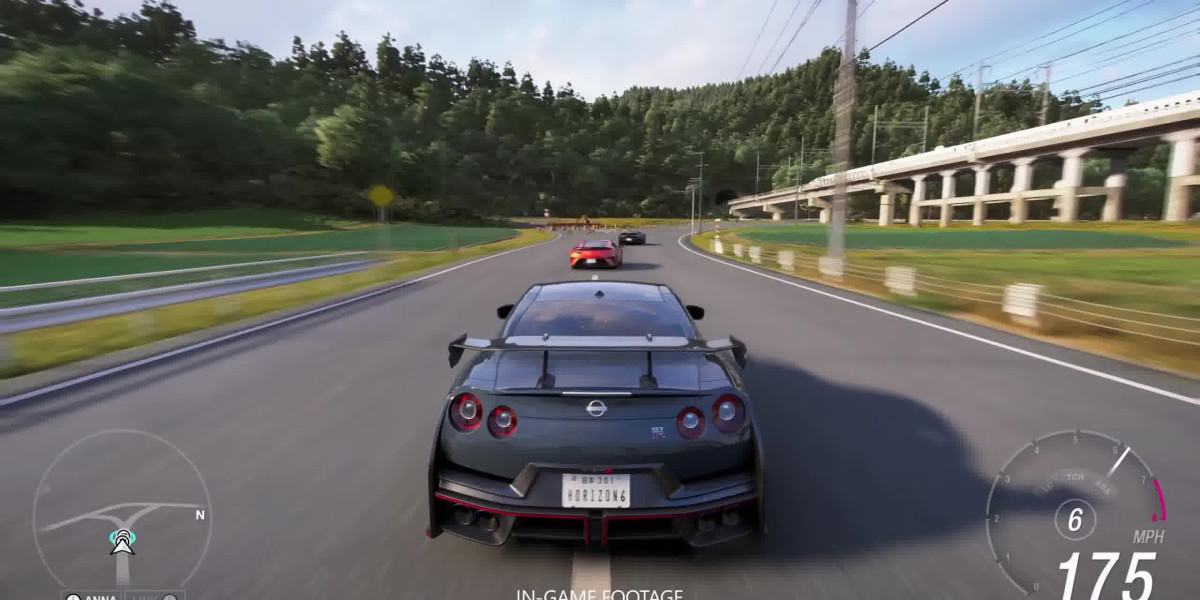

Forza Horizon 6 is presented as a game that fundamentally rethinks what multiplayer racing can mean. Instead of treating online players primarily as competitors, the supplied information describes a system designed around cooperation, mentorship, creativity, and spontaneous social encounters.
That distinction matters because racing games have traditionally organized multiplayer around a simple premise: enter a lobby, compete against other drivers, finish the event, and repeat. While that formula can be exciting, it can also make other players feel like temporary obstacles rather than members of a persistent community.
The multiplayer architecture described for Forza Horizon 6 Modded Accounts attempts to change that relationship.
One of the most important elements is the ability to form convoys naturally. Players do not necessarily need to navigate layers of menus before finding someone to drive with. Instead, the system is designed so that a driver encountering another player on the road can connect with them through a simple interaction.
This makes free roam itself part of the matchmaking system.
Imagine driving through a Japanese mountain road at sunset and noticing another player approaching from behind. Rather than continuing separately, both drivers can establish a convoy and continue their journey together. The interaction is spontaneous and does not require either person to commit to a formal race.
The supplied information goes further by describing a ghost-guide system for mixed-skill groups. When an experienced player and a newcomer travel together, the game can analyze the veteran's driving behavior and present a visual guide to the novice.
This is an intriguing solution to one of the biggest problems in multiplayer games: the gap between experienced and inexperienced players.
A skilled driver can move quickly enough that a beginner struggles to understand what makes the route efficient. A ghost guide can bridge that gap by showing braking points, steering lines, and other useful information. Learning becomes something that happens naturally during play.
The system therefore transforms multiplayer from a test of ability into an opportunity for skill sharing.
Horizon Tour reinforces the same philosophy. According to the supplied information, six-player human teams compete against adaptive AI opponents. The scoring structure emphasizes the combined performance of the team rather than rewarding only the individual driver at the front.
That change could significantly affect player behavior.
In a conventional race, there can be little reason for a driver to help someone else. In a cooperative event, however, another player's success contributes directly to the team's result. Drafting, blocking AI opponents, and maintaining formation can become strategically valuable.
This approach may also reduce some of the frustration associated with online racing. When the game teaches players that cooperation matters, aggressive behavior becomes less useful than coordination.
Accessibility forms another part of the multiplayer philosophy. The supplied description highlights Quick Chat features, vehicle-based communication, proximity tools, auto-driving profiles, and American/British Sign Language video streams. Together, these features suggest a design philosophy that attempts to remove barriers between players.
The result is a world where participation is not restricted to people who have mastered high-level racing mechanics.
A player can explore Tokyo, create liveries, participate in casual activities, join cruises, or contribute to collaborative EventLab projects. The game reportedly gives these activities meaningful progression rather than treating them as distractions from the "real" game.
That is particularly important for community health. People who enjoy different parts of a game can still share the same world. A competitive racer can meet an artist. An explorer can encounter a tuner. A casual player can join a convoy with someone who has thousands of hours of experience.
This variety is part of what makes the described Japanese setting so important. Tokyo's dense streets, highways, mountain routes, and countryside create a natural backdrop for different automotive cultures to overlap.
Players might encounter Itasha designs inspired by anime, understated track cars, drifting machines, or elaborate VIP builds within the same social space. The game becomes less like a single racing community and more like a collection of communities connected by the road.
Of course, discussions surrounding FH6 Cars may emerge wherever progression systems and online rewards exist. Similarly, Forza Horizon 6 Modified Accounts could become a topic among players interested in customization and progression. But the central social concept described here is fundamentally different from shortcutting progression: it is about making the player base itself part of the experience.
Forza Horizon 6's most significant multiplayer innovation, therefore, may not be a new race type or matchmaking algorithm. It may be the decision to make other people useful, interesting, and approachable even when they are not opponents.