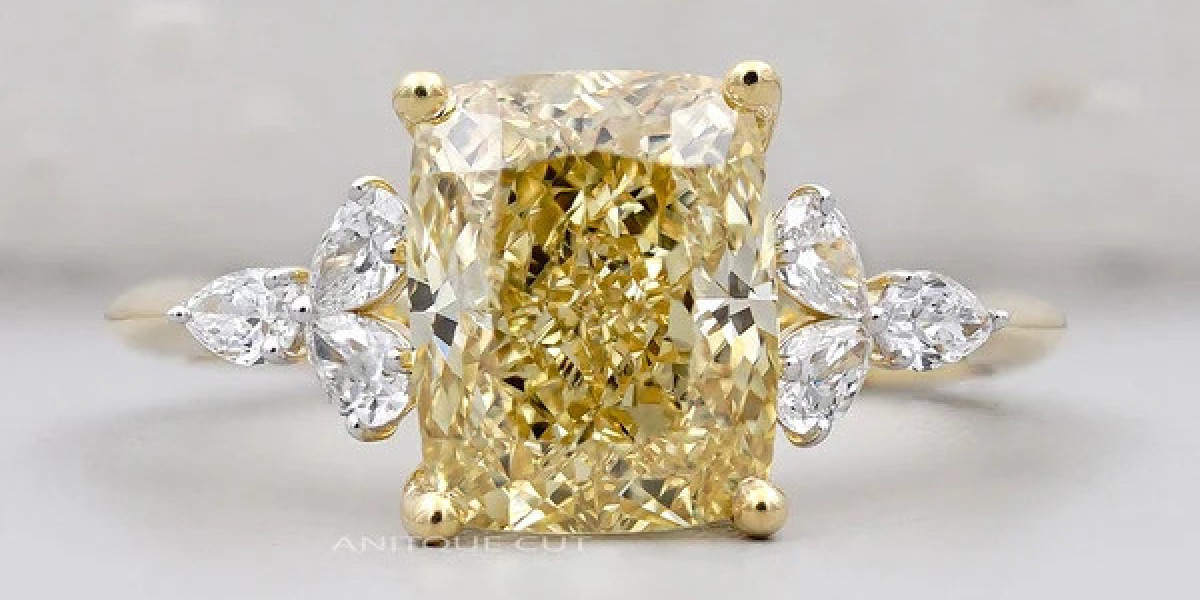

Choosing a yellow diamond ring can feel exciting, but it can also raise a practical question: Should you choose a larger diamond or a stronger yellow color? A bigger stone may give the ring more presence, while a deeper yellow can make the center diamond look more distinctive.
The good news is that you do not always have to sacrifice one for the other. The right balance depends on the diamond's cut, color intensity, carat weight, setting, and your personal budget. Understanding how these factors work together can make it much easier to choose a ring that looks beautiful without spending more than necessary.
Why Diamond Size and Color Need to Be Balanced
Diamond size is usually discussed in terms of carat weight, but carat does not tell you exactly how large a diamond will look from the top. Two diamonds with the same carat weight can have slightly different face-up sizes depending on their proportions and cut.
Color works differently. In a yellow diamond, the strength of the yellow hue is an important part of the stone's appearance. A stronger yellow can make the diamond stand out even when the stone is not particularly large.
This creates a simple trade-off. If your priority is a noticeable center stone, increasing carat weight may make more sense. If you want a richer yellow appearance, putting more of your budget toward color may produce a bigger visual difference.
Start With the Color You Actually Like
Before deciding on carat size, look at different shades of yellow. Yellow diamonds can range from soft and light tones to much stronger yellow hues.
There is no single shade that everyone will prefer. Some people like a gentle yellow that works well with the metal, while others want the center stone to have a clearly visible yellow body color.
Think about how you want the ring to look when viewed from a normal distance. A color that appears attractive in a close-up photograph may look different under everyday lighting.
If possible, compare stones side by side. This is one of the easiest ways to understand whether you would rather have a larger diamond with a lighter appearance or a smaller diamond with stronger color.
Consider Cut Before Increasing Carat Weight
Cut can have a major effect on how attractive and noticeable a diamond appears. A well-cut stone can show better brightness and face-up presence, while a poorly proportioned diamond may look less impressive despite having a higher carat weight.
This is especially important when you are working with a fixed budget. Instead of automatically choosing the largest stone available, compare the visible size and overall appearance.
For example, a 2-carat diamond with good proportions may look more appealing to you than a heavier stone with less pleasing proportions. The goal is not simply to maximize the number on the certificate. It is to find a combination that looks right on the hand.
Think About the Setting and Metal
The ring setting can change how the yellow diamond is perceived.
Yellow gold can reinforce the warm appearance of the center stone and create a coordinated look. White metals such as platinum or white gold can create stronger contrast around a yellow center diamond, making the color more noticeable.
The setting style matters as well. A solitaire places most of the attention on the center stone, so both size and color become major visual factors. A halo setting surrounds the center with smaller diamonds, which can make the center appear larger.
If your budget does not allow you to increase the center stone substantially, a carefully chosen setting can help create more visual presence without simply buying a heavier diamond.
Decide What Matters More: Presence or Color
A useful way to make your decision is to ask yourself one question:
When you look at the ring, what do you want to notice first?
If the answer is the size of the center stone, put more of your budget toward carat weight and look for a yellow tone that still gives you the appearance you want.
If the answer is the rich yellow color, you may prefer a slightly smaller diamond with stronger color.
Neither choice is wrong. An engagement ring is something you will see frequently, so your personal preference should carry more weight than a general rule about what you "should" buy.
Do Not Ignore the Shape
Diamond shape can influence both apparent size and the way color is displayed.
Elongated shapes such as oval, pear, and radiant cuts can create a larger-looking outline for their carat weight. Cushion and round shapes have different proportions and can produce a different visual balance.
For a yellow diamond, the shape should also complement the color. Some shapes may show the body color more noticeably, while others may create a different balance between yellow tone and light return.
Before making a final decision, compare the same approximate carat weight in several shapes. You may discover that changing the shape gives you the visual size you want without needing to move to a much higher carat weight.
Set a Budget Before Comparing Diamonds
It is easy to become focused on size once you start looking at larger diamonds. However, increasing carat weight can quickly change the price.
Set a comfortable budget first, then decide how you want to divide it between the center diamond, setting, and other design details. This helps prevent you from choosing a larger stone that forces compromises elsewhere.
Lab-grown diamonds can also give buyers another option when balancing size and appearance. Depending on the specific stone and market pricing, a lab-grown diamond may allow you to consider a larger center stone within the same overall budget.
Look at the Complete Ring, Not Just the Diamond
A diamond can look completely different once it is placed in a ring. The band width, prongs, side stones, setting height, and metal color all contribute to the final appearance.
For instance, a very thin band can make a center stone appear larger, while a wide band can create a more substantial overall look. Side stones can add visual interest, but they may also compete with the yellow center.
At Antiquecut, the focus can be on finding a combination of diamond characteristics and ring design that works together rather than selecting a center stone in isolation.
Buy the Look You Love, Not Just the Numbers
Buy a Yellow Diamond Engagement Ring based on the combination that feels right to you. If a slightly smaller diamond has the yellow color you have always wanted, it may be a better choice than a larger stone that feels too pale. Likewise, if size is your main priority, you can choose a lighter yellow tone and use the setting to create more contrast.
The best choice is the one that gives you the appearance, proportions, and color you genuinely enjoy seeing on your hand.
Final Thoughts
Balancing diamond size and color does not have to be complicated. Start by deciding which feature matters most to you, then consider cut, shape, setting, metal, and budget together.
A larger diamond is not automatically the better choice, and a stronger yellow is not automatically the right choice either. What matters is how all these details work together.
Take your time comparing stones, view them under different lighting, and focus on the complete ring rather than one specification. That approach can help you choose a yellow diamond ring that feels personal, fits your budget, and looks right every time you wear it.