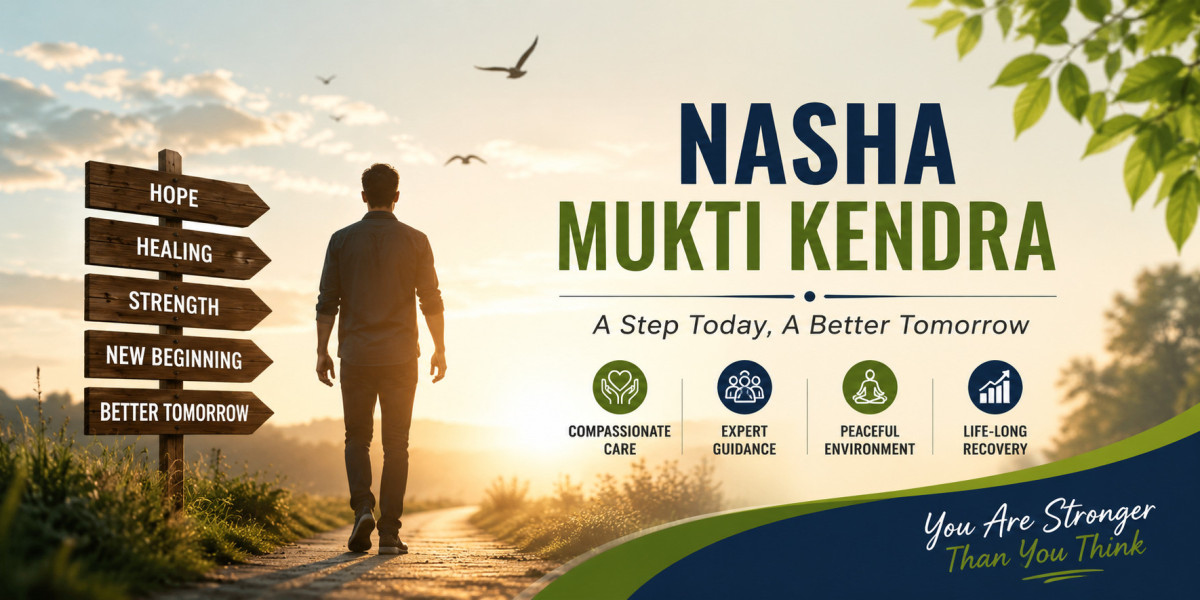

A man I heard about once described his old life in one line — "I wasn't living, I was just repeating the same day." That's what long-term addiction does. It doesn't just take away health or money. It takes away direction. Days blur into each other, and the person forgets what moving forward even feels like. This is really what a Nasha Mukti Kendra is meant to fix — not just the substance use, but the complete loss of direction that comes with it.
Lost, Not Broken
There's a difference between being broken and being lost, and it's worth sitting with that for a second. Someone struggling with addiction hasn't necessarily lost their character or their potential — they've lost their bearings. The habits that once gave their day shape (work, family time, hobbies, even simple routines) get replaced by a single, narrow loop centred around the substance. Everything else fades into the background.
A proper de-addiction center doesn't approach this as fixing something "broken." It approaches it as helping someone find their way back to a direction they'd lost sight of. That distinction changes the entire tone of treatment — less punishment, more guidance.
The First Few Days Are the Hardest to Talk About
Nobody really prepares people for how disorienting the first week at a facility feels. The body is going through withdrawal, sure, but the mind is doing something else entirely — it's realizing, often for the first time in years, how much time has actually been lost. That realization can hit harder than any physical symptom.
Good counsellors don't rush this part. They let it sit. Because underneath that discomfort is usually the first honest question a person has asked themselves in a long time: what do I actually want my life to look like? A quality rehabilitation program treats that question as the real starting point of recovery, not a side effect of it.
Rebuilding a Sense of Time
One thing addiction destroys quietly is a person's relationship with time. Days feel endless and pointless at once. Recovery slowly repairs this through structure — not rigid control, but a rhythm that gives each day a shape again. Morning routines, therapy sessions, physical activity, quiet time, meals at set hours. It sounds almost too basic to matter, but ask anyone a few weeks into a substance abuse treatment program, and they'll tell you — having a reason to get up each morning is bigger than it sounds.
This is where a Nasha Mukti Kendra does something subtle but important. It doesn't hand someone a five-year plan on day one. It just gives them a reason to get through today, then tomorrow, then the day after. Direction, it turns out, is built one ordinary day at a time.
Discovering Interests They'd Forgotten
Something interesting happens around the middle of most recovery programs — people start remembering things about themselves they'd completely lost touch with. Maybe they used to write. Maybe they were decent at fixing things with their hands. Maybe they liked teaching people, or cooking, or working outdoors. Vocational sessions, art therapy, and simple skill-building activities aren't there to fill time — they're there to reconnect someone with parts of themselves that addiction had quietly erased.
This rediscovery often becomes the seed of a new direction altogether. Someone who hadn't touched a paintbrush in a decade might leave treatment seriously considering art classes. Someone who spent years disconnected from physical work might find themselves drawn to gardening or carpentry. Small sparks like these matter more than they get credit for.
Support That Doesn't Disappear After Discharge
A direction only means something if there's a path to actually follow it. This is why aftercare planning deserves as much attention as the initial treatment. Local support groups, follow-up counselling, occasional check-ins, sometimes even help connecting with job opportunities — these things stop recovery from becoming a temporary phase that quietly reverses once life gets stressful again.
An honest addiction recovery program will be upfront about this — treatment inside the facility is only half the picture. The other half happens once someone steps back into their normal environment, surrounded by the same triggers, same people, same pressures. Without a plan for that stage, even the strongest early progress can slip.
Family as a Compass, Not Just Support
Family involvement plays a bigger role in "direction" than people expect. It's not just emotional support — it's often where someone gets their first sense of what they're working toward. A parent hoping to see their child stable again, a partner wanting to rebuild trust, a sibling who simply wants the old version of them back — these relationships often become the quiet motivation behind sticking with a difficult sobriety journey when things get hard.
Choosing a Facility With This in Mind
If you're looking into options, don't just check for medical credentials and cleanliness, though obviously those matter. Ask how the facility handles life-after-treatment planning. Ask whether they help residents explore interests, skills, or work opportunities. A genuine Nasha Mukti Kendra treats "what comes next" as part of the program, not an afterthought tacked on at discharge.
A Different Kind of Beginning
Recovery rarely follows a clean, straight path, and it shouldn't be expected to. But somewhere in that process, most people find a version of direction they hadn't felt in years — not a fixed destination, just forward motion again. And honestly, for someone who spent years stuck in the same repeating day, forward motion is more than enough to start with.