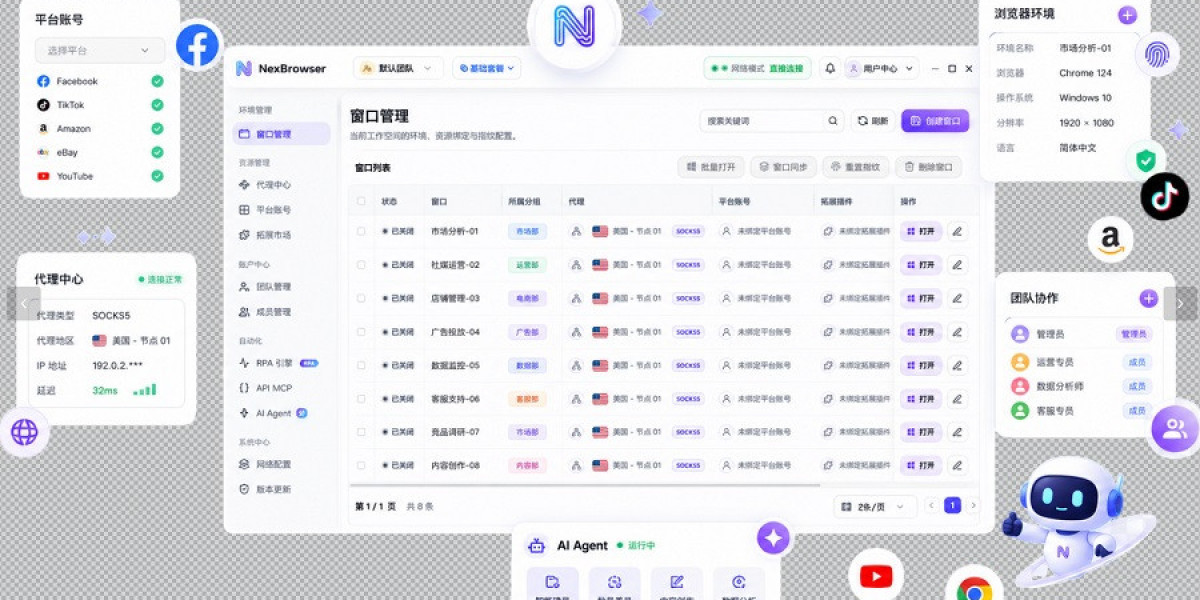

For years, web browsers have followed roughly the same formula. You enter a website address, type something into a search box, open several tabs, and move between pages until you find what you need. It works, but the process can feel surprisingly old-fashioned when most of our online activities involve research, comparison, writing, shopping, and repetitive tasks.To get more news about 指纹浏览器, you can visit nexbrowser.net official website.
This is where the AI browser comes in.
An AI browser is more than a traditional browser with a chatbot added to the side. Its real value comes from combining web access with artificial intelligence, allowing users to search for information, understand content, summarize pages, and sometimes complete tasks with fewer manual steps. In my opinion, this is one of the more interesting changes happening in everyday internet software because it focuses less on simply displaying websites and more on helping users interact with them.
What Makes an AI Browser Different?
The biggest difference is the way information is handled.
With a conventional browser, the user is responsible for connecting the dots. Suppose you are researching a new laptop. You might open the manufacturer's website, several review pages, online stores, comparison articles, and customer feedback. After reading everything, you still have to organize the information yourself.
An AI browser can make this process more conversational. Instead of treating every webpage as an isolated destination, the browser can use AI to help interpret the information you are viewing. You may be able to ask questions about a page, extract important details, summarize a long article, or compare information from different sources.
That small change can make browsing feel much more efficient.
AI-Powered Search and Research
Search is probably the area where most people notice the difference first.
Traditional search gives you a list of links. You then visit those pages and decide which information is useful. An AI browser can provide a more direct research experience by helping users understand search results and organize information around a specific question.
For example, someone researching a business topic may ask the browser to summarize several reports, identify important statistics, or explain a technical term in simpler language. Rather than repeatedly copying information into another AI tool, the assistance can happen much closer to the browsing process itself.
I particularly like this approach for long-form research. Reading a 3,000-word report just to find three relevant points is not a great use of time. Having AI identify the important sections first gives the user a useful starting point while still allowing them to read the original material when accuracy matters.
A Useful Assistant for Repetitive Tasks
Another attractive feature is task assistance.
Modern online work contains plenty of repetitive actions: collecting product information, organizing research notes, filling out routine forms, checking multiple pages, or turning scattered information into a simple summary. An AI browser can potentially reduce the amount of manual clicking involved in these processes.
This does not mean users should hand every decision over to AI. In fact, I think the best experience is the opposite. The browser should handle the tedious parts while the user remains in control of important decisions.
That balance is important. Automation is useful when it saves time, but it becomes frustrating when the software acts unpredictably or makes assumptions without asking.
Better Productivity Without Constant Tab Switching
One of the less obvious advantages of an AI browser is convenience.
Many people work with a ridiculous number of browser tabs open at once. One tab contains a document, another has a search result, several are product pages, and somewhere in the middle is the page they actually need. Switching between them creates unnecessary mental overhead.
An AI browser can reduce some of this friction by providing contextual assistance while you browse. Instead of leaving the current page to search for an explanation, you may be able to ask the AI directly. Instead of manually extracting information, the browser can help organize it.
It is a simple idea, but small improvements like this can add up during a busy workday.
Personalization and Context
AI browsers can also become more useful when they understand context.
A normal browser treats each search as largely independent. An AI-powered browser can potentially understand what you are currently reading and respond accordingly. If you are looking at a technical article, for example, you can ask for a simpler explanation. If you are reviewing a product, you can ask which specifications matter most. If you are reading a lengthy business report, you can request a concise breakdown of the main points.
This contextual behavior makes the browser feel less like a passive window and more like an active working environment.
What About Privacy and Accuracy?
There is, however, an important side to consider.
AI browsers often process webpage content and user requests through AI systems, so privacy policies, data handling, and permissions deserve attention. Users should understand what information is collected and how it is processed before relying heavily on any AI-powered browsing service.
Accuracy is another consideration. AI can summarize information quickly, but fast does not always mean correct. For financial, legal, medical, or other important information, I would still check the original source rather than accepting an AI-generated answer at face value.
For me, this is not a weakness unique to AI browsers. It is simply part of learning how to use AI responsibly.
My View on AI Browsers
I see the AI browser as a natural evolution rather than a complete replacement for the traditional browser.
The browser itself is not the exciting part anymore. The interesting question is what happens when the browser can understand what we are trying to accomplish.
A good AI browser should save time without making the experience complicated. It should help with research, reduce repetitive work, explain difficult information, and keep the user in control. When these features work smoothly, browsing becomes less about managing tabs and more about getting things done.
There will certainly be improvements ahead. AI browsers still need to become more reliable, transparent, and precise. But the direction is promising. The internet has always been built around finding information. AI browsers are taking the next step by helping people understand and use that information more efficiently.