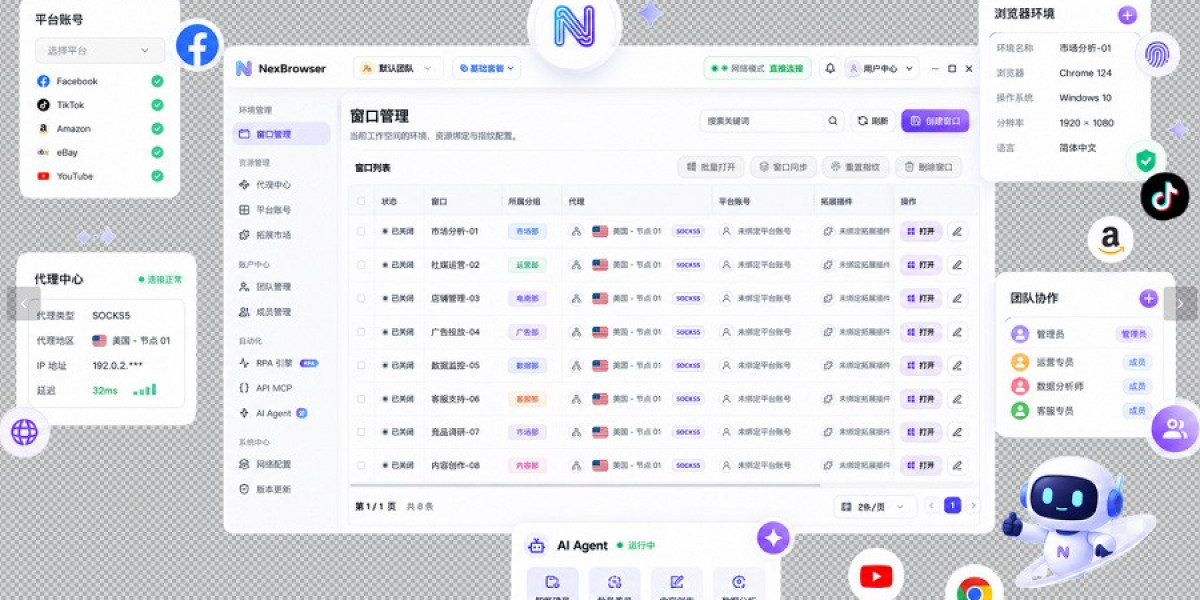

A fingerprint browser is not just another niche tool for technical users; it is a response to how aggressively modern websites track, classify, and sometimes penalize online identities. When I first experimented with one, I expected a slightly modified browsing experience. What I encountered instead was a system that treats every browser window as a fully independent digital persona. This independence is not cosmetic—it is structural, and it changes how you operate online.To get more news about 免费指纹浏览器, you can visit nexbrowser.net official website.
What Makes a Fingerprint Browser Different
The defining feature is its ability to simulate unique browser fingerprints. A fingerprint includes dozens of parameters: operating system metadata, screen resolution, timezone, language, hardware signatures, Canvas output, WebGL behavior, and more. A normal browser exposes a consistent fingerprint every time. A fingerprint browser, however, allows each environment to present a distinct identity.
The first time I created multiple environments, I noticed how cleanly they were separated. Cookies, caches, local storage, extensions, and proxy settings were all isolated. Opening ten environments felt like using ten different computers. This separation is not only convenient—it is essential for users who manage multiple accounts on platforms with strict anti‑association rules.
Another detail that impressed me was how the browser handles fingerprint authenticity. Poorly generated fingerprints look artificial, and platforms can detect them. High‑quality fingerprint browsers generate parameters that resemble real devices, reducing the risk of triggering automated security systems. In my experience, the smoother login flow and lower rate of verification prompts were clear indicators of better authenticity.
Stability and Long‑Term Reliability
Stability is an underrated but critical factor. A fingerprint browser is not useful if environments crash, drift, or change fingerprints unexpectedly. During long‑term use, I found that reliable platforms maintain environment consistency for months. This matters for account‑based work: a stable environment becomes part of the account’s identity, and any unexpected change can cause suspicion.
I also appreciated how some platforms handle updates. Instead of forcing all environments to adopt new fingerprint templates, they allow users to maintain older configurations. This avoids the risk of sudden fingerprint shifts that might disrupt established accounts.
Practical Use Cases
Fingerprint browsers are often associated with cross‑border e‑commerce, advertising operations, and data collection. These associations are accurate, but the scope is broader.
Cross‑border sellers use them to operate multiple storefronts without accidental linkage.
Advertising teams rely on them to test campaigns across regions and accounts.
Data researchers use them to avoid IP bans and fingerprint‑based blocking.
Privacy‑conscious individuals use them to reduce tracking and profiling.
Developers and testers simulate different device environments without physical hardware.
In my own work, the most valuable aspect was the ability to switch identities instantly. Instead of juggling multiple devices or virtual machines, I could manage everything from one interface.
Purchase Considerations
Choosing a fingerprint browser is not trivial. The market varies widely in quality, pricing, and reliability. Based on my experience, these are the factors that matter most:
Fingerprint quality — Look for realistic, stable fingerprints rather than random generation.
Environment scalability — Some platforms charge per environment, others per team seat. Choose based on your workload.
Team collaboration — Shared environments, permission controls, and activity logs are essential for multi‑person operations.
Proxy compatibility — A good fingerprint browser should support multiple proxy types and test proxy quality automatically.
Update frequency and support — Active development and responsive support teams indicate long‑term reliability.
For beginners, starting with a basic plan is enough to understand the workflow. For teams, investing in a collaboration‑focused version saves time and reduces operational risk.
Personal Perspective
After months of use, I see fingerprint browsers as part of a broader shift in digital identity management. Traditional browsers assume a single identity per device. Fingerprint browsers challenge that assumption by giving users control over how they appear online. This is not about hiding—it is about managing identity intentionally.
In a world where platforms increasingly rely on automated risk detection, having the ability to present stable, realistic, and isolated identities is becoming a necessity. Fingerprint browsers offer that control without requiring complex virtual machine setups or multiple physical devices.