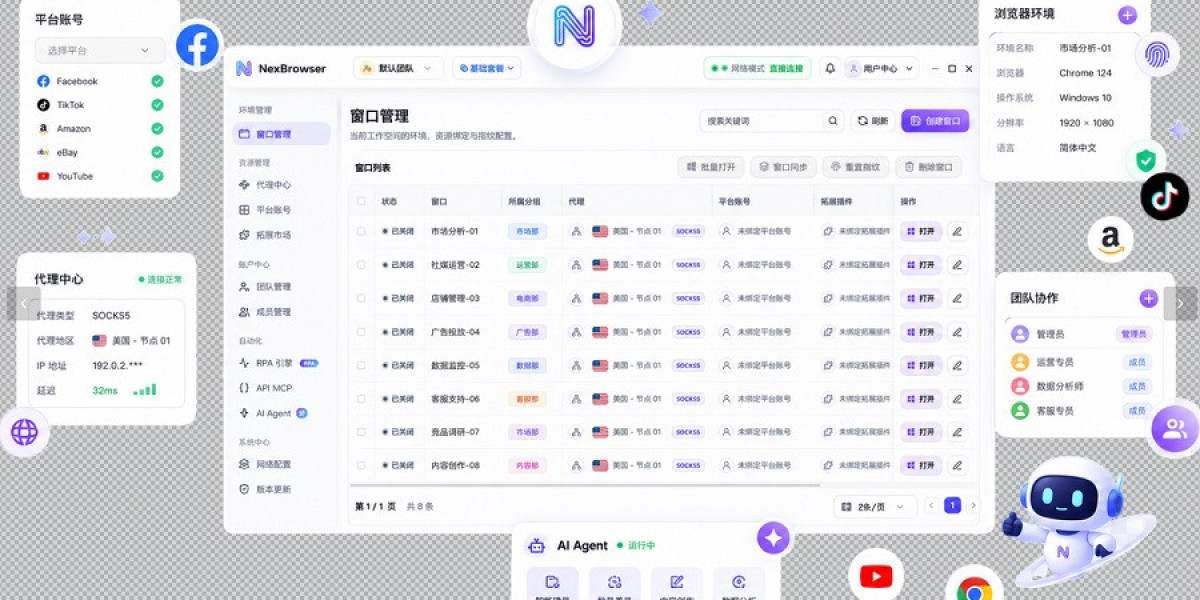

The e‑commerce browser is a category of tools that has quietly reshaped how people navigate online marketplaces. Unlike traditional browsers that simply display webpages, an e‑commerce browser is built with shopping‑specific functions at its core. Over the past few months, I have used one extensively, and the experience has been surprisingly different from what I expected. What impressed me most was not a single flashy feature, but the way multiple small details worked together to make online shopping feel more controlled, more transparent, and frankly, less tiring.To get more news about 电商浏览器, you can visit nexbrowser.net official website.
One of the defining characteristics of an e‑commerce browser is its integrated product‑analysis environment. Instead of opening dozens of tabs to compare prices, specifications, and seller reputations, the browser consolidates this information into a unified panel. For example, when browsing a product page, I can instantly view historical price trends, alternative sellers, and even cross‑platform comparisons. This eliminates the usual back‑and‑forth between different shopping apps or websites. In daily use, this detail alone saves a surprising amount of time, especially when I am researching items with many variants, such as electronics or home appliances.
Another feature that stands out is the intelligent recommendation engine. I am usually skeptical of recommendation systems because they tend to push sponsored products rather than genuinely relevant ones. However, the e‑commerce browser I tested uses behavioral patterns more thoughtfully. It analyzes browsing habits, price sensitivity, and preferred brands to surface options that feel aligned with my actual needs. For instance, when I searched for a dog harness, the browser recommended models with reinforced stitching and breathable mesh—details that matter to me because I walk my dog daily in Tokyo’s humid summers. These recommendations felt more like a knowledgeable friend offering suggestions rather than a platform trying to upsell me.
The browser also includes privacy‑focused tracking controls, which I consider essential. Many shopping platforms track user behavior aggressively, often without clear disclosure. The e‑commerce browser provides a transparent dashboard showing what data each site attempts to collect and offers one‑click blocking options. This gives me a sense of agency that traditional browsers rarely provide. I appreciate knowing that my price‑checking activities or product comparisons are not being used to manipulate future offers.
Performance is another area where the e‑commerce browser differentiates itself. Page loading feels smoother because the browser pre‑optimizes scripts commonly used by major shopping platforms. When browsing large marketplaces like Taobao or Amazon, product images load quickly, and transitions between pages feel more fluid. This may sound like a minor improvement, but when you spend long sessions researching products, these micro‑optimizations accumulate into a noticeably more pleasant experience.
From a personal perspective, what I enjoy most is the reduction of cognitive clutter. Traditional online shopping often feels chaotic: too many ads, too many pop‑ups, too many irrelevant suggestions. The e‑commerce browser filters much of this noise. It highlights essential information—price, quality indicators, seller reliability—while pushing distracting elements to the background. This design philosophy aligns with how I prefer to shop: calmly, methodically, and with enough information to make confident decisions.
Buying Advice
If you are considering adopting an e‑commerce browser, I recommend focusing on three aspects:
Feature completeness — Choose a browser that integrates price history, cross‑platform comparison, and privacy controls. These are the features that genuinely improve the shopping experience.
Recommendation quality — A good recommendation engine should feel helpful, not intrusive. Test it with a few different product categories to see whether the suggestions match your preferences.
Interface clarity — The best e‑commerce browsers reduce visual clutter. If the interface feels overwhelming, it defeats the purpose of using a specialized tool.
Final Thoughts
The e‑commerce browser is not just another digital convenience—it is a meaningful upgrade to how online shopping can be organized. Its strength lies in thoughtful details: consolidated comparisons, intelligent recommendations, privacy transparency, and smoother performance. After using it extensively, I find it difficult to return to a traditional browser for shopping tasks. If you value efficiency and clarity when navigating online marketplaces, this type of browser is worth trying.