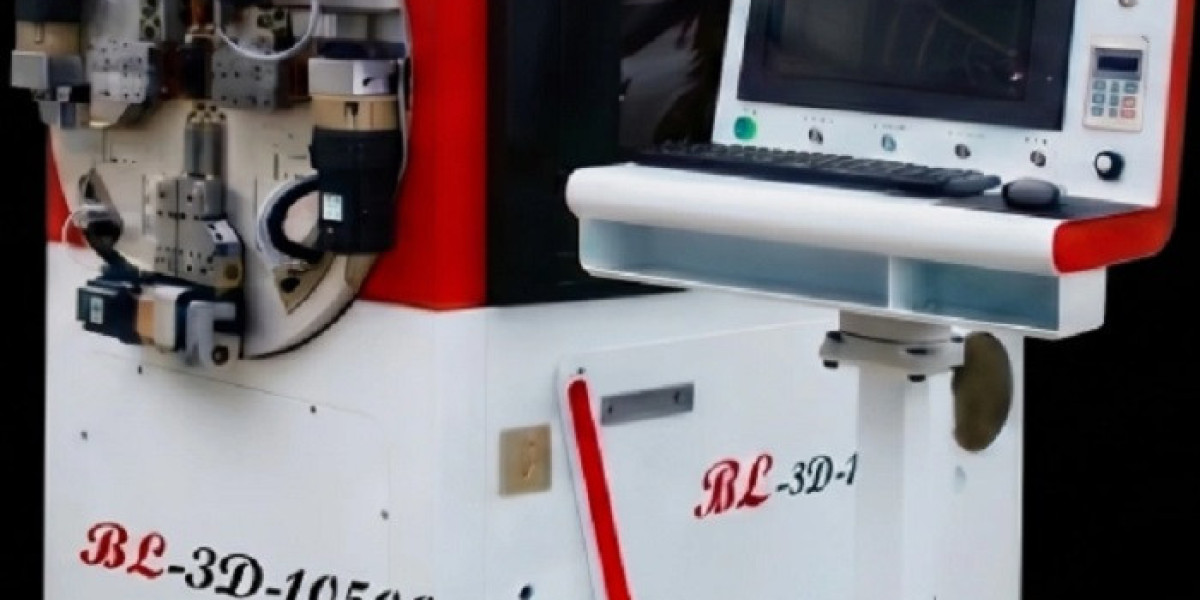

Wire looks simple at first glance. It is long, flexible, and relatively easy to handle by hand. But once a production line needs hundreds or thousands of identical bends, manual work quickly becomes slow, inconsistent, and expensive. This is where a wire bending machine becomes especially valuable. Designed to transform straight wire into carefully controlled shapes, the machine combines mechanical precision, repeatability, and production efficiency in a way that is difficult to achieve with traditional hand tools.Get more news about wire bending machine,you can vist our website!
In my view, the biggest advantage of a wire bending machine is not simply speed. It is consistency. A skilled operator can produce excellent results, but maintaining exactly the same bending angle and dimension throughout a large production run is much more difficult. An automated machine can repeat programmed movements with far greater stability, which makes it particularly useful for manufacturers producing standardized components.
Precise Bending for Consistent Results
A modern wire bending machine can be configured to perform a variety of operations, including straightening, cutting, bending, forming, and shaping. Depending on the machine design, wire can be processed into simple angles, loops, hooks, frames, springs, and more complicated three-dimensional forms.
Precision depends on several factors, including machine structure, control technology, tooling, wire diameter, and material characteristics. A rigid machine frame helps reduce unwanted movement during bending, while accurate feeding systems ensure that the correct amount of wire reaches the forming area.
This matters because even a small dimensional error can cause problems later in assembly. A component that is only slightly out of specification may no longer fit properly, especially when wire parts are used in automotive, electronics, furniture, construction, or industrial equipment.
Automation Saves More Than Time
Speed is another major reason manufacturers invest in wire bending equipment. Once the correct parameters have been programmed, the machine can perform repeated operations with limited manual intervention. This reduces the amount of time spent measuring, positioning, and manually bending individual pieces.
However, I think the more interesting benefit is the reduction in repetitive labor. Wire forming by hand can involve the same movements over and over again, which can become tiring during a long production shift. Automation allows operators to focus more on machine monitoring, quality inspection, material preparation, and other tasks that require human judgment.
For companies handling large production volumes, this can translate into more predictable output and better use of available labor.
Flexible Production for Different Wire Shapes
Not every customer needs the same wire product. One project may require a simple U-shaped component, while another may need a complicated multi-angle structure. A good wire bending machine should therefore provide enough flexibility to handle different designs.
Programmable controls are particularly useful here. Operators can adjust bending angles, feed lengths, rotation positions, and other parameters according to the required shape. When production changes from one part to another, the machine can often be reconfigured without completely changing the production process.
This flexibility is valuable for manufacturers serving multiple industries or producing customized components. Instead of relying on separate equipment for every shape, one capable machine may handle a broad range of applications.
Suitable for Different Materials
Wire is available in many materials, and each behaves differently during forming. Stainless steel is known for its strength and corrosion resistance, while carbon steel offers a practical combination of strength and cost. Aluminum wire is lighter and easier to handle in certain applications, while copper wire is commonly used where electrical conductivity is important.
A wire bending machine needs to match the characteristics of the material being processed. Machine capacity, tooling, feed mechanism, and bending method should all be considered before purchase.
This is one area where I would recommend looking beyond maximum machine specifications. A machine capable of handling a particular wire diameter on paper may not deliver the same performance with every material or shape. Real production requirements should always be the starting point.
Details That Make a Difference
Small design details can have a surprisingly large effect on daily operation. A reliable wire feeding system helps maintain stable material movement. High-quality forming tools can improve dimensional accuracy and reduce wear. Easy-to-use controls can shorten setup time, while accessible machine components make maintenance more convenient.
Safety is equally important. Guards, emergency stop systems, and properly designed operating areas help protect workers around moving components. Manufacturers should also consider how easy it is to perform routine inspections and replace consumable tooling.
A machine that is easy to maintain is often more valuable in the long run than one that simply looks impressive on a specification sheet.
What Should You Consider Before Buying?
Before selecting a wire bending machine, manufacturers should consider several practical questions. What wire diameters will be processed? Which materials are required? How complicated are the finished shapes? What production volume is expected? Is two-dimensional bending sufficient, or is three-dimensional forming necessary?
It is also worth considering software capabilities, setup time, machine footprint, tooling availability, and after-sales technical support. For a high-volume factory, reliability and production stability may matter more than having the highest possible bending speed.