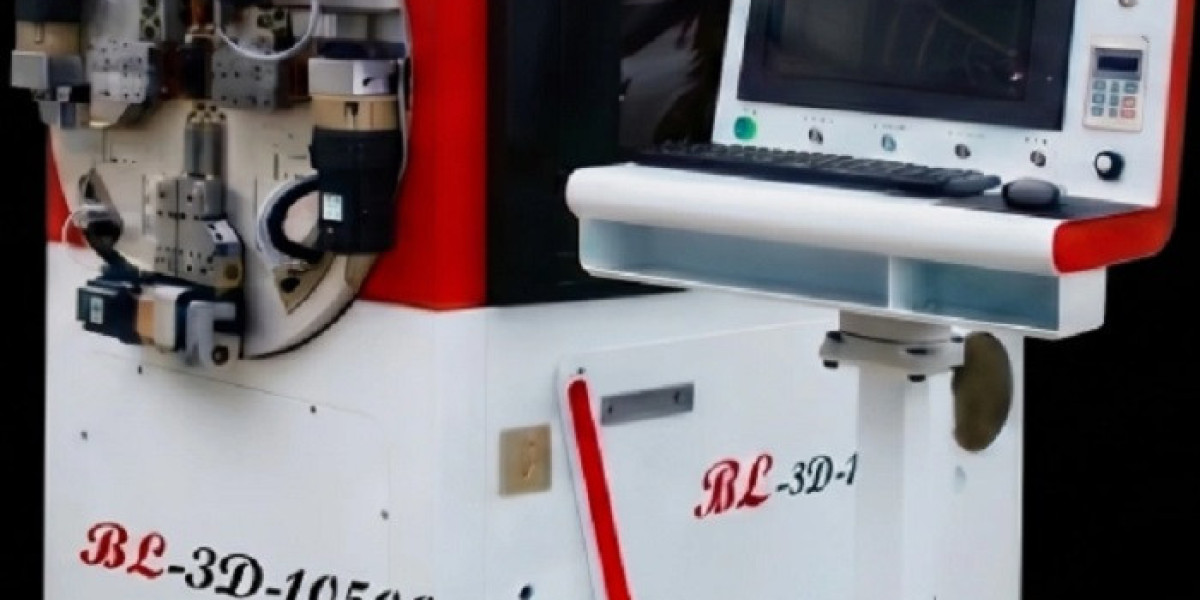

The CNC wire forming machine has become one of the most influential tools in today’s metalworking and fabrication industries. What makes it stand out is not just its ability to bend and shape wire, but the way it brings consistency, speed, and design freedom into a process that once relied heavily on manual skill. After spending considerable time observing and working with these machines, I’ve come to appreciate how their engineering details translate directly into real‑world advantages.Get more news about cnc wire forming machine,you can vist our website!
At the heart of the CNC wire forming machine is its computer‑controlled system. Instead of relying on manual adjustments, the operator inputs precise parameters into the control panel. The machine then executes each movement with remarkable accuracy. This level of control is especially valuable when working with intricate shapes or tight tolerances. In traditional bending setups, achieving identical parts required constant monitoring. With CNC technology, repeatability becomes a built‑in feature rather than a challenge.
One detail that impressed me early on is the multi‑axis capability. Many CNC wire forming machines operate with two to eight axes, allowing them to twist, bend, coil, and cut wire in a single continuous process. This eliminates the need for multiple machines or manual repositioning. Watching the machine work feels almost choreographed—the wire feeds smoothly, the bending head rotates with purpose, and each angle is executed with clean precision. It’s a reminder of how far automation has come in transforming craftsmanship into programmable performance.
Material compatibility is another strength. Whether working with stainless steel, carbon steel, copper, or aluminum, the machine adapts easily. The servo motors maintain stable force, preventing deformation or surface damage. I’ve noticed that even when switching between materials with different hardness levels, the machine maintains consistent output. This versatility makes it ideal for industries ranging from automotive and aerospace to household appliances and decorative hardware.
Speed is a factor that often gets overlooked until you see the machine in action. A CNC wire forming machine can produce complex shapes in seconds. For high‑volume production, this efficiency is invaluable. It reduces labor costs, shortens lead times, and allows manufacturers to respond quickly to market demands. In my experience, the combination of speed and accuracy is what truly sets CNC wire forming apart from older bending methods.
Another detail worth highlighting is the intuitive interface. Modern machines come with touchscreen panels, clear menus, and real‑time monitoring. Even operators with limited technical backgrounds can learn to use them effectively. The ability to store and recall programs also simplifies workflow. Once a design is perfected, it can be saved and reproduced anytime without recalibration. This is especially helpful for companies that manufacture seasonal or recurring product lines.
From a personal perspective, what I appreciate most is the reliability. The machines are built with reinforced frames, high‑quality bearings, and durable servo systems. They withstand long production hours without losing accuracy. Maintenance is straightforward—regular lubrication, cleaning, and occasional calibration keep the machine running smoothly. Compared to older mechanical benders, CNC models feel more stable and predictable, which reduces downtime and frustration.
Of course, no machine is perfect. CNC wire forming machines require an upfront investment, and operators must understand basic programming concepts. However, the long‑term benefits—higher productivity, fewer errors, and broader design capabilities—far outweigh the initial learning curve. In many workshops I’ve visited, the machine quickly becomes indispensable once integrated into daily operations.
One aspect that often surprises newcomers is the creative potential. Because the machine can execute complex geometries, designers have more freedom to experiment. Whether producing custom springs, artistic wire shapes, or specialized industrial components, the CNC system encourages innovation. I’ve seen manufacturers use it to prototype new ideas rapidly, adjusting angles or lengths on the screen and generating physical samples within minutes.
In summary, the CNC wire forming machine is more than a piece of equipment—it’s a tool that reshapes how manufacturers think about wire fabrication. Its precision, speed, versatility, and reliability make it a cornerstone of modern production. For anyone considering upgrading their workshop or expanding their manufacturing capabilities, this machine offers a compelling blend of performance and practicality. It’s not just about bending wire; it’s about elevating the entire process.