
Myopia, or nearsightedness, is one of the fastest-growing eye health concerns in children today. The condition begins when the eye elongates beyond its ideal shape. This excessive growth causes distance objects to appear blurry and unclear. What many parents do not realize is that myopia can worsen significantly year after year. Specialized optical lens technology now offers a clinically validated approach to slowing this progression.
The Problem With Standard Corrective Lenses
Standard eyeglasses and conventional contact lenses serve one purpose effectively. They correct existing blurry vision by adjusting how light enters the eye. A child wearing standard glasses sees clearly while wearing them. However, standard lenses do nothing to address the underlying process causing vision to worsen. The eye continues to grow and elongate regardless of what standard corrective lenses are in use.
This is a critical distinction that parents often miss. Wearing stronger glasses each year feels like the condition is being managed. In reality, each stronger prescription represents another year of unaddressed progression. The eye has grown longer, and the glasses have simply kept pace. Without addressing the growth mechanism itself, the final adult prescription continues climbing.
High myopia, defined as a prescription beyond negative six diopters, significantly increases the risk of serious eye disease. Retinal detachment, myopic maculopathy, and early glaucoma are all associated with high prescription levels. These complications can cause permanent vision loss with lifelong consequences. The goal of specialized lens technology is to prevent children from reaching these dangerous prescription levels. Addressing the growth mechanism early in life offers the most meaningful protection.
Understanding the Peripheral Defocus Mechanism
To understand how specialized lenses work, it helps to understand the mechanism driving myopia. Research has established that the peripheral retina plays a crucial role in regulating eye growth. The central retina processes the clear, focused image we use for tasks like reading. However, the peripheral retina also receives light signals that influence how the eye develops.
With standard corrective lenses, the central visual field is corrected accurately. The peripheral retina, however, may continue to receive a myopic defocus signal. This peripheral signal can act as a biological stimulus encouraging further axial elongation. The eye essentially continues growing in an attempt to achieve better peripheral focus. Specialized lens designs address this problem directly by modifying peripheral retinal signals.
Myopic defocus is deliberately introduced across the peripheral retinal field by specialized lens designs. This peripheral signal communicates that the eye has grown sufficiently and does not need to elongate further. The biological response is a measurable reduction in axial growth rate. Multiple international clinical trials have validated this mechanism across diverse pediatric populations. The results consistently confirm that specialized lenses reduce axial elongation compared to standard prescription lenses.
How Specialized Soft Contact Lenses Are Designed
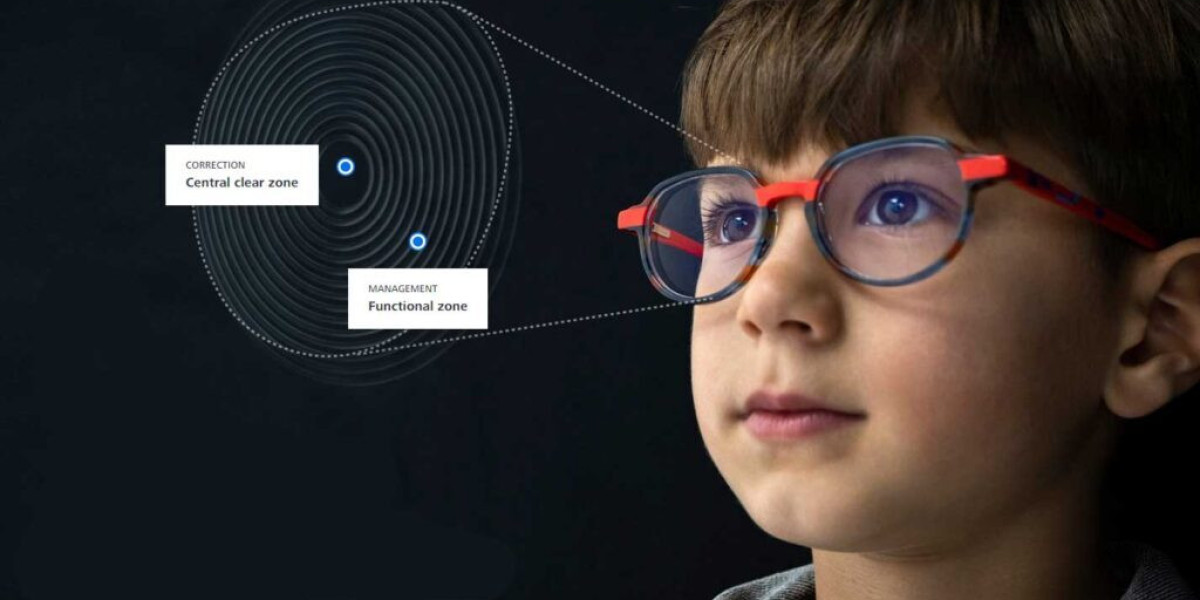
Soft specialized contact lenses use concentric optical zone designs to achieve their therapeutic effect. The lens surface is divided into alternating zones of different optical power. The central zone provides accurate distance correction, keeping the child's vision clear. Surrounding concentric zones are engineered to create targeted myopic defocus across the peripheral retinal field.
The engineering precision behind this design is remarkable. Optical modeling software is used to calculate exact zone dimensions and power profiles. Clinical trials validate each design before it is made commercially available. Different lens brands use slightly different zone configurations based on their specific research findings. An experienced optometrist selects the most appropriate brand and design for each individual patient.
Myopia control contact lenses in daily disposable format are ideally suited for most children. Daily replacement eliminates the hygiene concerns associated with reusable lens care. A fresh, sterile lens each morning maximizes comfort and minimizes infection risk. Children adapt to soft contact lens wear more readily than most parents expect. The fitting process includes professional instruction in insertion, removal, and basic eye care awareness.
What Clinical Research Shows About Effectiveness
The clinical evidence supporting specialized lens use in childhood myopia is substantial. Randomized controlled trials represent the gold standard of clinical evidence. Multiple such trials have been conducted across several countries with diverse pediatric populations. All consistently demonstrate that children wearing specialized lenses show reduced axial elongation. The magnitude of reduction varies by lens design but is clinically meaningful across all tested options.
Some trials report reductions in axial elongation rate of 40 to 60 percent compared to standard glasses. This means that over a clinical trial period of one to three years, treated children grew their eyes significantly less. The difference compounds over the full span of the growth years. A child who progresses at half the rate for a decade reaches adulthood with a substantially lower prescription. This lower final prescription translates directly into reduced lifetime risk of serious ocular complications.
Long-term follow-up data from extended trials also supports the durability of these effects. Children who wore specialized lenses during active growth years maintained their prescription advantages into early adulthood. This persistence of benefit confirms that the treatment addresses real biological changes in eye growth. Parents can be confident that the investment in specialized lens management produces genuine and lasting clinical returns.
Orthokeratology: Specialized Rigid Lens Therapy
Orthokeratology represents a distinct category of specialized lens therapy. These rigid gas-permeable lenses are worn exclusively during sleep. They work by gently reshaping the corneal surface through controlled overnight pressure. When removed in the morning, the reshaped cornea provides clear vision throughout the day without any lens wear. This lens-free daytime benefit is particularly appealing for active, sporty children.
The myopia management benefit comes from how corneal reshaping modifies peripheral retinal signals. The reshaped corneal periphery produces the same therapeutic peripheral defocus effect as specialty soft lenses. Children wearing orthokeratology lenses show consistent reductions in axial elongation rates in clinical studies. Some studies suggest orthokeratology may produce slightly stronger effects than specialty soft lenses in certain patient profiles. An optometrist assesses individual suitability based on corneal anatomy and prescription range.
Fitting orthokeratology lenses requires specialized clinical training and diagnostic equipment. Corneal topography maps the exact dimensions and curvature of each patient's cornea. This data guides precise lens design and parameter selection. Follow-up topography confirms that the reshaping effect is achieving the desired therapeutic outcome. Regular professional monitoring throughout the treatment course ensures safety and effectiveness.
Combining Lenses With Atropine for Enhanced Effect
Some children experience progression that is faster than specialty lenses alone can adequately address. In these cases, combining optical interventions with pharmaceutical support is increasingly recommended. Low-dose atropine eye drops, typically at concentrations of 0.01% to 0.05%, are added to the treatment plan. The drops are instilled once each evening and work through mechanisms separate from optical defocus modification.
Atropine is believed to act on muscarinic receptors in the retinal and scleral tissue. This direct tissue-level action reduces the biological signals driving axial elongation. Because its mechanism differs from the optical peripheral defocus approach, the effects are additive. Children receiving both treatments show greater slowing than those receiving either treatment alone. This combined approach is particularly beneficial for fast progressors who need stronger intervention.
Monitoring at regular intervals guides decisions about atropine dosage and lens management. The optometrist adjusts the plan based on ongoing axial length measurements. A favorable treatment response is reflected in stable or slowing axial length readings. Fast or unexpected progression prompts plan escalation or modification. This responsive approach ensures each child receives the most effective management possible.
Practical Considerations for Parents
Introducing specialized contact lens wear requires some practical preparation. Most children aged eight and older are capable of wearing and caring for soft contact lenses. The optometrist assesses maturity and motivation before recommending lenses for a specific child. Daily disposable lenses simplify the routine by eliminating cleaning and storage requirements. Children insert a fresh lens each morning and discard it in the evening.
The first fitting appointment includes detailed instruction in lens handling. Children practice insertion and removal under professional supervision. Most children achieve confident, independent lens handling within the first few days of practice. Parents who approach lens wear positively and supportively help children adapt more quickly. Making lens insertion part of the morning routine reduces resistance and builds consistency.
Annual or semi-annual monitoring appointments track the treatment's effectiveness. Axial length measurements at each visit reveal whether progression is being adequately slowed. Prescription updates ensure the corrective power of the lens remains appropriate. Corneal health is assessed at every visit to confirm ongoing safety. Parents receive clear communication about their child's progress at every stage of the management program.
The Lifelong Impact of Early Lens-Based Management
The benefits of early specialized lens management extend well beyond the years of active treatment. Children whose progression is slowed during growth years enter adulthood with lower prescriptions. Lower prescriptions mean a significantly reduced risk of serious ocular complications throughout life. The risk of retinal detachment, macular degeneration, and glaucoma all decrease as prescription level decreases. Each diopter prevented during childhood represents a meaningful improvement in lifetime eye health probability.
Quality of life is also meaningfully better with lower adult prescriptions. Contact lens and glasses prescriptions are thinner, lighter, and less optically distorting. Surgical vision correction such as LASIK becomes more accessible at lower prescription levels. Participation in activities without corrective lenses is more feasible at moderate than at high myopia levels. The comprehensive benefit of specialized childhood lens management justifies every appointment, every lens cost, and every year of committed treatment.