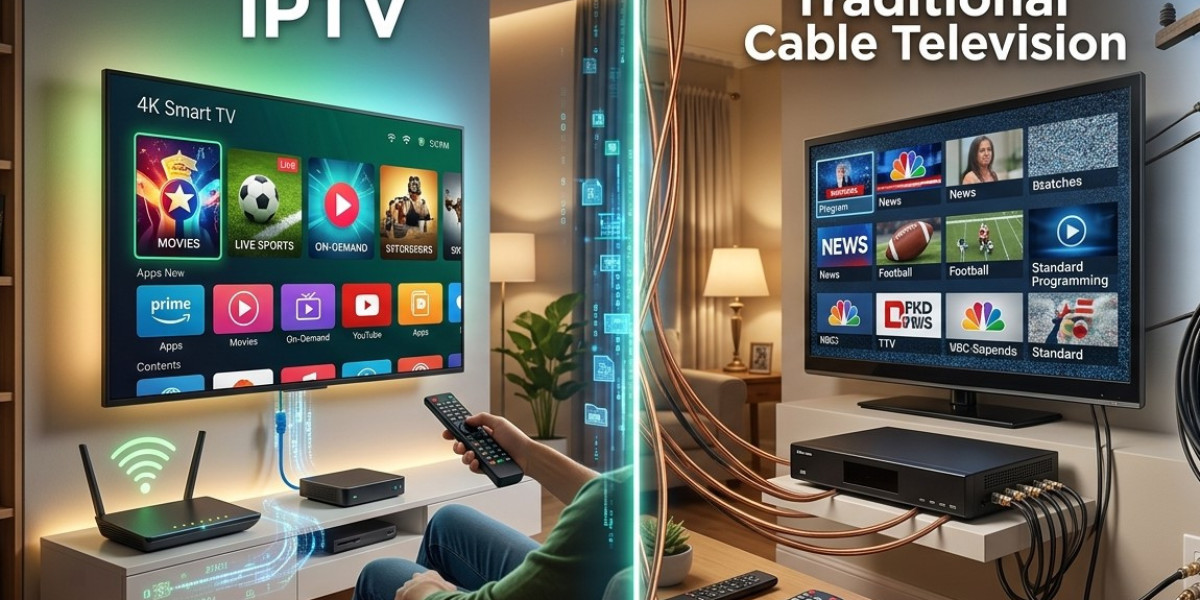

Television has changed significantly over the last few decades. Traditional cable television was once the standard way for households to access live channels, movies, sports, news, and entertainment. Today, internet-based television has introduced another option:IPTV.
For viewers in the USA, the choice between IPTV and traditional cable can depend on several factors, including channel preferences, internet connectivity, equipment, pricing, viewing flexibility, and the type of programming a household wants.
For Indian families living in the United States, the comparison can be even more important. Many households want access to Hindi entertainment, regional Indian channels, Indian news, movies, sports, and other familiar programming alongside the American content they already watch.
This is why terms such asIndian IPTV USA,Indian IPTV subscription, andIndian IPTV Boxare increasingly relevant when families explore television options.
But what exactly is the difference between IPTV and traditional cable television? Which one provides more flexibility? Does IPTV always cost less? Is cable still useful? And what should families consider before choosing a service?
Let's explore the differences in detail.
What Is Traditional Cable Television?
Traditional cable television delivers television programming through a cable network connected to a customer's home.
A cable provider generally supplies a package of channels, with the television receiving those signals through the provider's infrastructure.
Depending on the provider and package, cable television can include:
- Local channels
- National news
- Sports
- Movies
- Entertainment
- Children's programming
- International channels
- Premium channels
- Specialty networks
Cable has been a popular television technology for decades because it provides households with a structured selection of channels through a dedicated television service.
A cable subscription may also include additional services such as internet and telephone, depending on the provider.
What Is IPTV?
IPTV stands forInternet Protocol Television.
Instead of delivering television through a traditional cable network, IPTV uses internet-based networks to deliver supported television programming.
This doesn't simply mean watching a YouTube video or using any streaming application. IPTV generally refers to television content delivered through IP networks as part of a managed or provider-supported service.
Depending on the provider, IPTV may include:
- Live television
- Indian regional channels
- News
- Sports
- Movies
- Entertainment
- Catch-up programming
- Replay features
- On-demand content
The exact features and content vary by provider, device, subscription, and licensing arrangements.
IPTV vs. Cable: The Basic Difference
The easiest way to understand the distinction is to look at how the content reaches your television.
Traditional cable:
Television programming is delivered through the cable provider's physical network.
IPTV:
Television programming is delivered through an internet-based IP network.
Both can provide live television.
Both can offer large channel packages.
Both can require compatible equipment.
But the underlying delivery method is different.
1. IPTV Depends on an Internet Connection
One of the most important differences is internet dependence.
Traditional cable television generally receives television signals through the cable provider's network.
IPTV relies on internet connectivity or an IP-based network.
This means IPTV users need a suitable internet connection and home network.
If the internet connection is unstable, other household activities may also affect the viewing experience.
For example, a family might simultaneously be:
- Watching IPTV
- Video calling
- Gaming
- Downloading files
- Working from home
- Using multiple streaming services
A well-performing home network can therefore be important for a smooth IPTV experience.
2. Cable and IPTV Use Different Equipment
Cable television typically requires equipment provided or supported by the cable company.
This may include a cable box or other receiver.
IPTV can be accessed through various compatible devices, depending on the provider.
These may include:
- Smart TVs
- Streaming devices
- Mobile devices
- Computers
- Compatible IPTV applications
- IPTV boxes
AnIndian IPTV Boxcan be useful for households that prefer a dedicated television setup.
However, device compatibility varies between providers.
Families should always check whether a particular IPTV box is supported before purchasing it.
3. IPTV Can Offer Greater Device Flexibility
One reason some households are interested in IPTV is that television is no longer limited to one physical television set.
Depending on the service, viewers may be able to access content on supported Smart TVs, mobile devices, tablets, computers, or streaming hardware.
This can make television more flexible for modern households.
However, consumers should check the provider's current device and simultaneous-stream policies.
A service might support several registered devices but restrict how many can stream simultaneously.
4. Traditional Cable Is Often Designed Around the Television
Cable television remains particularly familiar to many households.
You turn on the television, choose a channel, and watch.
For viewers who don't want to manage multiple applications or internet-connected devices, this simplicity can still be attractive.
This can be especially important for older family members.
Grandparents may prefer a traditional remote and channel guide instead of navigating multiple streaming platforms.
IPTV services can also provide a channel-based experience, particularly when used with a compatibleIndian IPTV Box, but the exact interface depends on the provider and device.
5. IPTV Can Be Attractive to Indian Families Abroad
One of the major reasons Indian families in the USA explore IPTV is access to relevant Indian programming.
Traditional American cable packages may not always provide the specific combination of Indian channels a household wants.
Families may be interested in:
- Hindi channels
- Punjabi channels
- Tamil channels
- Telugu channels
- Malayalam channels
- Bengali channels
- Marathi channels
- Gujarati channels
- Kannada channels
- Indian news
- Indian entertainment
- Indian movies
- Sports
For these households, anIndian IPTV USAservice may be worth researching if it offers the desired programming through an authorized distribution arrangement.
6. Channel Count Doesn't Tell the Whole Story
Both cable and IPTV providers can advertise large channel packages.
However, the number of channels isn't necessarily the best way to determine value.
A household may have access to 500 channels but regularly watch only 20.
A smaller package containing the family's favorite Indian and regional channels could therefore be more useful.
When comparing anIndian IPTV subscriptionwith cable, families should ask:
Which channels do we actually watch?
That question is often more valuable than simply comparing channel counts.
7. Regional Indian Channels Can Be a Major Difference
For Indian households abroad, regional programming can be extremely important.
India's television industry includes a large number of language-specific channels.
A Telugu family may prioritize Telugu programming.
A Tamil family may want Tamil entertainment.
A Punjabi household may follow Punjabi news and movies.
A Malayalam-speaking family may want Malayalam serials and regional news.
Therefore, consumers should check the specific channel lineup offered by a service.
A package marketed as "Indian TV" should not automatically be assumed to include every regional language.
8. Live TV Is Available Through Both Technologies
It is incorrect to assume that IPTV is only for on-demand viewing.
IPTV can provide live television, depending on the provider.
Viewers can potentially watch:
- Live news
- Sports
- Entertainment
- Special events
- Regional programming
- Cultural broadcasts
This means IPTV can replicate one of the most familiar aspects of cable television: scheduled live TV.
The difference is primarily how the programming is delivered.
9. IPTV May Provide More Flexible Viewing Features
Depending on the provider, IPTV can combine live television with additional features.
These may include:
- Catch-up
- Replay
- Electronic program guides
- On-demand programming
- Search
- Favorites
- Multi-device support
Such features can be useful for families whose schedules don't match television schedules.
For example, an Indian program might air at an inconvenient time in the USA because of the time difference.
If a legitimate catch-up or replay feature is available, viewers may be able to watch it later.
However, these features are not universal. Families should check exactly what each provider offers.
10. Cable Can Also Provide Advanced Features
Traditional cable shouldn't be viewed as outdated technology with no modern capabilities.
Many cable providers offer features such as:
- DVR recording
- On-demand content
- Program guides
- Mobile applications
- Streaming integrations
- Multi-room services
Therefore, the comparison isn't simply "old cable versus modern IPTV."
Cable has also evolved.
The real question is which service provides the features a particular household needs.
11. Pricing Can Be Difficult to Compare
Many people assume IPTV is always cheaper than cable.
That isn't necessarily true.
Pricing varies significantly between providers.
Cable packages may include:
- Television
- Equipment rental
- Premium channels
- DVR services
- Internet bundles
IPTV subscriptions may have different pricing structures.
Families should compare the total cost rather than looking only at the advertised monthly price.
Consider:
- Subscription fees
- Equipment costs
- Installation
- Internet costs
- Premium content
- Additional devices
- Taxes or applicable charges
- Contract requirements
- Cancellation terms
If IPTV requires an internet connection that the household wouldn't otherwise have, that cost should also be considered.
12. Internet Costs Matter When Choosing IPTV
Because IPTV depends on internet connectivity, the cost of a suitable internet plan is part of the overall television setup.
Many households already have broadband internet, so this may not represent an additional television-specific cost.
But families should still make sure their internet plan and home network can support their viewing habits.
A household with several simultaneous internet activities may need to pay attention to network performance.
13. Cable Can Be Convenient for Households That Want One Provider
One advantage of traditional cable is that the household may already have an established relationship with the provider.
A single company may offer:
- Television
- Internet
- Phone service
- Equipment
- Technical support
Bundling can simplify billing and support.
For some families, this convenience may outweigh the potential flexibility of IPTV.
14. IPTV Can Provide a Different Kind of Convenience
IPTV can be attractive to viewers who prefer internet-connected television.
Instead of relying on a traditional cable connection, households can access compatible services through supported devices.
This can be particularly useful for families that already use Smart TVs and other connected devices.
The experience can feel more integrated with the way people use modern technology.
15. Picture Quality Depends on Multiple Factors
Both cable and IPTV can provide high-quality television.
Picture quality isn't determined solely by whether the service is cable or IPTV.
It can depend on:
- Source quality
- Provider infrastructure
- Internet connection
- Home network
- Device
- Television resolution
- Compression
A high-resolution TV won't automatically produce excellent IPTV video if the underlying service or network is poor.
Likewise, cable quality can vary by provider and network.
16. Reliability Is Important for Both
Every television technology can experience technical issues.
Cable problems might include:
- Network outages
- Equipment failures
- Weather-related disruptions
- Signal issues
IPTV problems might involve:
- Internet outages
- Network congestion
- Router problems
- Application errors
- Device compatibility
This is why consumers should evaluate the reliability and support reputation of the provider they are considering.
17. Customer Support Can Influence the Overall Experience
Television is something households expect to work when they turn it on.
If something goes wrong, customer support becomes important.
Before subscribing to an IPTV service, consumers should check how support is provided.
For example:
- Is there a support team?
- Are setup instructions available?
- Are compatible devices clearly listed?
- Is troubleshooting assistance offered?
- Are subscription terms easy to understand?
Cable providers generally have established support infrastructure, but IPTV providers vary considerably.
This makes provider selection especially important.
18. Legal and Authorized Content Matters
One of the most important differences isn't technical at all.
The IPTV market includes legitimate services as well as services that may not have appropriate rights to distribute the programming they offer.
Consumers should choose providers that are authorized to distribute their television content.
This is especially important when a service advertises an unusually large number of premium channels at an unusually low price.
A responsible consumer should ask:
Does this provider have the necessary rights to distribute the content being offered?
The answer matters more than simply finding the cheapest package.
IPTV vs. Cable for Indian Families in the USA
Let's consider a typical Indian household.
The grandparents primarily watch regional Indian news and serials.
The parents watch Indian news, movies, entertainment, and sports.
The children watch American programming and occasionally Indian movies.
Traditional cable may provide some Indian channels, but the household may need an additional service to access its preferred regional programming.
AnIndian IPTV USAservice may provide another option if it offers the family's desired channels and is authorized to distribute them.
The household could then use its existing internet connection and compatible television hardware.
The right choice depends on the actual channel lineup, cost, device compatibility, and features.
Indian IPTV Box vs. Cable Box
The hardware experience can also differ.
A traditional cable box is generally tied to the cable provider.
AnIndian IPTV Box, by contrast, may be used to access a compatible IPTV service through an internet connection.
The IPTV box may offer a familiar remote-controlled television experience.
However, buyers should avoid assuming that an IPTV box itself guarantees access to any particular television service.
The device and content provider are separate considerations.
Always verify compatibility and use the device with an authorized service.
IndianIPTVUSA.com and IPTV in the USA
Families searching forIndian IPTV USAservices may encounterIndianIPTVUSA.comwhile researching options.
If considering the brand, viewers should review current information about:
- Indian channels
- Regional programming
- Live TV
- Supported devices
- Indian IPTV Boxcompatibility
- Pricing
- Customer support
- Subscription terms
- Available viewing features
Because channel lineups, pricing, applications, and supported devices can change, consumers should verify the latest information before subscribing.
As with any IPTV provider, viewers should also make sure that the service is properly authorized to distribute the content it offers.
Which Is Better: IPTV or Cable?
There is no single answer.
IPTV may be attractive if you:
- Already have reliable broadband
- Want Indian regional programming
- Prefer internet-connected television
- Want flexible device options
- Value features such as catch-up where available
- Want to explore alternatives to traditional cable
Cable may be attractive if you:
- Prefer a traditional television setup
- Want bundled internet and TV services
- Prefer established local support
- Don't want television to depend on a separate internet service
- Like a conventional cable-box experience
The best choice depends on the household.
Questions to Ask Before Choosing
Before selecting IPTV or cable, ask:
- Which channels does my family actually watch?
- Are our preferred Indian regional channels included?
- Do we need live sports?
- Do we want Indian news?
- Do we need catch-up or on-demand features?
- What devices will we use?
- Do we need anIndian IPTV Box?
- How reliable is our home internet?
- What is the total monthly cost?
- Are there equipment or activation fees?
- What customer support is available?
- Is the content properly authorized?
These questions can make the decision much easier.
Final Thoughts
So, what is the difference between IPTV and traditional cable television?
The biggest difference ishow television content is delivered.
Traditional cable uses a cable provider's network, while IPTV uses internet-based networks. But the practical differences extend beyond delivery technology.
IPTV can offer flexibility across compatible devices and may be particularly appealing to Indian families looking for regional Indian programming in the USA. Traditional cable can remain attractive because of its familiar setup, established support, and bundled services.
For Indian households, the most important issue may not be whether IPTV is technically newer than cable.
It may be whether the service provides theright Indian channels, regional programming, live television, useful features, reasonable pricing, reliable performance, and easy access for every member of the family.
AnIndian IPTV Boxcan provide a convenient television-centered experience for households that prefer dedicated hardware, provided it is compatible with the selected service.
Families researchingIndian IPTV USAoptions may also come acrossIndianIPTVUSA.com. Before subscribing, viewers should review current channel availability, pricing, device compatibility, support, features, and subscription terms.
Most importantly, consumers should choose television services that are authorized to distribute the content they offer.
Ultimately, IPTV and cable are not simply a battle between old and new technology. They are two different approaches to television delivery, each with its own strengths.
The best choice is the one that fits your household'scontent preferences, technology setup, budget, viewing habits, and need for flexibility.