
Preparing for an HIV blood test is usually simple. Most standard HIV blood tests do not require fasting or complicated preparation, but knowing what to expect can make the appointment easier and help you understand the result correctly.
The most important preparation is not about food or physical activity. It is about knowing when the possible exposure occurred, which HIV Blood Test in Dubai you are taking, and how the test window period affects the result.
Whether you are getting tested as part of routine healthcare, after a potential exposure, or because you want reassurance about your HIV status, this guide explains how to prepare from the moment you schedule the test until you receive the result.
Start With the Most Important Detail: When Was the Possible Exposure?
Before your HIV blood test, think about the date of any situation that may have exposed you to HIV.
You do not need to remember every detail perfectly. An approximate date can still help a healthcare professional understand whether you may be testing during the HIV window period.
The window period is the time between HIV infection and the point when a particular test can reliably detect it. Different HIV tests have different detection windows.
For example, HIV.gov states that a laboratory antigen and antibody test using blood from a vein can usually detect HIV about 18 to 45 days after exposure. A nucleic acid test can generally detect HIV around 10 to 33 days after exposure, while antibody tests may take approximately 23 to 90 days.
This is why the date of possible exposure is one of the most useful pieces of information to provide during your appointment.
Do You Need to Fast Before an HIV Blood Test?
For most standard HIV blood tests, fasting is not required.
You can generally eat and drink normally before an HIV test unless your healthcare provider has instructed you to fast because other blood tests are being performed at the same appointment.
If you are unsure, contact the testing facility beforehand and ask whether any preparation is required.
Drinking water can also be helpful because being adequately hydrated may make a blood draw easier, particularly if your veins are difficult to access.
What Information Should You Take With You?
You usually do not need to bring anything complicated to an HIV testing appointment. However, having some basic information available can make the consultation more useful.
Consider knowing:
The approximate date of a potential HIV exposure
Whether you have previously had an HIV test
The date of your most recent HIV test, if applicable
Any medications you currently take
Whether you have recently used HIV prevention medication
Any questions you have about HIV testing or prevention
If you have medical records or previous HIV test results, bring them if your healthcare provider requests them.
You should also ask how the result will be delivered and how long the laboratory expects the test to take.
Tell the Healthcare Professional About Recent HIV Exposure:
There is no need to hide information because you are worried about judgment. Healthcare professionals ask about sexual health and possible exposure to provide appropriate medical care.
Tell the provider if you recently had:
Unprotected vaginal or anal sex
A condom failure
Shared injection equipment
Another situation you believe could have exposed you to HIV
The timing and nature of an exposure can influence which HIV test is appropriate and whether additional testing is needed.
It can also determine whether emergency prevention may be available.
A Recent Exposure May Require More Than a Routine HIV Test:
If a possible HIV exposure occurred very recently, especially within the previous 72 hours, do not simply wait for a routine test.
Post-exposure prophylaxis, or PEP, is medication that can reduce the risk of HIV infection after a potential exposure. It is most effective when started as soon as possible and must be started within 72 hours of exposure. HIV.gov recommends seeking medical care promptly when PEP may be appropriate.
A healthcare professional can assess your situation and determine whether PEP, HIV testing, or follow-up testing is appropriate.
This is especially important because a test performed immediately after exposure cannot necessarily rule out a newly acquired HIV infection.
Know Which HIV Blood Test You Are Getting:
Not every HIV test detects infection in the same way.
A commonly used laboratory test is an HIV antigen and antibody test. It looks for both antibodies produced by the immune system and the p24 antigen associated with HIV.
Another test, called a nucleic acid test, detects HIV genetic material. NAT testing can identify infection earlier than some antibody-based tests but may not be routinely used for every screening situation.
Understanding which test you are taking can help you interpret the window period and understand when a negative result is considered reliable.
If the testing provider has not explained the test type, it is reasonable to ask.
What Happens During the Blood Test?
Once you arrive, the healthcare professional may ask a few questions about your health and potential exposure before collecting your sample.
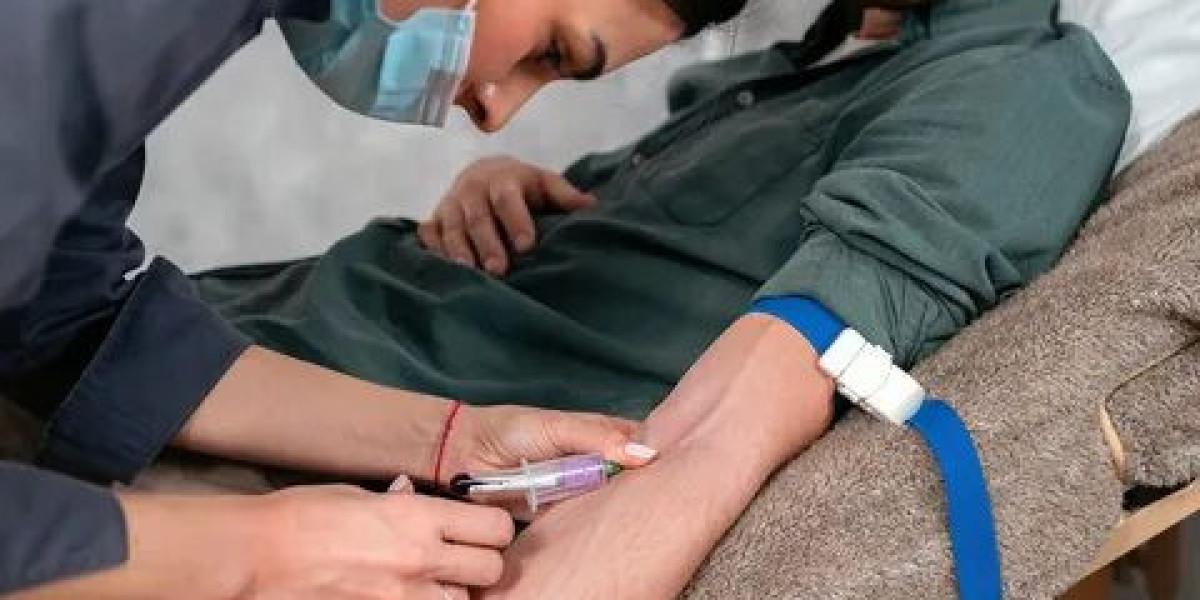
For a laboratory HIV blood test, blood is usually drawn from a vein in your arm.
The professional will clean the skin, insert a sterile needle, collect the required blood sample, and then remove the needle. The procedure typically takes only a few minutes.
You may feel a brief pinch or slight pressure. Mild soreness or a small bruise can occur afterward, but most people can return to normal activities.
If you are nervous about needles, tell the person collecting your blood before the procedure. They can help you remain comfortable and seated safely.
Should You Stop Taking Medication Before HIV Testing?
Do not stop prescription medication simply because you are preparing for an HIV test unless a qualified healthcare professional specifically tells you to do so.
Tell your healthcare provider about medications you are taking, including HIV-related medications such as PrEP or PEP.
HIV prevention medications can affect how HIV infection is detected and may influence the recommended testing approach. Your provider can interpret your testing needs in light of your medication history.
Never change or discontinue prescribed medication without professional medical advice.
What If You Are Taking PrEP?
If you use pre-exposure prophylaxis, or PrEP, tell the healthcare professional before testing.
PrEP is medication used by people who do not have HIV to reduce their risk of acquiring HIV. People taking PrEP are typically monitored with regular HIV testing as part of their care.
Your provider can recommend the appropriate testing schedule and explain how your medication affects the testing process.
If you have missed PrEP doses or recently experienced a potential exposure, mention this as well. Accurate information helps your provider make an appropriate assessment.
How Should You Prepare Mentally for the Result?
The waiting period can sometimes feel more difficult than the blood draw itself.
Try to remember that getting tested does not mean that you have HIV. It means you are taking a responsible step to understand your health.
Avoid trying to diagnose HIV based on symptoms alone. HIV can cause no obvious symptoms for a long time, and symptoms that occur after an exposure can have many other causes.
Instead, focus on the test result and the timing of testing.
If anxiety is affecting you significantly, consider asking the testing provider when the result will be available and whether counseling or support is available at the testing location.
What Does a Negative Result Mean?
A negative HIV test means that HIV was not detected by the test.
However, if the test was taken during the window period, a negative result may not completely rule out a recent infection.
If your provider recommends repeat HIV testing, follow the suggested schedule. Testing after the appropriate window period can provide greater confidence about your status.
A negative result also does not protect you from future exposure. If there is ongoing risk, discuss HIV prevention options such as condoms, PrEP, and regular testing with a healthcare professional.
What If the Result Is Reactive?
A reactive HIV screening test is not necessarily a confirmed HIV diagnosis.
Additional testing is required to determine whether HIV infection is actually present. Modern HIV testing uses established testing algorithms to reduce the risk of an incorrect diagnosis.
The World Health Organization recommends validated testing strategies and confirmation of HIV infection rather than relying on a single reactive screening result.
If your screening test is reactive, the healthcare provider will explain the next steps and arrange appropriate follow-up testing.
Questions to Ask Before You Leave the Testing Center:
Before completing your appointment, consider asking:
What type of HIV test was performed?
Knowing the test type helps you understand its window period.
When will I receive my result?
The turnaround time can vary between rapid and laboratory testing.
Do I need another HIV test?
If you tested soon after a potential exposure, repeat testing may be recommended.
How will I receive my result?
Ask whether the result will be provided in person, through a secure online system, by phone, or through another method.
What should I do if the result is reactive?
Knowing the follow-up process in advance can reduce uncertainty.
A Simple Preparation Checklist:
You generally do not need elaborate preparation for an HIV blood test. Focus on the essentials:
Remember the approximate date of any possible exposure.
Ask which HIV test will be used.
Confirm whether fasting is necessary, especially if other blood tests are being performed.
Continue prescribed medications unless your healthcare provider instructs otherwise.
Tell the provider about PrEP, PEP, or other relevant medications.
Ask when and how you will receive your result.
Find out whether repeat testing may be necessary.
Seek urgent medical advice about PEP if a possible exposure occurred within the previous 72 hours.
Final Thoughts: Preparation Is Mostly About Timing
Preparing for an HIV blood Lab tests is usually much easier than people expect. You generally do not need to fast, change your daily routine, or follow complicated instructions.
The most important preparation is understanding when the test is being performed in relation to a possible HIV exposure. The type of test also matters because different HIV tests have different detection windows.
A healthcare professional can help you determine whether your test is appropriate for the timing of your exposure and whether follow-up testing is needed.
If you are concerned about HIV, getting tested is a practical step toward knowing your status. Approach the appointment with accurate information, be honest with the healthcare provider about possible exposure and medications, and follow the recommended testing schedule for the most meaningful result.