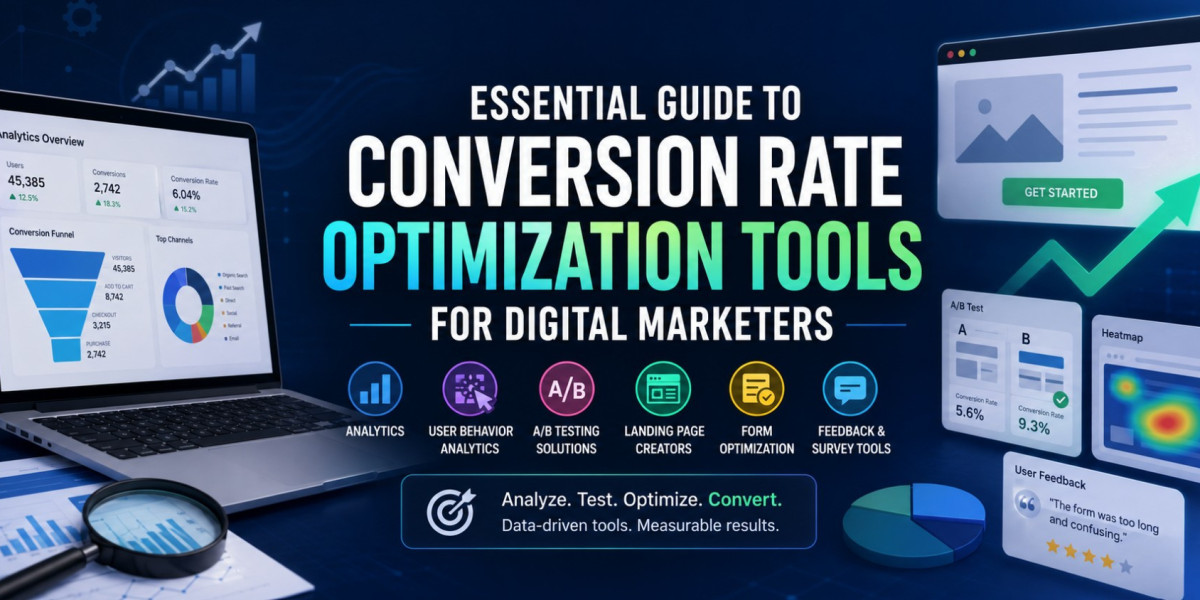

Conversion rate optimization has evolved from a buzzword into a core discipline for high-performing digital marketing teams. Businesses invest heavily in website traffic, but without systematic optimization, much of that investment leaks away as missed conversions. This guide explores the most impactful conversion rate optimization tools, what they do, why they matter, and how to deploy them for maximum returns.
Understanding Conversion Rate Optimization
Conversion rate optimization, often abbreviated as CRO, is focused on increasing the percentage of website visitors who take a desired action. This may include making a purchase, filling out a form, subscribing to a newsletter, or another key engagement metric. Successful CRO requires a blend of data analysis, psychological insight, and continuous iteration.
Why CRO Tools Matter
The right CRO tools empower marketers and website owners to systematically uncover friction points in the conversion process and address them efficiently. Rather than guessing, teams can run experiments, analyze behaviors, and measure the impact of each change. For today’s competitive market, these tools are not optional, they are foundational.
Categories of Conversion Rate Optimization Tools
CRO tools allow professionals to approach optimization from multiple perspectives and phases of the user journey. Below are the primary categories:
Analytics Platforms
Analytical tools track, aggregate, and visualize visitor behavior. Notable platforms include Google Analytics and advanced solutions that offer real-time tracking of specific events and conversion funnels. These platforms help you measure conversion rates, identify traffic sources, and evaluate which campaigns are driving results.
User Behavior Analytics
Understanding “what” is happening on your site is essential, but real breakthroughs come from understanding “why.” Tools in this category, such as session replay software and heatmaps, let you observe how users navigate, where their attention lingers, and where they drop off. These insights inform targeted improvements and hypothesis generation.
A/B Testing Solutions
A/B testing, sometimes called split testing, allows teams to compare two or more versions of a page or element. Good A/B testing tools come with features such as traffic allocation, statistical significance calculation, and experiment tracking. This enables reliable data-driven decisions about headlines, layouts, colors, call-to-action buttons, and more.
Landing Page Creators
Specialized landing page builders are invaluable for isolating traffic and optimizing for conversions. Many offer templates grounded in proven psychological principles, mobile responsiveness, and built-in analytics to monitor performance. These tools allow quick deployment of high-converting campaigns without heavy developer involvement.
Form Optimization Tools
Every conversion relies on a form or some form of input. Tools specifically designed for form analytics and optimization identify bottlenecks, autofill issues, or steps causing abandonment. They enable progressive profiling, inline validation, and even multi-step sequencing to improve user experience and conversion rates.
Feedback and Survey Tools
Quantitative data provides direction, but qualitative user feedback refines your approach. On-site survey popups, exit intent surveys, and user feedback widgets help you hear directly from actual visitors about objections, confusion, or motivations. Integrating this input with test results uncovers fresh opportunities for growth.
Key Features to Look For
Selecting the right CRO tools is not simply about features and price. Here are some elements to consider:
Integration: Ensure the tools easily connect with your analytics, CRM, CMS, and other marketing platforms.
Ease of Use: Look for intuitive dashboards and minimal learning curve, enabling non-technical teams to execute optimizations independently.
Scalability: Choose tools that can accommodate increased site traffic and growing business requirements.
Actionable Insights: Tools should provide clear, actionable reports—not just raw data.
Best Practices for Using CRO Tools
Even the most advanced tools accomplish nothing if used without a rigorous process. Begin with a clear hypothesis. Use analytics to establish a baseline and identify focus areas. Implement one change at a time through A/B testing to isolate effects. Always collect both quantitative and qualitative feedback, and use findings to cycle back into the next round of improvement. CRO is a continual process, not a one-time task.
Frequently Asked Questions
What is the biggest mistake people make with CRO tools?
One common mistake is relying solely on quantitative data without considering user intent or motivation. This can lead to “optimizing” in the wrong direction. Pair any statistical findings with user feedback for context.
How often should I run conversion experiments?
There is no universal schedule; effective teams prioritize continuous testing. Each major page or funnel should have at least one active experiment at all times. The cadence is dictated by your site’s traffic levels and learning goals.
Can small businesses or startups benefit from CRO tools?
Absolutely. Many tools offer free or affordable tiers. Even basic heatmaps and feedback forms can deliver significant ROI by highlighting small but crucial improvements. Starting CRO early builds a culture of evidence-driven marketing.
Which is more important, analytics or A/B testing?
Both are essential but serve different purposes. Analytics uncovers what is happening and points out areas for improvement. A/B testing provides the controlled experiments needed to validate hypotheses before making permanent changes.
Conclusion
Conversion rate optimization tools are essential for transforming website traffic into tangible business results. The best approach is to use a mix of analytics, user behavior tracking, A/B testing, and user feedback to form a full picture.
As your strategies mature, continue exploring more advanced solutions while maintaining a disciplined, customer-centric process. Companies who consistently invest in CRO tools and methods will outperform, regardless of sector or business size.