
Modern marketing is more complex than ever before. Buyers expect personalized experiences, quick responses, and relevant communication at every stage of their decision making journey. At the same time, marketing teams are expected to generate more qualified leads while proving measurable business results. Managing these expectations manually is both time consuming and inefficient.
Marketing automation has become an essential solution for organizations looking to improve efficiency without compromising customer experience. By automating repetitive marketing activities, businesses can nurture prospects, strengthen customer relationships, and help sales teams focus on high value opportunities. More importantly, marketing automation allows companies to deliver the right message to the right audience at the right time.
What Is Marketing Automation?
Marketing automation refers to the use of software and technology to automate marketing processes, campaigns, and customer interactions. Instead of manually sending emails, tracking leads, or segmenting audiences, businesses can create automated workflows that perform these tasks based on customer behavior and predefined rules.
A well implemented marketing automation strategy helps organizations manage the complete customer journey, from attracting potential buyers to converting them into loyal customers. The result is a more consistent and personalized experience that supports long term business growth.
Why Marketing Automation Matters for Companies
Unlike many consumer purchases, buying decisions often involve multiple stakeholders and longer sales cycles. Prospects typically research solutions, compare vendors, and evaluate options before making a final decision.
Marketing automation supports this process by keeping prospects engaged throughout their journey. Instead of relying on one time campaigns, businesses can deliver continuous value through educational content, personalized communication, and timely follow ups.
For sales teams, this means receiving better qualified leads that have already shown genuine interest. Marketing teams benefit from improved campaign performance, stronger reporting capabilities, and greater operational efficiency.
Key Benefits of Marketing Automation
One of the biggest advantages of marketing automation is increased productivity. Repetitive tasks such as email campaigns, lead assignment, and customer segmentation can be completed automatically, allowing marketing professionals to focus on strategy and creativity.
Another significant benefit is personalization at scale. Businesses can tailor messages based on customer interests, previous interactions, and buying behavior. Personalized communication often leads to higher engagement, stronger trust, and improved conversion rates.
Marketing automation also improves lead nurturing. Not every prospect is ready to buy immediately. Automated workflows help maintain regular communication until potential customers are prepared to speak with a sales representative.
Data driven decision making is another major advantage. Automation platforms provide valuable insights into campaign performance, customer engagement, and conversion trends. These insights help marketers refine strategies and maximize return on investment.
Essential Features of an Effective Marketing Automation Platform
Choosing the right marketing automation platform requires understanding the features that support business goals.
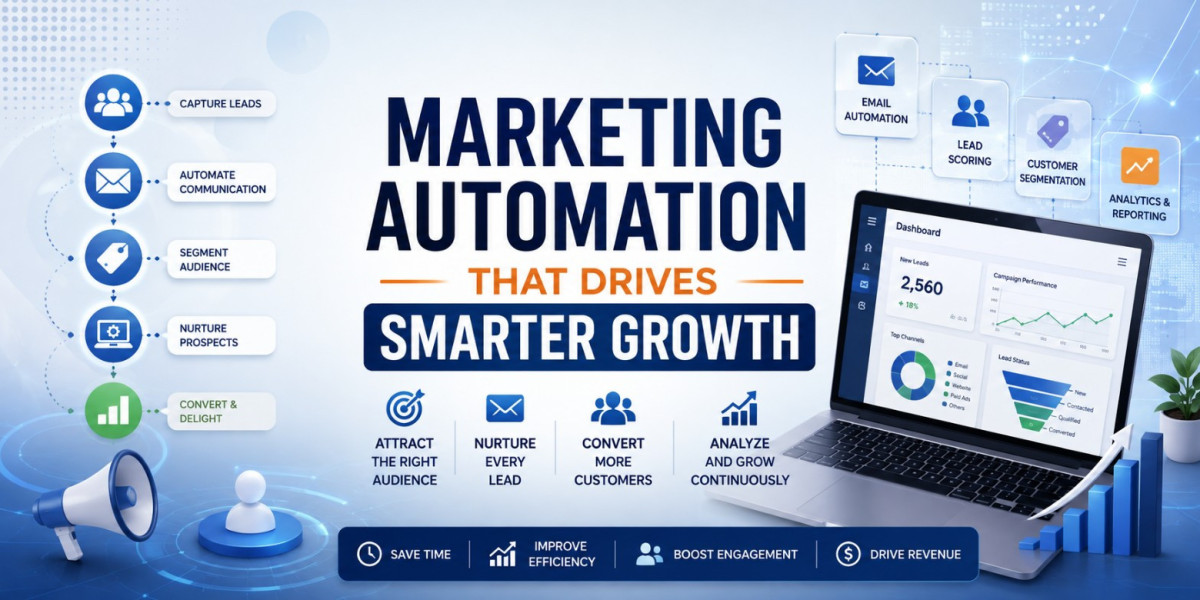
Email automation remains one of the most valuable capabilities. Businesses can schedule campaigns, create personalized messages, and trigger emails based on customer actions.
Lead scoring helps prioritize prospects according to their engagement level. This enables sales teams to focus on leads that are most likely to convert.
Customer segmentation allows marketers to group contacts based on industry, company size, location, interests, or behavior. Better segmentation results in more relevant communication and stronger campaign performance.
Analytics and reporting provide visibility into campaign effectiveness. Businesses can monitor open rates, click through rates, lead conversions, and revenue contribution to continuously improve marketing strategies.
Integration with customer relationship management systems also plays a vital role by creating a seamless connection between marketing and sales teams.
Best Practices for Successful Marketing Automation
Successful marketing automation begins with a clear understanding of the target audience. Businesses should develop detailed buyer personas and identify the information prospects need at each stage of the buying journey.
Content quality remains equally important. Automation delivers messages efficiently, but valuable content is what builds trust and encourages engagement. Educational articles, case studies, industry insights, and practical resources often perform well in environments.
Regular testing should also become part of every automation strategy. Small improvements in subject lines, email timing, content structure, or call to action messaging can significantly improve campaign results over time.
Businesses should also maintain clean and accurate customer data. Outdated or incomplete information reduces personalization and can negatively affect campaign performance.
Finally, marketing and sales alignment is essential. Both teams should work together to define lead qualification criteria, share customer insights, and establish common performance goals.
Common Marketing Automation Mistakes to Avoid
While marketing automation offers significant advantages, poor implementation can limit its effectiveness.
One common mistake is automating every interaction without considering the customer experience. Excessive communication may overwhelm prospects rather than engage them.
Another challenge is relying on generic messaging. Automation should enhance personalization rather than replace it. Customers expect communication that reflects their interests and needs.
Ignoring performance metrics is another missed opportunity. Businesses should regularly evaluate campaign data and optimize workflows based on measurable results.
Many organizations also underestimate the importance of strategy. Technology alone cannot deliver success. Marketing automation works best when supported by clear objectives, quality content, and continuous improvement.
The Future of Marketing Automation
As artificial intelligence continues to evolve, marketing automation is becoming increasingly intelligent and predictive. Businesses can now identify customer intent more accurately, recommend personalized content, and optimize campaigns using advanced analytics.
Predictive lead scoring, conversational experiences, and intelligent customer insights are helping organizations make faster and more informed marketing decisions. Companies that embrace these innovations will be better positioned to meet changing customer expectations while maintaining operational efficiency.
Rather than replacing human marketers, automation is enabling them to focus on creativity, strategy, relationship building, and business growth.
Conclusion
Marketing automation has evolved from a helpful marketing tool into a critical business capability for modern organizations. It enables companies to streamline operations, improve customer engagement, and generate higher quality leads while supporting stronger collaboration between marketing and sales.
When combined with valuable content, accurate data, and a customer focused strategy, marketing automation becomes a powerful driver of sustainable business growth. Organizations that invest in thoughtful automation today will be better equipped to build meaningful customer relationships and remain competitive in an increasingly digital marketplace.
Frequently Asked Questions
1. What is the primary purpose of marketing automation?
The primary purpose of marketing automation is to automate repetitive marketing tasks while delivering personalized customer experiences that improve lead generation, nurturing, and conversions.
2. Is marketing automation suitable for small businesses?
Yes. Small businesses can use marketing automation to save time, improve efficiency, and scale marketing efforts without significantly increasing operational costs.
3. How does marketing automation improve lead generation?
Marketing automation captures, segments, nurtures, and scores leads based on their behavior, helping businesses identify prospects that are more likely to become customers.
4. Can marketing automation replace human marketers?
No. Marketing automation supports marketers by handling repetitive processes, while human expertise remains essential for strategy, creativity, relationship building, and decision making.