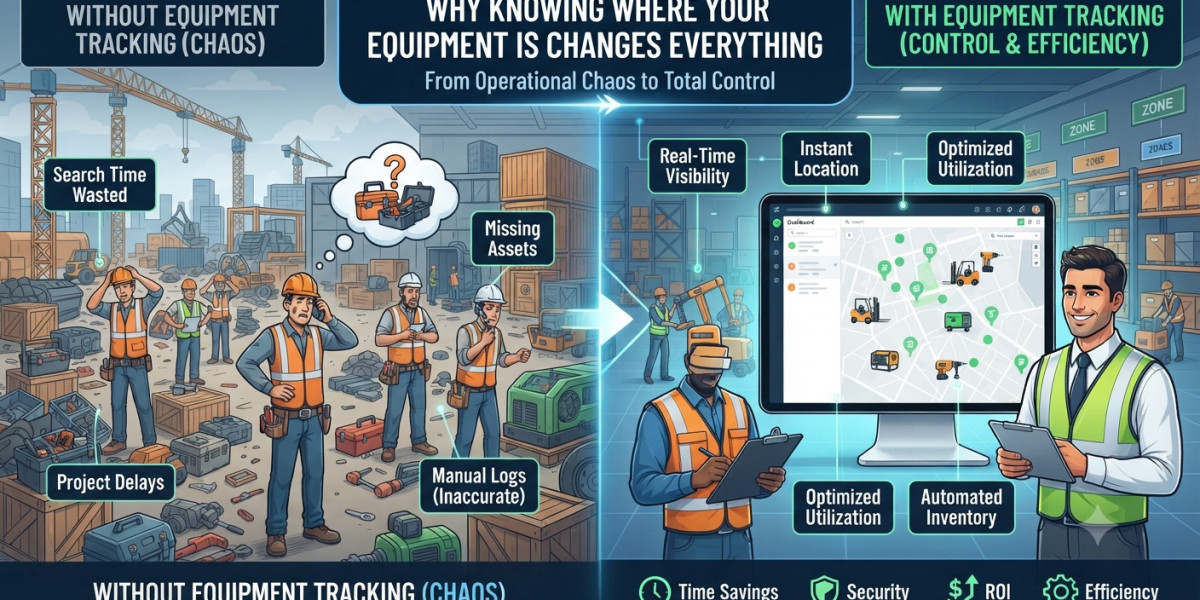

Construction equipment is constantly on the move. Excavators are transferred between projects, generators support multiple jobsites, trailers transport machinery, and specialized tools are shared across different crews. As operations grow, keeping track of every piece of equipment becomes increasingly difficult without a structured system.
When contractors don't have clear visibility into equipment locations, simple questions can become time-consuming to answer. Is the machine available? Which jobsite is it on? Who is using it? Has it been scheduled for maintenance? The inability to quickly access this information can lead to delays, unnecessary rentals, duplicate purchases, and lower productivity.
Construction equipment tracking software helps contractors maintain real-time visibility into equipment across multiple jobsites. By centralizing equipment information, project teams can make faster decisions, improve resource utilization, and keep construction operations running more efficiently.
Why Equipment Visibility Matters
Construction companies invest significant resources in heavy equipment and field assets.
Without accurate tracking, equipment may sit idle, be transferred without documentation, or become difficult to locate when another project needs it.
Limited visibility can result in:
Time spent searching for equipment
Delayed project schedules
Unnecessary equipment rentals
Duplicate purchases
Poor equipment utilization
Communication gaps between teams
Reduced operational efficiency
Knowing exactly where equipment is located helps eliminate uncertainty and supports better day-to-day planning.
Create a Centralized Equipment Inventory
Managing equipment across multiple projects is much easier when all information is stored in one system.
Instead of relying on spreadsheets or manual logs, contractors can access a centralized equipment database that includes:
Equipment identification
Current location
Assigned project
Assigned operator or crew
Operational status
Maintenance history
Inspection records
Equipment availability
Having one reliable source of information reduces confusion while improving coordination across departments.
Track Equipment Across Multiple Jobsites
Equipment rarely stays in one location for long. As project priorities change, machines are frequently reassigned to support new work.
Equipment tracking software allows construction teams to quickly determine:
Current Location
Identify where equipment is currently operating.
Project Assignment
See which jobsite is using each machine.
Availability
Determine whether equipment is available for reassignment.
Movement History
Review previous transfers between projects.
This visibility helps contractors allocate resources more effectively while reducing unnecessary transportation.
Improve Equipment Utilization
Construction companies often own valuable equipment that is not being fully utilized. Without accurate tracking, idle machines may go unnoticed while other projects rent additional equipment.
Tracking software helps managers identify:
Frequently used equipment
Underutilized assets
Idle machines
High-demand equipment
Seasonal usage patterns
Understanding utilization helps maximize existing investments before expanding the equipment fleet.
Reduce Lost and Misplaced Equipment
Equipment that frequently moves between locations can easily become misplaced if transfers are not properly documented.
Even smaller assets and attachments can be difficult to locate when records are incomplete.
Centralized equipment tracking helps improve accountability by recording:
Equipment assignments
Jobsite transfers
Current locations
User assignments
Equipment status
This reduces the likelihood of misplaced equipment while making recovery faster when items change locations.
Connect Equipment Tracking With Maintenance
Location information becomes even more valuable when combined with maintenance data. Before assigning equipment to a project, managers should know not only where it is, but whether it is ready for work.
Modern tracking systems can connect equipment tracking with:
Preventive maintenance schedules
Inspection records
Service history
Repair status
Work orders
Equipment condition
This gives project teams a complete picture of equipment readiness before deployment.
Improve Communication Across Teams
Equipment coordination involves project managers, supervisors, dispatchers, mechanics, and field crews. When equipment information is stored in different places, communication becomes more difficult.
A centralized tracking platform allows authorized users to quickly review:
Equipment location
Availability
Maintenance status
Inspection completion
Jobsite assignments
Equipment transfers
Shared information helps reduce misunderstandings while improving collaboration across projects.
Use Telematics for Better Operational Visibility
Modern construction equipment often generates valuable operational data. When combined with equipment tracking, telematics provides additional insights into how machines are being used.
Construction companies can monitor information such as:
Equipment location
Engine hours
Utilization
Operating activity
Idle time
Equipment movement
These insights support better planning while helping contractors improve equipment performance.
Support Better Planning Across Projects
Construction schedules change frequently.
A project may require additional equipment with little notice, making accurate equipment visibility essential. Tracking software supports planning by helping managers:
Locate available equipment
Coordinate equipment transfers
Avoid scheduling conflicts
Allocate resources efficiently
Prepare for upcoming projects
Having immediate access to equipment information allows project teams to respond more quickly to changing jobsite requirements.
Integrate Equipment Tracking With Construction Operations
Equipment tracking becomes even more valuable when connected with the rest of the construction workflow.
Modern platforms integrate equipment tracking with:
Equipment management
Preventive maintenance
Fleet management
Asset tracking
Digital inspections
Work orders
Telematics
Operational reporting
Rather than using separate systems for each function, contractors can manage equipment through one connected platform that supports smarter operational decisions.
Scale Equipment Tracking as Your Business Grows
As construction businesses expand, the number of machines, tools, and assets increases significantly. Manual tracking methods that once worked for a small fleet often become inefficient across multiple jobsites.
Construction equipment tracking software provides scalable processes that help contractors maintain visibility regardless of fleet size.
Whether managing dozens or hundreds of machines, centralized tracking supports better organization and more efficient resource management.
Conclusion
Knowing where equipment is located is about much more than finding machines on a map. It enables contractors to improve planning, reduce delays, increase utilization, and make better operational decisions throughout every project.
Construction equipment tracking software helps construction companies centralize equipment information, monitor locations, coordinate transfers, support maintenance planning, and improve communication across teams.
As construction operations become more connected, Modern platforms combine equipment tracking with maintenance, inspections, telematics, fleet management, and reporting to help contractors manage equipment more efficiently and keep projects moving forward.