
The return-to-office conversation has shifted something important in how companies think about physical workspace. When showing up in person was automatic, the office was infrastructure. Now that it's a choice — or at least partly a choice for many knowledge workers — the office has to earn it. It has to be a place worth coming to. A place that offers something remote work doesn't.
And one of the most powerful things an office can offer is a physical environment that's genuinely, unmistakably yours. Not a coworking space, not a generic floor-plate buildout, but a place that looks and feels like the organization that occupies it.
That's the strategic argument for custom office furniture in 2025. And it's a stronger argument than it's ever been.
The Workplace as a Retention and Recruitment Tool
What the Environment Signals
When a prospective hire walks into your office for an interview, they're reading the space before anyone says a word to them. The quality of materials, the thoughtfulness of the layout, the coherence between the environment and the brand they've seen externally — these are signals about how the organization operates, whether it invests in people, and whether it's the kind of place they want to spend their time.
A thoughtfully designed workspace signals investment. It says this organization takes its culture seriously enough to build an environment that reflects it. That's a recruiting message that no job description can quite replicate.
Retention works similarly. People spend more hours at work than almost anywhere else. An environment that's been designed for them — that supports how they work, that feels coherent and considered — contributes to how they feel about where they work. That contribution is quiet but real.
The Talent Market Context
In industries where top talent has genuine options — technology, finance, professional services, media, life sciences — workplace quality is a differentiator. Organizations that have invested in their environment are competing on a dimension that can't easily be replicated by salary adjustments alone. The physical experience of working somewhere is part of what people choose when they choose where to work.
The Studio Other Approach to Custom Furniture
Studio Other operates at the intersection of industrial design and engineering — a combination that produces something genuinely different from what either discipline achieves alone. With over 25 years of experience and projects spanning 18 states, the team has developed a co-design process that begins not with furniture specifications but with understanding how people actually use a space.
That behavioral starting point matters. Most furniture projects start with a floor plan and a finish palette. Studio Other starts with questions: How does your team move through this space? Where do collaborative moments happen spontaneously? What does the flow between focus work and group work look like? Where do clients engage with the brand?
The answers to those questions shape everything — from the form of individual pieces to the way furniture systems relate to each other and to the architecture of the space.
Where Custom Furniture Creates Specific Value
The Lobby and First Impressions
The lobby is brand infrastructure. Every person who enters — client, candidate, partner, board member — forms an initial impression in the first few moments. A Custom reception desk designed for a specific space, with proportions, materials, and finish chosen to reflect the brand, does active brand work in those moments. It communicates scale, quality, and intentionality before a word is spoken.
Studio Other has produced reception environments for clients across professional services, technology, entertainment, and investment management — organizations where the first impression carries real commercial weight.
Individual Workstations and the Daily Experience
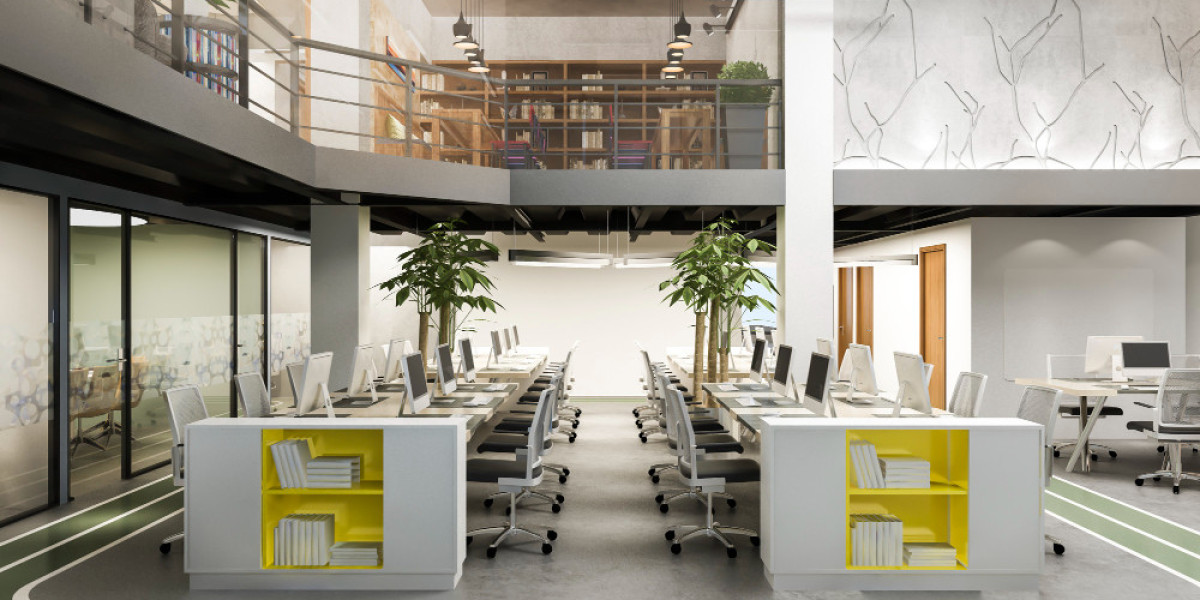
The workstation is where most of the actual work happens, and it deserves design investment proportional to its use. A Custom office desk is designed around the specific people who will use it — their technology setup, their ergonomic needs, the way they collaborate with people around them, the way they manage their tools and materials. That specificity produces a better daily experience than any standard desk can.
For organizations managing hundreds of workstations, the cumulative effect of better individual experiences is significant. Employees who work comfortably and efficiently in a space that supports how they work are meaningfully more effective than those who are constantly working around the limitations of furniture that was designed for somebody else.
Collaborative and Shared Spaces
Conference rooms, creative spaces, break areas, and lounge zones are the social infrastructure of an office. They're where culture is built, where relationships develop, where ideas get tested. Custom office furniture in these spaces creates environments that are specific to how each organization collaborates — rather than defaulting to the conference table and chair combination that every other office has.
What Scalable Custom Actually Means
One of the persistent misconceptions about custom furniture is that it doesn't scale — that it's a bespoke service suitable for a single flagship office but impractical for multi-location organizations. Studio Other's model directly challenges that assumption.
Because they design using digital fabrication methods, every piece that gets designed once can be reproduced accurately and consistently across any number of locations. The production process is essentially the same whether you're ordering ten units or a thousand. Organizations like Procore (1,040 seats), Boston Consulting Group (1,790 seats), and Google (1,076 seats) have used this capability to deploy cohesive design systems across multiple offices — maintaining brand consistency across every location while retaining the quality and specificity of custom.
The Materials and Sustainability Angle
Quality custom office furniture is also a sustainability choice, even if that's not the primary reason most clients pursue it. Studio Other's material approach — steel with high recycled content, low-VOC powder coat finishes, Greenguard-certified interior materials, regional manufacturing partnerships — reflects a genuine commitment to responsible production that aligns with the sustainability goals most serious organizations are pursuing.
Furniture built to last 12 years or more is also inherently more sustainable than furniture replaced every five. The lifecycle math consistently favors investment in quality.
The 12-Year Warranty as a Confidence Signal
Studio Other offers a 12-year warranty on their furniture. That's not a marketing detail — it's a structural commitment that reflects the quality of materials, manufacturing, and engineering going into every piece. It's also a signal of how the firm thinks about the client relationship: not as a transaction, but as a long-term investment in a space that will perform reliably over time.
Design Your Space with Intention
If your organization is ready to invest in a workspace that works for your team, reflects your brand, and stands up over time, the conversation starts with what you actually need — not with what's available in a catalog. Studio Other's co-design process is built to uncover exactly that.
Visit studioother.com to explore recent projects, learn how the custom office furniture process works, and connect with the team to start designing a space that's built for you.