
Epilepsy is one of the most common serious neurological conditions in the United States, affecting roughly 3.4 million Americans. It's also one of the most diagnostically challenging. The path from first seizure to confirmed diagnosis often takes months — sometimes years — involving multiple EEG studies, specialist consultations, and considerable uncertainty for patients and families navigating a frightening experience without a clear clinical picture.
A meaningful part of that delay is procedural. EEG studies take time to schedule, take time to read, and take time to report. For a condition where early, accurate diagnosis directly influences treatment decisions and outcomes, that timeline is clinically costly. Improving it isn't just a workflow efficiency question — it's a patient care imperative.
Modern eeg software, particularly platforms built on artificial intelligence and network-level brain analysis, is starting to address that problem in ways that weren't possible even five years ago. Here's how the technology works, why it matters for epilepsy diagnosis specifically, and what it means for clinicians and patients in the US.
The EEG's Unique Role in Epilepsy
EEG remains the primary tool for epilepsy diagnosis — and for good reason. It directly measures the electrical activity of the brain, capturing the kind of abnormal patterns that define different seizure types and epilepsy syndromes. No other diagnostic modality gives you that direct, real-time window into brain function.
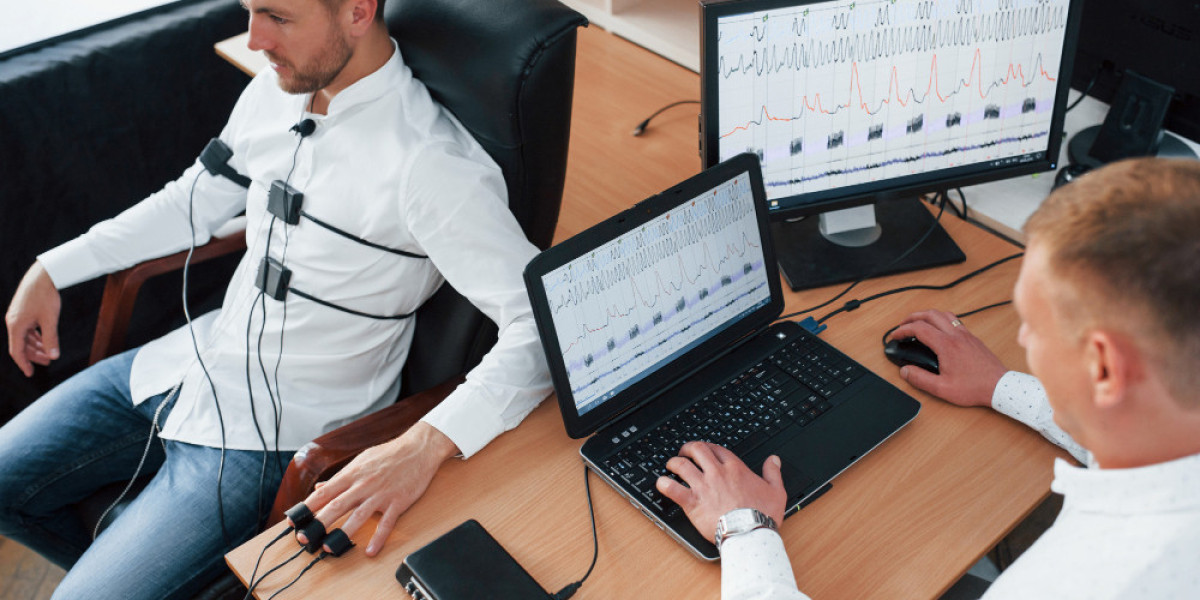
But EEG is also extraordinarily data-rich. A routine outpatient EEG might run 20 to 40 minutes. An inpatient monitoring study might run days. The volume of data produced in a comprehensive epilepsy workup is enormous, and interpreting it accurately requires both expertise and time that the specialist workforce can't always supply at the pace patients need.
That gap — between the information EEG can theoretically provide and what clinical systems can actually extract from it efficiently — is where intelligent eeg software creates its most important value.
From Data to Diagnosis: What AI Changes
The Detection Problem
Interictal epileptiform discharges — spikes, spike-and-wave complexes, and related patterns — are among the most diagnostically significant findings in EEG. They occur between seizures, often unpredictably, and can be distributed sparsely across a long recording. Missing them has real clinical consequences: an EEG that appears normal but contains missed epileptiform activity may lead to a delayed or incorrect diagnosis.
Automated eeg spike detection addresses this problem directly. Rather than relying entirely on a human reader to identify every candidate event in a long recording, AI-powered detection algorithms scan the entire study and flag events for clinician review. The neurologist then applies their clinical judgment to the flagged events — confirming, contextualizing, and incorporating findings into the overall clinical picture.
This isn't about replacing the neurologist. It's about removing the most repetitive, fatigue-sensitive part of the review process so that expert attention can be focused where it adds the most value.
The Visualization Problem
Even with good detection, traditional EEG software presents findings in a format that has real limitations. The scrolling waveform display — a remarkable tool when it was developed — shows brain activity electrode by electrode, in sequence. It doesn't show you, in any intuitive or clinically interpretable way, how the brain is functioning as a system.
This matters in epilepsy particularly because seizure propagation — the way abnormal electrical activity spreads through the brain — is a network phenomenon. Understanding where a seizure starts, how it spreads, and which circuits are involved is critical for treatment planning, especially for patients being evaluated for surgical intervention. Waveform display can suggest this but can't show it clearly.
What LVIS and NeuroMatch Are Doing Differently
LVIS Corporation was founded on a specific scientific principle: that to understand brain function and dysfunction, you have to measure how brain circuit elements communicate — not just what individual neurons or regions are doing in isolation. The clinical platform that embodies that principle is Neuromatch, now FDA-cleared for use in the United States.
NeuroMatch produces 3D and 4D visualizations of brain network activity from EEG data — a genuinely novel representation that surfaces the network-level patterns that conventional displays don't make visible. For epilepsy diagnosis specifically, this means clinicians can see not just where abnormal activity is occurring, but how it's organized and connected across the brain.
The platform was developed in collaboration with Stanford's Byers Center for Biodesign, supported by grants from the Epilepsy Foundation and LivaNova, and has been named a 2026 Edison Awards Silver Award recipient. That combination of scientific pedigree and commercial validation is relatively rare in medical technology — and it speaks to the quality of what's been built.
The Clinical Workflow Impact
Faster Turnaround, Better Throughput
For epilepsy monitoring units running continuous EEG on multiple patients simultaneously, the throughput challenge is severe. Studies pile up. Interpretation lags. Patients wait. AI-powered eeg software with automated detection and efficient visualization tools directly addresses that bottleneck — allowing the same clinical team to process more studies in less time without increasing error rates.
For outpatient practices doing routine diagnostic EEGs, the impact is similar but perhaps more immediately visible to patients: studies get read faster, results get communicated sooner, and the diagnostic timeline shortens in ways that are genuinely meaningful to people waiting for answers.
Consistency Across Readers and Shifts
One of the most persistent quality challenges in EEG interpretation is variability — between readers, between institutions, and within the same reader across different conditions. Fatigue, interruption, and varying clinical context all affect how a study is read. AI-assisted analysis introduces a layer of consistency that doesn't vary based on what time of day the study is reviewed or how many studies preceded it.
That consistency is particularly important in epilepsy, where the difference between detecting and missing an epileptiform discharge can determine whether a patient gets an accurate diagnosis or spends another year in diagnostic limbo.
What This Means for Patients
Ultimately, everything in this conversation traces back to someone who has had a seizure and doesn't yet know why — or someone whose seizures aren't controlled and whose clinical team is trying to understand what's happening in their brain. For those patients, diagnostic technology that is faster, more comprehensive, and more accurate isn't an abstract improvement. It's the difference between clarity and continued uncertainty.
Eeg software that decodes brain networks rather than just displaying waveforms, that flags abnormal events automatically so human expertise can be applied where it counts — this is the direction the field needs to move in, and LVIS NeuroMatch is leading that movement in the US market.
Explore NeuroMatch for Your Practice
If you're working in epilepsy care, neurology, or a hospital system evaluating EEG technology, LVIS NeuroMatch is the platform worth examining carefully. Visit lviscorp.com to explore the science behind the technology, review FDA clearance information, and connect with the LVIS team about plans available for US practices. The future of eeg software is already here — and it's producing results that matter.