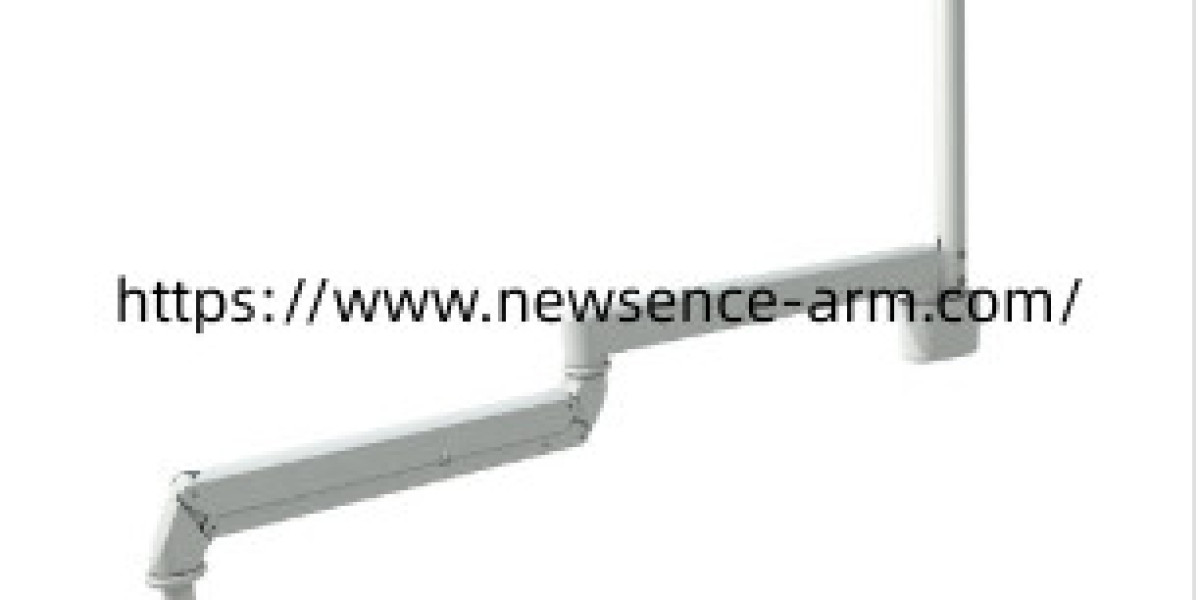

Medical facilities often need equipment that can adapt to changing workflows rather than remain fixed in one location. In this situation, choosing a Floor Stand Medical Monitor Arm Manufacturer involves considering mobility, structural stability, monitor compatibility, cable organization, and ease of repositioning. A reliable Floor Stand Medical Monitor Arm Manufacturer should understand how medical staff use displays across different rooms and workstations, offering practical solutions that can fit a variety of clinical environments. For hospitals, clinics, laboratories, and medical equipment distributors, a well-designed floor-standing monitor arm can provide useful flexibility while keeping screens accessible and allowing healthcare teams to adjust equipment according to their daily requirements.
Mobility for Changing Clinical Environments
Healthcare spaces are rarely static. Equipment may need to be moved when a patient room is reorganized, when a procedure requires additional working space, or when medical staff need to change their position around a bed or workstation.
A floor-standing monitor support system can offer an advantage in these situations because it does not depend on a fixed wall or ceiling installation. Staff can reposition the unit according to the immediate needs of the room, provided the floor area and equipment configuration allow sufficient movement.
This flexibility can be useful in examination rooms, treatment areas, consultation spaces, and other environments where workflows may change throughout the day. Instead of permanently assigning a screen to one location, a mobile solution can give healthcare teams more freedom when arranging their working environment.
However, mobility should always be balanced with stability. The base design, overall structure, and wheel configuration can all influence how easily the equipment moves and how securely it remains positioned during use.
Matching the Arm With Different Monitor Requirements
Medical facilities may use displays of different sizes and weights depending on their applications. For this reason, compatibility is an important consideration when selecting a monitor support system.
Before purchasing, project teams should confirm the dimensions and weight of the intended display. They may also need to consider mounting standards, adjustment requirements, and the desired screen orientation.
A flexible arm can provide additional convenience by allowing users to adjust the monitor to a more suitable height or angle. This can be helpful when different staff members use the same equipment during a working shift.
The adjustment range should match the actual clinical environment. A system designed for a compact examination room may have different requirements from one used beside a hospital bed. Understanding the intended application can help buyers select a configuration that provides useful movement without creating unnecessary complexity.
NEWSENCE-ARM and Practical Equipment Positioning
Equipment positioning can influence how efficiently a medical team works. A monitor placed too far away may be difficult to view, while a poorly positioned support system can interfere with movement around the workspace.
Floor-standing designs provide an opportunity to position displays according to the layout of the room. Depending on the model, users may move the monitor closer to a patient bed, adjust the viewing angle for staff, or reposition the screen when the room configuration changes.
The base footprint is an important part of this process. It should provide sufficient stability while fitting within the available floor area. Buyers should consider nearby beds, carts, cabinets, and other equipment before determining where the unit will be placed.
A well-planned arrangement can help reduce unnecessary obstacles and make better use of the available space. For facilities with frequently changing workflows, this flexibility can be particularly valuable.
Cable Management and Everyday Maintenance
Medical monitors often require power and signal connections, making cable management an important part of equipment organization. Loose or poorly arranged cables may affect the appearance of a room and make routine maintenance more difficult.
A practical monitor support system should allow cables to be organized along the structure where appropriate. This can help keep wiring away from areas where staff and equipment move frequently.
Maintenance should also be considered during procurement. Medical equipment is used regularly, so technical teams need convenient access to relevant components when inspections or adjustments are required.
Routine checks may include examining the base, wheels, arm joints, mounting points, and cable arrangements. Keeping these areas in good condition can help maintain stable operation and extend the useful life of the equipment.
Cleaning is another consideration for healthcare facilities. A streamlined structure with accessible surfaces can make routine cleaning more manageable and support the overall organization of the clinical environment.
Planning Procurement for Long-Term Flexibility
When purchasing medical monitor support equipment, healthcare organizations should look beyond immediate requirements. Rooms may be renovated, departments may expand, and equipment may be replaced as technology develops.
A flexible floor-standing system can provide greater adaptability when these changes occur. If the monitor is upgraded or the room layout changes, the support unit may continue to be useful as long as its compatibility and capacity remain suitable.
For distributors, understanding customer requirements is equally important. Information about monitor specifications, room dimensions, expected quantities, movement needs, and installation preferences can help buyers identify suitable configurations.
Supplier communication also plays an important role in successful procurement. Clear technical documentation, accurate specifications, stable production, and responsive service can make purchasing projects easier to coordinate.
Healthcare facilities and medical equipment distributors seeking more information about monitor support solutions can visit https://www.newsence-arm.com/ to explore available options. With suitable mobility, stable construction, flexible positioning, organized cable management, and thoughtful procurement planning, floor-standing medical monitor arms can provide practical support for changing clinical environments.