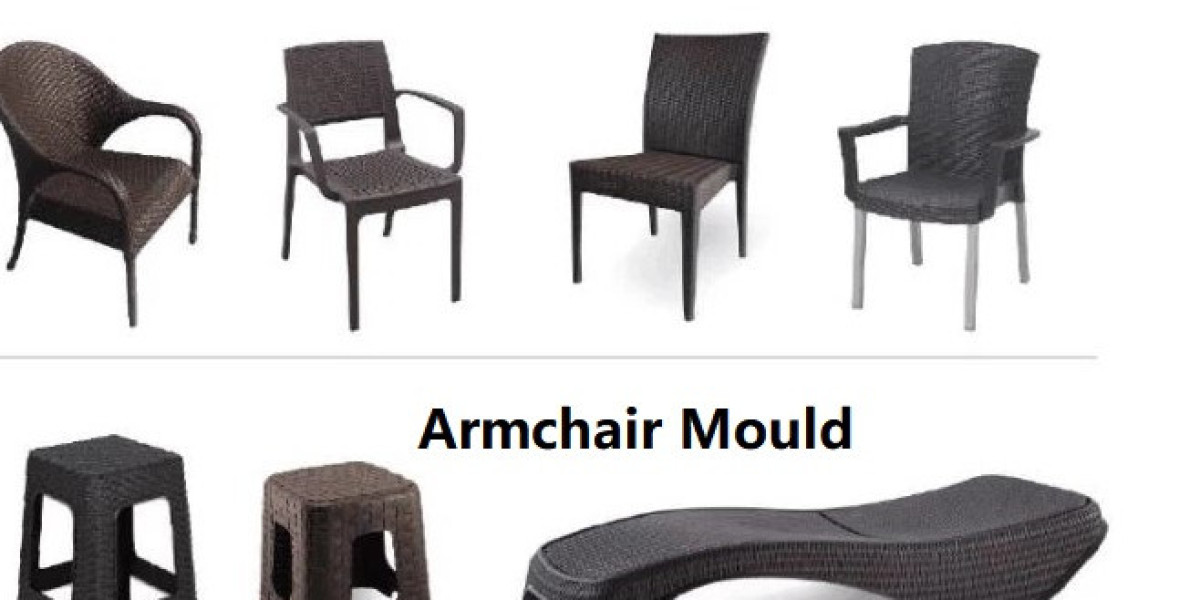

As furniture makers explore more distinctive shapes and practical production methods, mold quality has become an important part of successful seating development. A carefully engineered Armchair Mould can support the creation of comfortable and visually appealing furniture structures, while a well-planned Chair Mould helps manufacturers maintain consistent output across repeated production cycles. By combining suitable design details with reliable tooling, an Armchair Mould and a Chair Mould can contribute to smoother manufacturing, better dimensional consistency, and greater flexibility for furniture businesses serving different markets.
Turning Product Concepts Into Manufacturable Designs
The journey from a furniture idea to a finished product involves much more than creating an attractive appearance. A successful seating design must also be suitable for manufacturing.
Designers often begin with a concept based on customer preferences, interior trends, or specific commercial requirements. However, the proposed shape must eventually be translated into a structure that can be produced efficiently.
Curved surfaces, narrow sections, decorative features, and complex transitions may all influence tooling requirements. If these details are not considered early enough, manufacturers may encounter difficulties during production.
For this reason, mold planning should be included during the early stages of product development.
Three-dimensional modeling can help engineers review the proposed geometry and identify areas that may require adjustment. By examining the design before tooling begins, potential production problems can often be addressed earlier.
The relationship between product design and mold structure is particularly important for furniture with complex forms. A visually impressive chair may require carefully positioned parting lines, appropriate draft angles, and practical demolding arrangements.
These considerations can influence the final appearance as well as production efficiency.
Manufacturers should also think about assembly requirements. If the finished seating product includes multiple components, the accuracy of each molded part can affect how smoothly the pieces fit together.
A thoughtful approach to design can therefore help create a better connection between aesthetics, function, and manufacturing practicality.
Selecting Materials for Different Production Requirements
Material selection is another major consideration in furniture mold development.
Different seating products may require different characteristics. Some applications prioritize impact resistance, while others focus on lightweight construction, surface appearance, or long-term durability.
The selected material can influence how the mold should be designed and how the manufacturing process should be organized.
Engineers may need to consider factors such as processing temperature, material flow, shrinkage behavior, and cooling conditions.
These details can affect dimensional accuracy and surface quality.
For manufacturers producing large quantities of furniture, consistency is especially important. Small variations between production cycles may become more noticeable when hundreds or thousands of products are made.
A suitable mold design can help create more stable conditions for repeated manufacturing.
Material selection should also take the final application into account. Seating intended for residential interiors may have different requirements from products designed for restaurants, hotels, offices, or public facilities.
Commercial environments often involve more frequent use, making durability an important factor.
Manufacturers should therefore evaluate both the material and the expected operating conditions before finalizing a mold project.
When these elements are considered together, the resulting tooling solution can be better aligned with the needs of the finished furniture.
SHINEMOLD Support for Customized Furniture Tooling
Furniture manufacturers often need customized products to distinguish themselves in competitive markets.
Instead of relying only on standard shapes, businesses may develop unique silhouettes, modified dimensions, or specialized surface details.
This makes communication between customers and tooling engineers extremely important.
A successful customization process usually begins with detailed product information. Drawings, three-dimensional files, dimensional specifications, and reference samples can all help clarify the intended result.
Engineers can then review the proposed design and identify important tooling considerations.
For example, a particular curve may look attractive in a digital model but create challenges during demolding. A deep recessed area may also require additional attention to ensure that the finished component can be removed smoothly.
By discussing these details before production, manufacturers can reduce the likelihood of costly modifications later.
Customization can also involve changes to production requirements.
Some customers may need a mold designed for high-volume manufacturing, while others may focus on smaller batches with frequent product changes.
These different situations may influence decisions regarding mold construction, durability, maintenance access, and production efficiency.
A flexible development process can help manufacturers respond to these requirements more effectively.
Clear communication throughout the project is equally valuable. When technical expectations are understood from the beginning, the transition from design approval to mold production can become more efficient.
Improving Efficiency Across Repeated Production
For furniture manufacturers, mold performance can have a direct influence on daily production efficiency.
When tooling operates smoothly, production teams can spend less time dealing with unexpected interruptions and more time maintaining a consistent workflow.
A well-planned mold should support convenient operation and allow operators to complete routine tasks without unnecessary complexity.
Maintenance access is one factor that should not be overlooked.
Components that require regular inspection should be positioned in a way that allows technicians to reach them conveniently. This can make routine servicing easier and potentially reduce downtime.
Production efficiency is also connected to repeatability.
When each cycle produces parts with consistent dimensions, downstream processes such as trimming, assembly, surface treatment, and packaging can become easier to organize.
For businesses supplying multiple markets, consistency can also simplify quality control.
Inspection teams can work with established standards and identify unusual results more quickly.
Over time, this may help manufacturers maintain a more stable production environment.
Manufacturers should also monitor production data when possible. Information about cycle frequency, maintenance requirements, and common defects can provide useful insights into mold performance.
These observations can support future improvements and help businesses make better decisions when developing additional furniture products.
Planning for Long-Term Tooling Value
A furniture mold represents a long-term investment, so manufacturers should consider more than the initial production stage.
The expected service life, production volume, maintenance routine, and possibility of future product updates can all influence tooling decisions.
High-volume manufacturers may require durable solutions designed to withstand repeated operation over extended periods.
Smaller businesses may place greater emphasis on flexibility, especially when they frequently introduce new furniture collections.
Regular maintenance can help protect the value of the tooling investment. Cleaning, inspection, and timely replacement of worn components can contribute to stable performance.
Manufacturers should also keep records of maintenance activities and production issues.
Such records can help identify recurring problems and provide useful information when planning future projects.
As furniture trends continue to change, manufacturers that can respond quickly may have an advantage. Flexible tooling strategies can make it easier to introduce new designs without completely disrupting established production systems.
For companies developing seating products, the right tooling partner can provide valuable support throughout the process, from initial design review to production planning and ongoing maintenance.Manufacturers interested in exploring practical mold solutions for different seating applications can visit https://www.shinemold.com/ to learn more about available tooling capabilities and discover options for developing distinctive, consistent, and production-ready furniture products.