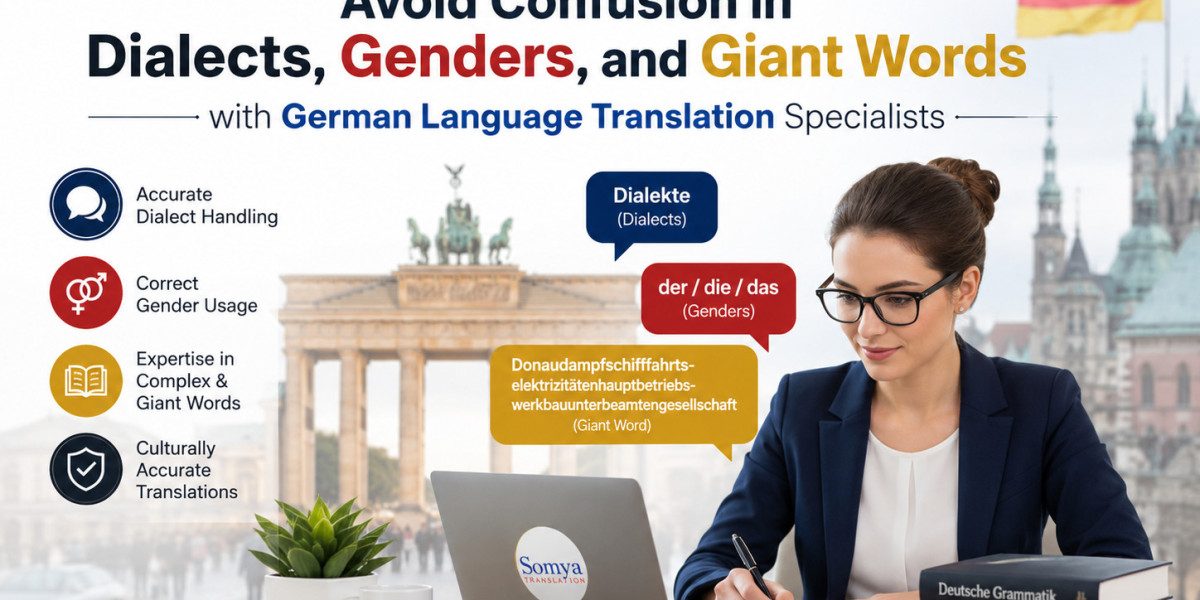

It is easy to assume that English-to-German translations are simple, as both languages share many words, like kindergarten and wanderlust. However, German is quite a complicated language, consisting of three grammatical genders, four sentence cases, and several regional dialects spoken by over a hundred million people globally. The importance of the language cannot be understated, especially for a business that is aiming to establish a long-term presence in Europe. To navigate through these complexities, many businesses opt to work with German language translation specialists.
In this blog, we will explore the strategic and corporate importance of the German language and how to find reliable German language translation services in India.
Importance of the German Language for the Regional Market
Germany is the largest economy in the European Union, with a nominal GDP surpassing $5 trillion in 2026. Additionally, Germany also holds historical and linguistic influence over neighboring countries like Austria, Liechtenstein, Belgium, Switzerland, and Luxembourg.
Additionally, Germany has smartly distributed its major industrial hubs across the country rather than having them all in one single city.
Major Cities | Industries |
Frankfurt | Finance and Banking |
Munich and Stuttgart | Automotive and Tech |
Hamburg | Logistics and Maritime |
Germany also boasts an employment rate of 97% and presents a highly skilled workforce and an unmatched consumer buying force.
The country also hosts an international trade fair that draws around ten million foreign visitors every year. With a globally accelerating business economy and a multitude of opportunities, foreign companies are often attracted to Germany. But before they can reap the benefits of operating in the country, they must overcome the complex barrier of the German language.
Overcoming Technical Complexities with German Localization
The German language presents some pressing challenges that cannot be handled by AI tools or standard translation services. Precision in German document translation requires high linguistic and cultural know-how.
· Text Expansion: German is infamously known to have long compound words, like Kraftfahrzeug-Haftpflichtversicherung, a 36-letter word that simply means motor vehicle liability insurance. Similarly, during English to German translations, texts can expand up to 33% of their original size. This creates formatting issues and requires layout adjustments to maintain visual professionalism.
· Grammatical Cases and Gender: Many languages determine gender depending on how a word ends. However, in German, the nouns are assigned masculine, feminine, or neuter gender with no consistent pattern. Additionally, the language uses four grammatical cases, unlike English, which has three:
o Nominative
o Accusative
o Dative
o Genitive
This completely changes the use of articles and adjectives, making German translations overly complicated.
· Formal vs. Informal Speech: Sie is the formal way to address someone, and Du is the informal way. Mixing them up while translating marketing materials or legal documents can lead to critical errors. German language translation specialists are aware of these grammatical complexities, making the results appropriate and acceptable.
Tricky Regional Dialects and Interpretation
In Germany, the geography influences the dialect spoken.
· High German or Hochdeutsch: This dialect originated in the mountains of southern Germany. Today, it is widely used in media, education, and official communication.
· Low German or Plattdeutsch: This dialect gradually developed in the northern plains of the country and is specifically used for everyday communication within the regional groups.
Other than these two, German also contains some influential dialects, like Bavarian (Bayerisch), Swabian (Schwäbisch), Alemannic, Upper Saxon (Sächsisch), Berlin Dialect (Berlinerisch), Viennese (Wienrisch), and Pennsylvania Dutch.
During an international conference in India, attended by global dignitaries, it is vital to be respectful towards these dialects. Using a professional interpreting service in Delhi helps to respect these cultural distinctions and regional idioms, ensuring clear communication.
Expert translation agencies work with native, certified German translators and interpreters who understand when to use the standardized version of the language and when to adapt to a specific dialect.
You can learn more about German dialects and their cultural significance in our blog: German Translations: Solving the Puzzle of German Dialects.
Finding a Reliable Linguistic Partner in India
Clear communication in the German language is essential in some industries, such as automotive or renewable energy. And if you are a brand engaging in these industries, relying on expert German language translation services in India is necessary.
As a trusted certified German translation company, we, Somya Translators, help organizations across the subcontinent with strategic language solutions.
We strongly believe that industry standards matter. As an ISO 17100:2015 certified service provider, we follow the industry gold standards for translations, like working with native linguists, implementing strategic quality reviews, utilizing strict data security infrastructure, and integrating advanced computer-assisted translation (CAT) tools.
Frequently Asked Questions (FAQs)
Q1) What makes German translations so beneficial in India?
Ans. With the advent of digitalization, Indian businesses are increasingly investing in Germany. A reliable Indian translation agency offers unmatched benefits that help organizations or brands connect easily with German audiences. By working with highly qualified German linguists, efficient project management procedures, and multi-step quality checks, expert German language translation specialists provide round-the-clock services, cost-effective scaling, and precise localization customized to specific industries.
Q2) Why is ISO 17100:2015 certification important for translation?
Ans. The ISO 17100:2015 certification is specifically designed for the translation industry and guarantees that the said agency utilizes qualified translators and reviewers, follows multi-step reviews, and maintains a secure infrastructure to deliver accurate and high-quality results. This certification also holds legal accountability for the company.
Q3) Can Somya Translators’ German legal translations be accepted by the courts and embassies of Germany?
Ans. Yes, because Somya Translators are certified under ISO 17100:2015, our German translations are officially recognized. We provide a certificate of accuracy with every translated legal document, which guarantees total accuracy and establishes accountability.
From complex technical translations for the automobile industry to expert German interpreters, we are always ready to cater to your needs.
Let’s connect to discuss your project requirements, and we can scale the rich German markets together!
Contact us today for a free quote!
Call: +91-9990094796
Email: info@somyatrans.com