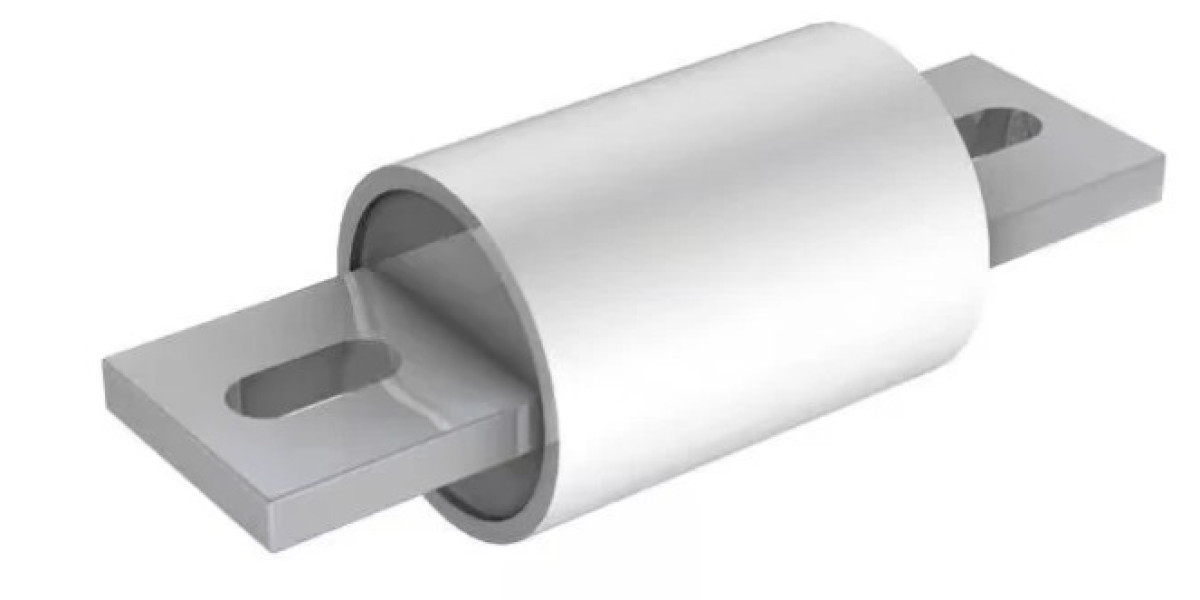

A DC fuse may appear to be a small and relatively simple electrical component, but its role in a direct-current power system is far more important than its size suggests. From solar installations and battery storage systems to electric vehicles, telecommunications equipment, industrial machinery, and DC control cabinets, fuses provide a basic but critical layer of protection against excessive current.Get more news about DC fuse,you can vist our website!
The main purpose of a DC fuse is straightforward. When current rises above a safe level for a specified period, the fuse element melts and opens the circuit. This interrupts the flow of electricity before overheating can seriously damage cables, batteries, electronic components, or connected equipment.
What makes DC fuse protection particularly interesting is that direct current behaves differently from alternating current. With AC power, the current naturally crosses zero many times per second, which helps extinguish an electrical arc. DC current does not have this natural zero-crossing point. As a result, interrupting a DC fault can be more demanding. A properly designed DC fuse therefore needs sufficient voltage rating, breaking capacity, insulation performance, and arc-extinguishing ability.
Key Features of a Good DC Fuse
One of the first characteristics to examine is the rated current. DC fuses are available in a wide range of current ratings, allowing designers to match protection to the cable, load, and circuit requirements.
However, choosing a fuse based only on the normal operating current is a mistake. Motors, inverters, capacitive loads, and some electronic equipment may produce temporary startup or inrush currents. A fuse that is sized too closely to normal operating current may open unnecessarily.
Voltage rating is equally important. A fuse rated for a lower DC voltage should never be assumed suitable simply because its current rating appears correct. Higher DC voltages can maintain an arc after the fuse element melts, making safe interruption more difficult.
Breaking capacity is another feature that deserves close attention. Battery banks and energy storage systems can deliver extremely high short-circuit currents. In these environments, the fuse must safely interrupt the maximum prospective fault current without rupturing or creating additional hazards.
Construction quality also influences performance. Depending on the application, DC fuses may use ceramic bodies, high-temperature materials, metal end caps, bolted connections, or specialized arc-quenching fillers. Good mechanical construction becomes especially important where vibration, temperature changes, or demanding industrial conditions are present.
Performance Review
From a practical point of view, the greatest strength of a DC fuse is its simplicity. Unlike electronic protection devices, a fuse does not need software, communication, or an external control signal to operate. When excessive current generates enough heat in the fuse element, the circuit opens automatically.
This simplicity usually contributes to high reliability.
Another advantage is speed. Certain fuse designs can react very quickly to severe fault currents, helping protect sensitive semiconductor devices, power electronics, and expensive battery equipment.
During evaluation, however, I believe it is important to look beyond the statement that a fuse “works.” The more meaningful question is whether it behaves predictably under real operating conditions.
A good DC fuse should remain stable during normal current fluctuations while responding reliably to genuine overloads and short circuits. Time-current characteristics are therefore extremely useful when comparing products. They show how long a fuse can carry different levels of overcurrent before opening.
Temperature should also be considered. A fuse installed in a hot enclosure may behave differently from one tested under moderate laboratory conditions. Poor ventilation, nearby heat-generating devices, conductor size, and mounting method can all influence thermal performance.
For this reason, professional fuse selection should be treated as part of overall electrical system design rather than as an isolated component decision.
Common Applications
DC fuses are widely used in photovoltaic systems, where they can protect strings, combiner boxes, inverters, and battery circuits. Solar systems may operate at relatively high DC voltages, making the use of correctly rated DC protection especially important.
Battery energy storage is another major application. Lithium battery systems can supply very high fault currents, so suitable fuse protection is often used close to battery connections to reduce the consequences of short circuits.
DC fuses are also found in electric vehicles, charging-related equipment, telecommunications infrastructure, UPS systems, railway electronics, marine electrical systems, automation cabinets, and industrial DC distribution networks.
Each application has different requirements. A fuse selected for a small low-voltage electronic circuit may be completely inappropriate for a high-energy battery bank.
Buying Advice
When purchasing a DC fuse, start by confirming the system voltage, continuous operating current, expected inrush current, and maximum possible fault current. These four factors provide a much stronger basis for selection than simply matching the fuse to the nominal load.
Next, examine the fuse type and time-current curve. Fast-acting fuses may be suitable for sensitive electronics, while applications with temporary current surges may require different operating characteristics.
Mechanical compatibility also matters. Check dimensions, terminal style, fuse holder requirements, mounting method, and available installation space. In high-current circuits, connection quality is especially important because loose or undersized connections can create resistance and unwanted heat.
Buyers should also consider certifications, testing documentation, traceability, and manufacturer technical support. For critical industrial, energy storage, or transportation systems, I would avoid choosing a fuse purely because it has the lowest price. The cost difference between a well-engineered fuse and a questionable alternative is usually tiny compared with the value of the equipment it protects.
Final Thoughts
A DC fuse is one of those components that often receives little attention until something goes wrong. Yet correct fuse selection can significantly improve the safety and reliability of a DC electrical system.
In my view, the best DC fuse is not necessarily the one with the highest rating or the lowest cost. It is the one correctly matched to the voltage, current profile, fault level, environment, and equipment being protected.
For buyers and engineers, careful attention to electrical ratings, breaking capacity, response characteristics, construction quality, and manufacturer reliability is essential. When selected properly, a DC fuse provides simple, fast, and dependable protection that can prevent a small electrical fault from becoming a much larger and more expensive problem.