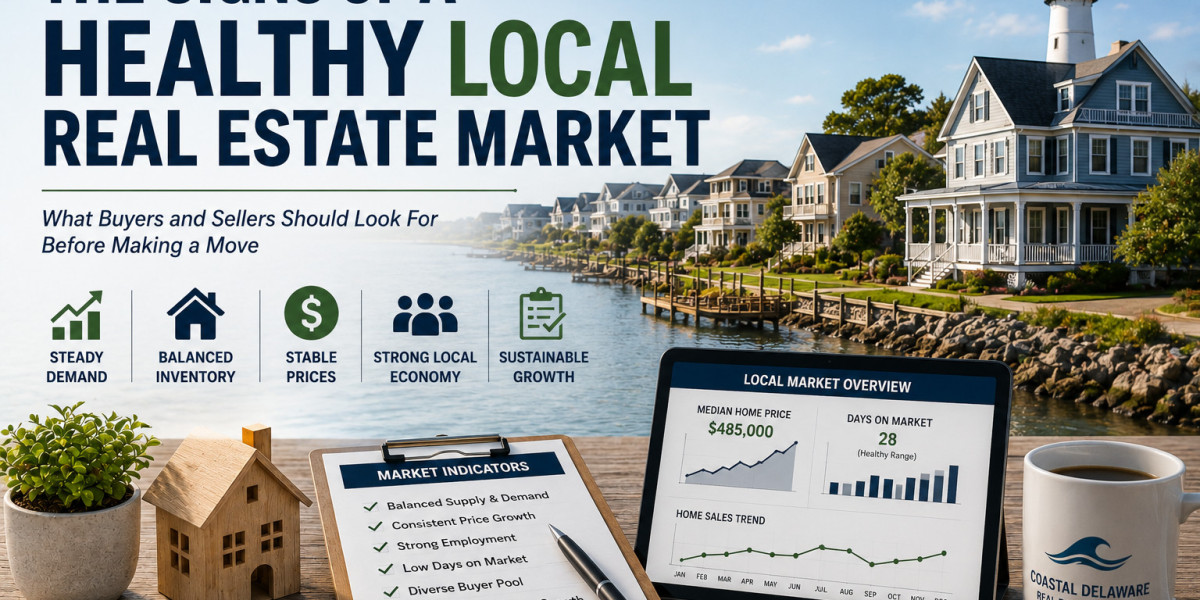

A healthy local real estate market is not defined by rapidly rising prices alone. Sustainable markets balance buyer demand, housing supply, affordability, economic stability, and long-term community growth. When these factors work together, buyers and sellers can make decisions with greater confidence, while properties retain stronger marketability through changing conditions.
Lifestyle appeal is also an important part of local housing demand. Buyers researching resources such as Things to Do in Milton DE are often evaluating more than attractions. They are looking at recreation, local businesses, community events, daily convenience, and whether the area offers a satisfying place to live throughout the year.
Understanding the signs of a healthy market helps buyers avoid decisions based only on headlines or short-term price movements. It also allows sellers and investors to recognize whether demand is supported by lasting fundamentals rather than temporary excitement.
Housing Supply and Demand Remain Balanced
One of the clearest signs of a healthy real estate market is a reasonable balance between available homes and active buyers.
When inventory is extremely low, buyers may face bidding wars, limited choices, and pressure to make rushed decisions. Prices can rise quickly, but that level of growth may not remain sustainable if affordability declines.
Excessive inventory creates the opposite problem. Homes may remain unsold for long periods, sellers may repeatedly reduce prices, and buyers may question whether demand is weakening.
A balanced market gives buyers enough choice while allowing well-priced properties to sell within a reasonable period. This creates more stable conditions for both sides of the transaction.
The right balance varies by location and property type. Detached homes, condominiums, townhouses, and vacation properties may each experience different levels of demand within the same market.
Home Prices Grow at a Sustainable Pace
Price appreciation can indicate a desirable market, but the pace of growth matters. A healthy market generally experiences gradual increases supported by income growth, buyer demand, limited supply, and improvements in the community.
Rapid price increases may create impressive short-term gains, but they can also push homes beyond what local residents can afford. When prices separate too far from household incomes, demand may become dependent on outside buyers or speculative investment.
Sustainable appreciation gives homeowners an opportunity to build equity without creating extreme affordability pressure. It also reduces the risk of sharp corrections caused by unrealistic pricing.
Buyers should review several years of local sales rather than focusing only on the most recent quarter. Long-term patterns often provide a more accurate picture of market stability.
Properties Sell Within a Reasonable Time
Days on market is an important indicator of local demand. In a healthy market, appropriately priced homes generally attract interest without selling so quickly that buyers cannot complete proper research.
Very short listing periods may indicate intense competition, especially when many homes receive multiple offers. Long listing periods can suggest weak demand, poor property condition, or unrealistic seller expectations.
Buyers should compare current marketing times with historical local averages. They should also review differences between neighborhoods and price ranges.
A luxury coastal property may naturally take longer to sell than a moderately priced primary residence. Context is essential when interpreting this metric.
| Market Indicator | Healthy Signal | Possible Warning Sign |
|---|---|---|
| Housing inventory | Buyers have reasonable options | Severe shortage or persistent oversupply |
| Price movement | Gradual, supported appreciation | Sudden unsustainable increases or sharp declines |
| Days on market | Consistent with local norms | Rapidly increasing listing times |
| Closed sales | Steady transaction activity | Large decline in completed sales |
| Price reductions | Limited and property-specific | Widespread repeated reductions |
No single indicator should be evaluated in isolation. A healthy market is usually confirmed by several positive signals working together.
Local Employment Supports Housing Demand
Housing demand depends heavily on household income and employment stability. Communities with diverse employment opportunities are often better positioned to support a healthy market.
Healthcare, education, professional services, construction, tourism, retail, government, and remote employment can all contribute to local economic strength. A market supported by several industries may be more resilient than one dependent on a single employer.
New job creation can attract renters and buyers, while stable employment allows current residents to remain in the community. Local wages should also be strong enough to support housing costs.
In coastal markets, tourism may play an important role, but year-round employment adds stability. Healthcare facilities, schools, professional services, and local businesses help support permanent housing demand outside the peak visitor season.
Buyers Represent More Than One Market Segment
A healthy housing market usually attracts a diverse range of buyers. These may include first-time purchasers, families, retirees, remote workers, investors, and second-home owners.
This diversity reduces dependence on one narrow source of demand. If investor activity slows, full-time residents may still support the market. If seasonal demand weakens, retirees or relocation buyers may continue purchasing.
Different buyer groups also create demand for different property types. Families may prefer larger detached homes, while retirees may look for single-level living or low-maintenance communities. Remote professionals may prioritize home offices and reliable internet.
A market with broad appeal is often more adaptable when economic conditions or lifestyle trends change.
New Construction Matches Genuine Demand
Construction activity can be a positive sign when it responds to population growth and buyer needs. New homes increase housing choice, introduce modern features, and may bring infrastructure improvements.
Problems can emerge when construction moves faster than demand. A large supply of unsold new homes may lead to incentives, price reductions, and greater competition for existing properties.
Buyers should review:
How quickly new homes are selling
Whether construction is concentrated in one price range
How new development affects roads and utilities
Whether existing homes remain competitive
Whether population growth supports the added supply
Healthy development is generally measured and responsive. It expands housing opportunities without overwhelming the market.
Local Infrastructure Keeps Pace With Growth
Roads, utilities, drainage, broadband, schools, healthcare, and public safety all influence real estate demand. A growing market needs infrastructure that can support additional residents.
Well-planned improvements can increase convenience and strengthen long-term property appeal. Better broadband may attract remote workers, while new medical facilities can make a community more practical for retirees and families.
Growth becomes less sustainable when services fail to keep pace. Traffic congestion, drainage problems, limited healthcare access, and overcrowded roads can reduce buyer satisfaction.
Buyers should investigate both current infrastructure and approved development plans. A market may look healthy today but face future challenges if growth is not being managed responsibly.
Essential Services Operate Year-Round
Year-round livability is a particularly important sign of health in coastal and vacation-oriented markets.
Permanent residents need grocery stores, healthcare, restaurants, fitness facilities, professional services, schools, and community resources throughout the year. Areas that remain active outside the tourist season are more likely to attract full-time buyers.
A market dependent almost entirely on a few busy months may experience greater fluctuations in rental demand, employment, and local business activity.
Year-round services create a broader economic base and make the community suitable for retirees, families, and remote workers. This can support more consistent housing demand.
Rental Activity Is Stable and Regulated
Rental demand can strengthen a local real estate market, especially in coastal destinations. However, healthy rental activity should be based on realistic occupancy, responsible management, and clear local regulations.
An oversupply of short-term rentals can create competition and reduce income expectations. It may also affect neighborhood character and lead to additional restrictions.
A healthy rental market usually offers:
Consistent demand from tenants or visitors
Realistic rental rates supported by comparable properties
Clear community and local government rules
Professional property-management options
A balance between rental properties and owner-occupied homes
Investors should calculate income after management, cleaning, maintenance, taxes, insurance, and vacancy. Strong gross revenue does not always produce strong net returns.
Property Values Reflect Local Fundamentals
In a healthy market, property prices are supported by tangible advantages. These may include desirable locations, limited supply, strong infrastructure, community amenities, employment, or consistent buyer demand.
Warning signs appear when prices rise mainly because buyers expect them to continue rising. Speculative demand can create short-term competition without improving the underlying community.
Buyers should compare recent sales, ownership costs, local incomes, and nearby markets. They should understand why one neighborhood commands a premium and whether that advantage is likely to remain valuable.
A price premium may be justified by walkability, beach access, healthcare, recreation, or strong community management. It becomes riskier when there is no clear long-term reason for the difference.
Local Planning Supports Responsible Development
Healthy markets benefit from thoughtful community planning. Local decision-makers must balance residential construction, commercial activity, infrastructure, environmental protection, and public services.
Responsible development can improve convenience while preserving the qualities that attract residents. Poor planning may result in congestion, loss of open space, strained utilities, or excessive housing supply.
Buyers should review zoning maps, public planning information, and proposed projects near the property. Undeveloped land may eventually become housing, retail, roads, or public facilities.
Understanding the future direction of a community helps buyers evaluate whether current market strength is likely to continue.
Final Thoughts
A healthy local real estate market combines balanced supply and demand, sustainable price growth, stable employment, diverse buyers, responsible construction, and reliable infrastructure.
No market remains perfectly balanced at all times. Seasonal patterns, mortgage rates, economic changes, and new development can temporarily shift conditions. The important question is whether the community’s underlying fundamentals remain strong.
Buyers should look beyond rising prices and attractive listings. By reviewing local sales, inventory, employment, ownership costs, infrastructure, and year-round demand, they can identify markets with stronger long-term stability and make more informed property decisions.