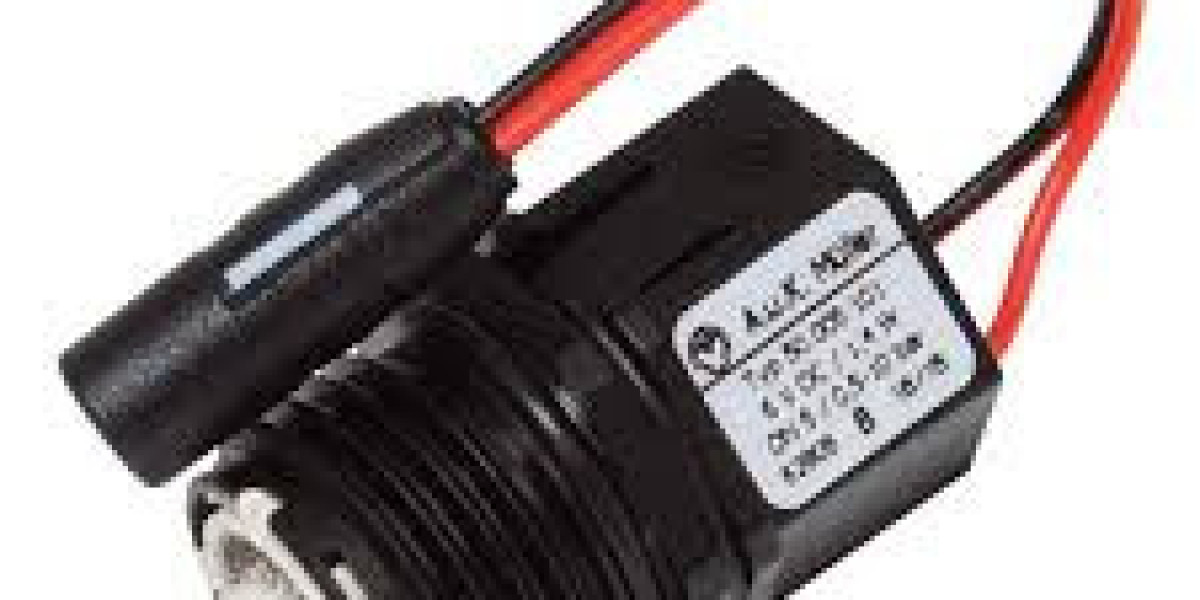

The growing demand for hygienic and intelligent water management has accelerated the adoption of touchless faucet systems across commercial buildings, healthcare facilities, transportation hubs, educational institutions, and residential environments. These automated systems improve user convenience while helping reduce unnecessary water consumption through accurate electronic control. Serving as the core switching component, the Sensor Faucet Solenoid Valve enables precise water regulation by converting electronic sensing signals into reliable mechanical operation. Zhejiang Fuxin Electrical Technology Co., Ltd. combines advanced material science, precision manufacturing, and electromagnetic engineering to develop dependable valve solutions that support modern intelligent sanitary systems.
Material engineering establishes the foundation for long-term operational stability. Engineers carefully select corrosion-resistant stainless steel, premium brass alloys, and advanced engineering polymers that maintain structural integrity under continuous exposure to moisture and frequent operating cycles. Stainless steel components provide excellent corrosion resistance and mechanical strength, while brass components ensure dimensional stability and precise machining performance. Engineering polymers reduce friction between moving assemblies, improve wear resistance, and contribute to smoother valve operation during prolonged service. Careful material selection helps maintain consistent performance even in demanding sanitary environments.
Surface engineering further improves durability and reliability. Precision polishing removes microscopic imperfections from critical contact surfaces, reducing mechanical resistance while improving movement accuracy. Advanced anti-corrosion treatments strengthen protection against oxidation, humidity, mineral deposits, and cleaning chemicals commonly found in sanitary applications. These manufacturing technologies preserve structural integrity while minimizing maintenance requirements and extending overall product lifespan.
Sensor integration is one of the defining technologies behind intelligent faucet systems. Modern sensing devices continuously monitor user movement and communicate with electronic controllers without requiring physical contact. When a user enters the detection range, the control system immediately sends an electrical signal to activate water flow. Once the user leaves the sensing area, the system automatically stops water delivery, reducing unnecessary water consumption while maintaining excellent hygiene standards. This intelligent operating principle supports efficient resource management and improves user experience in high-traffic environments.
Electromagnetic engineering transforms sensor commands into accurate mechanical movement. The Sensor Faucet Solenoid Valve utilizes an optimized magnetic circuit consisting of precision-designed coils, magnetic cores, and moving armatures to achieve rapid and stable switching performance. Engineers carefully optimize magnetic flux distribution to improve conversion efficiency while minimizing unnecessary electrical losses. Stable electromagnetic characteristics ensure accurate response during repeated activation cycles and contribute to dependable long-term operation.
Mechanical engineering further enhances operational consistency. Internal moving components are manufactured with highly accurate dimensional tolerances to maintain precise alignment throughout continuous service. Engineers optimize structural geometry to reduce friction while improving switching smoothness and positioning accuracy. The close coordination between electromagnetic assemblies and mechanical structures supports stable valve performance under varying operating conditions.
Reliable sealing technology is essential for maintaining accurate water regulation. Engineers select high-quality elastomer sealing materials with excellent elasticity, compression resistance, and long-term durability. Precision-machined sealing interfaces provide consistent contact pressure, preventing leakage while allowing smooth mechanical movement. Stable sealing performance helps extend service life and supports dependable operation throughout continuous switching cycles.
Manufacturing precision directly determines product consistency. Advanced CNC machining equipment produces valve bodies, plungers, magnetic cores, and internal structural components with extremely accurate dimensional tolerances. Automated production lines improve assembly accuracy while reducing manufacturing variation across large production volumes. Comprehensive quality inspection verifies machining precision, assembly consistency, electromagnetic alignment, and functional performance before every product proceeds to final testing.
Hydraulic optimization improves water flow efficiency and operational stability. Engineers utilize computational flow analysis to optimize internal channels, reducing turbulence while minimizing pressure loss throughout the valve body. Smooth hydraulic pathways improve flow consistency, reduce stress on moving components, and contribute to quieter system operation. Optimized hydraulic design supports efficient water management across a wide range of intelligent sanitary applications.
Comprehensive reliability testing validates long-term performance under demanding service conditions. Engineers conduct extensive evaluations covering electromagnetic response, sealing performance, corrosion resistance, mechanical endurance, environmental durability, and operational consistency. Accelerated life-cycle testing provides valuable engineering data that supports continuous product improvement while ensuring stable quality across every manufacturing batch.
As intelligent building technology continues to advance, automated sanitary systems increasingly rely on highly reliable electromagnetic control components that integrate seamlessly with sensors, controllers, and centralized management platforms. Zhejiang Fuxin Electrical Technology Co., Ltd. remains committed to advancing intelligent fluid control technologies through continuous innovation in materials, engineering, and manufacturing, and additional information about sanitary valve solutions is available through https://www.fuxinvalve.com/product/sanitary-ware-solenoid-valves/ for modern touchless water management applications.