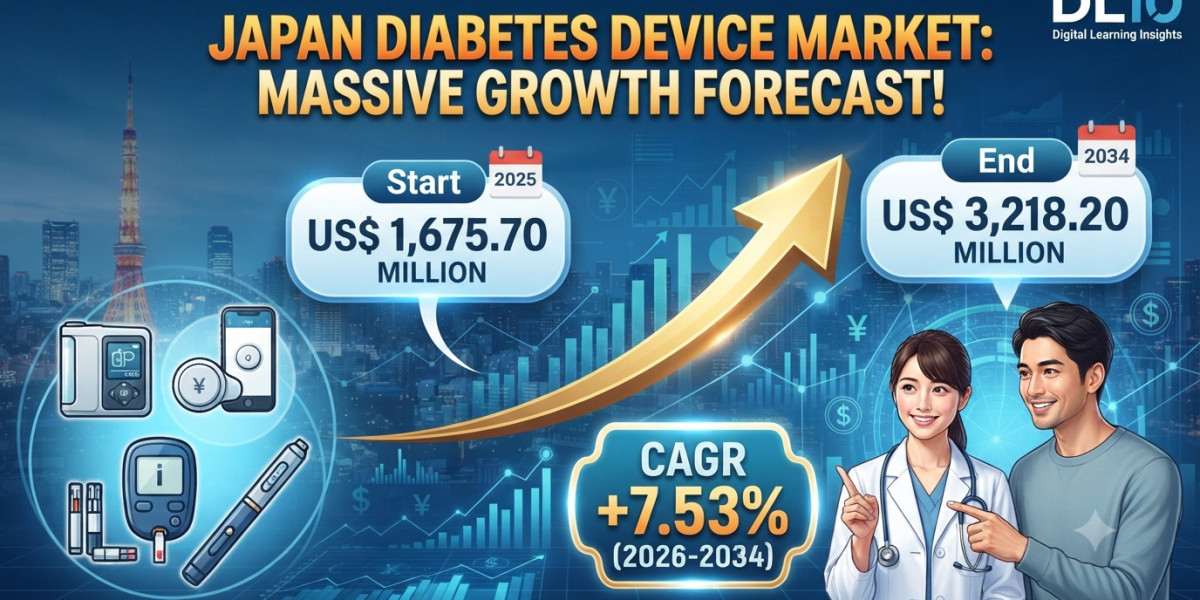

The landscape of diabetes management in Japan is undergoing a significant transformation, driven by an aging demographic, technological breakthroughs, and a robust, reimbursement-backed healthcare infrastructure. According to Renub Research, the Japan diabetes device market is anticipated to register growth from US$ 1,675.70 Million in 2025 to US$ 3,218.20 Million by 2034, expanding at a CAGR of 7.53% during the forecast period from 2026 to 2034.
This growth is propelled by the rising prevalence of diabetes, the high adoption of advanced monitoring systems, and an increasing shift toward home-based care.
Download Free Sample Report:https://www.renub.com/request-sample-page.php?gturl=japan-diabetes-market-p.php
Market Dynamics: Drivers and Challenges
Growth Drivers
Aging Population & Rising Diabetes Rates: Japan faces one of the fastest-aging populations globally, with projections indicating that those aged 65 and over will constitute 31.4% of the population by 2030. This demographic is naturally more susceptible to Type 2 diabetes and associated metabolic disorders, creating a sustained demand for monitoring and insulin delivery solutions.
Technological Innovation: Japan’s precision electronics sector has fostered a culture of innovation. The integration of Bluetooth, smartphone apps, and cloud-based data storage into devices—such as glucose meters and insulin delivery systems—has significantly enhanced patient compliance.
Supportive Healthcare Infrastructure: Japan’s universal healthcare system, including generous reimbursement policies for glucometers and insulin delivery systems, ensures that advanced care remains accessible to the broader population.
Market Challenges
Pricing Pressures: The Japanese government strictly regulates medical equipment pricing to contain healthcare costs. This poses a challenge for manufacturers to maintain profitability while investing in the high R&D costs required for next-generation devices.
Stringent Regulatory Approval: The regulatory framework prioritizes safety and reliability above all, often resulting in prolonged approval timelines for new technologies compared to other global markets.
Segment Analysis
Self-Monitoring Blood Glucose (SMBG)
SMBG remains a high-volume, stable market. Despite the rise of Continuous Glucose Monitoring (CGM), SMBG is viewed as an essential, cost-effective tool for confirmatory testing and patients who prefer traditional monitoring methods.
Continuous Glucose Monitoring (CGM)
The CGM segment is experiencing rapid adoption. Patients—particularly those with Type 1 diabetes and intensive insulin-dependent Type 2 diabetes—are shifting toward CGM for real-time data, reduction in fingersticks, and better glycemic control.
Insulin Pumps & Pens
Insulin Pens: These remain a mainstream, robust segment due to their ease of use, precision, and ergonomics. They are the preferred choice for elderly patients requiring simpler, more reliable administration.
Insulin Pumps: A niche but growing segment, insulin pumps are increasingly incorporating "hybrid closed-loop" technology. Their growth is tied to the evolution of automated insulin delivery systems and physician-led education programs.
Regional and Distribution Insights
Key Cities: Tokyo, Saitama, and Shizuoka
Tokyo: As the epicenter of healthcare innovation, Tokyo leads in the adoption of premium digital health solutions and CGM technology, supported by a high density of specialists.
Saitama: Serves as a vital residential hub with a growing senior population, where demand is focused on affordable, user-friendly devices and the convenience of online pharmacy channels.
Shizuoka: Balancing urban and rural needs, this region relies heavily on home-care solutions that minimize the need for frequent hospital travel, driving demand for self-management devices.
Distribution Channels
Hospital Pharmacies: Act as "gatekeepers," especially for new users initiating complex therapies like CGM or insulin pumps. They remain essential for patient education and troubleshooting.
Online Pharmacies: Increasingly favored for the repurchase of chronic supplies (sensors, test strips, lancets). They offer convenience and subscription-like reorder schemes that significantly boost long-term treatment adherence.
Competitive Landscape
The market is characterized by intense competition among global leaders who leverage digital connectivity and precision engineering. Key players covered in Renub Research analysis include:
Abbott Laboratories, Roche, Medtronic, Novo Nordisk A/S, Terumo Corporation, Eli Lilly, BD, and Dexcom Inc.
Frequently Asked Questions (FAQs)
1. What is the projected market size of the Japan diabetes device market by 2034? According to Renub Research, the market is expected to reach US$ 3,218.20 Million by 2034.
2. What is the expected CAGR for the Japan diabetes device market between 2026 and 2034? The market is projected to grow at a CAGR of 7.53% during the forecast period.
3. Why is the aging population in Japan a significant driver for this market? The elderly population has a higher risk of metabolic disorders, obesity, and complications like cardiovascular disease, which necessitates frequent blood sugar monitoring and advanced insulin delivery management.
4. How does the Japanese government support the growth of diabetes devices? The government provides universal healthcare and reimbursement inclusion for essential devices, which promotes early diagnosis and steady use of monitoring and insulin delivery systems.
5. Why are online pharmacies becoming more popular in Japan? They provide convenience, home delivery for recurring supplies, and predictable reordering, which is particularly beneficial for the elderly and working professionals managing chronic conditions.
6. What are the main challenges for companies entering the Japanese diabetes device market? Companies face strict government-mandated price controls and a rigorous, long regulatory approval process that prioritizes patient safety and device clinical validation.
7. How are "smart" devices changing the Japanese diabetes landscape? Devices that integrate Bluetooth connectivity and mobile applications allow for better data tracking, patient-doctor communication, and personalized treatment adjustments, leading to higher patient compliance.