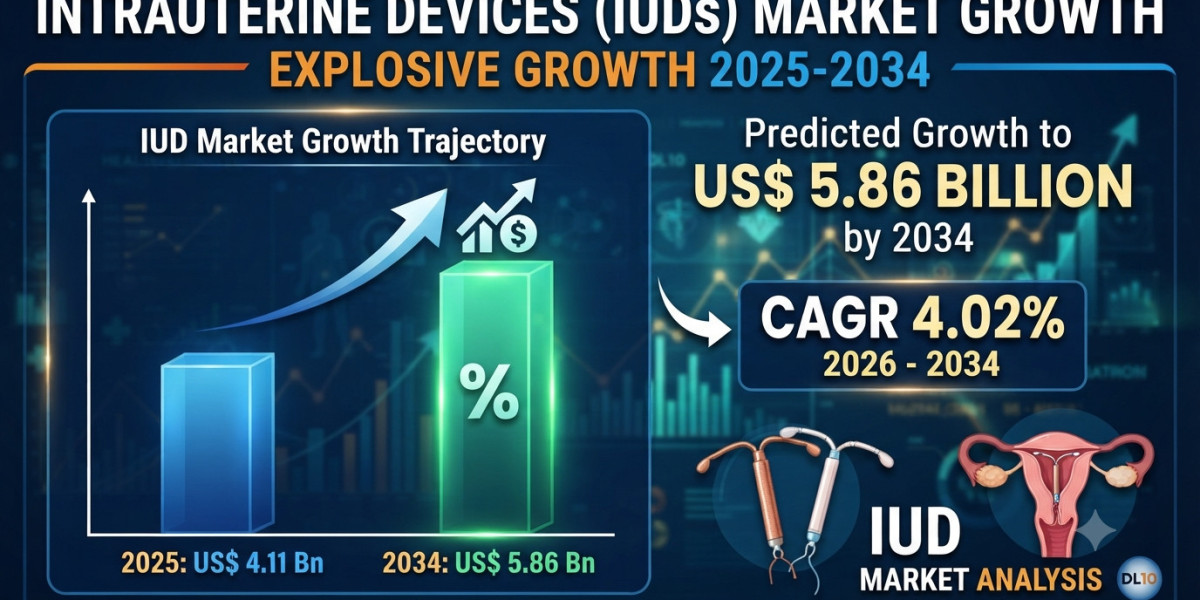

The global market for Intrauterine Devices (IUDs) is poised for substantial expansion. According to Renub Research, the market is projected to grow from US$ 4.11 Billion in 2025 to US$ 5.86 Billion by 2034, expanding at a compound annual growth rate (CAGR of 4.02%) between 2026 and 2034. This positive trajectory is driven by a global shift toward long-acting, reliable contraception, increased government-led family planning initiatives, and continuous technological innovations in women's healthcare.
Download Free Sample Report:https://www.renub.com/request-sample-page.php?gturl=intrauterine-devices-market-p.php
Market Overview
Intrauterine devices are highly effective, T-shaped instruments inserted into the uterus to prevent pregnancy for periods ranging from three to ten years. Often referred to as Long-Acting Reversible Contraception (LARC), these devices are categorized primarily by their components:
Hormonal IUDs: These devices secrete progestin, which thickens cervical mucus to inhibit sperm and, in many cases, suppresses ovulation.
Copper IUDs: These are non-hormonal, utilizing the natural spermicidal properties of copper to prevent fertilization.
IUDs have gained immense popularity globally due to their "set-and-forget" nature, high efficacy rates, and cost-effectiveness compared to daily oral contraceptives.
Growth Forces Shaping the Market
1. Rise of Long-Acting Reversible Contraception (LARC)
The "set-and-forget" convenience is a primary catalyst for market adoption. Unlike daily pills or periodic injections, IUDs provide continuous protection for years, significantly reducing user error. Advancements, such as the FDA’s 2022 approval extending the usage duration of Bayer’s Mirena IUD to eight years, have further solidified consumer and provider confidence in these methods.
2. Government Support and Public Health Initiatives
National governments are increasingly incorporating IUDs into public health strategies to improve reproductive health and manage population growth. By subsidizing these devices and funding provider training, governments are lowering entry barriers. For example, the influx of private equity funding into manufacturers like Pregna International Limited underscores the growing commercial and social interest in scaling these vital reproductive health solutions.
3. Technological Innovation and Awareness
Design improvements have made modern IUDs smaller, more flexible, and easier to insert, thereby increasing patient comfort. Simultaneously, global partnerships—such as the collaboration between Medicines360 and DKT WomanCare to expand access to the AVIBELA IUD—are playing a crucial role in educating women and democratizing access to high-efficacy (99%+) contraceptive options.
Key Market Challenges
Despite the clear benefits, the market faces several hurdles:
Misconceptions and Cultural Barriers: Despite clinical success, myths regarding infertility and potential side effects—such as discomfort, pain, or bleeding—persist in various regions.
Infrastructure Gaps: The insertion and removal of IUDs require specialized medical training. In resource-limited or rural settings, a shortage of trained gynecologists or healthcare infrastructure can hinder the widespread availability of these services.
Segment Analysis
Hormonal vs. Copper IUDs
Hormonal IUDs: Demand is surging due to their dual benefit of preventing pregnancy and managing gynecological issues, such as dysmenorrhea and heavy menstrual bleeding.
Copper IUDs: These remain a staple for women seeking non-hormonal, long-term options. Their longevity (up to ten years) and cost-effectiveness make them a preferred choice in many public health programs.
Distribution Channels
Hospitals: Act as the primary hubs for high-risk patients and first-time insertions, offering the necessary diagnostic support to ensure safety.
Gynecology Clinics: Increasingly becoming the preferred channel for patients seeking personalized care, consultations, and post-procedure follow-ups in an urban, private-practice setting.
Regional Market Dynamics
USA: A mature market characterized by robust healthcare infrastructure, strong insurance support, and active clinical innovation, such as the development of new-generation, low-dose copper IUDs.
United Kingdom: Driven by public-funded sexual health initiatives that prioritize cost-effective, long-term contraceptive methods. Recent innovations, such as non-traumatic cervical stabilizers like Carevix®, reflect a commitment to modernizing women's healthcare.
India: Growth is fueled by government-backed family planning programs, particularly in rural and semi-urban health centers. The urban sector is simultaneously seeing a rise in hormonal IUD adoption through private gynecological centers.
Saudi Arabia: Rapid healthcare modernization and an increasing focus on women’s health services are normalizing IUD use, shifting it toward a standard component of gynecological care.
FAQs (Information Provided by Renub Research)
1. What is the expected market size for IUDs by 2034? The market is forecasted to reach US$ 5.86 Billion by 2034, growing from US$ 4.11 Billion in 2025.
2. What is the projected CAGR for the IUD market from 2026 to 2034? The market is expected to grow at a CAGR of 4.02% during this period.
3. What are the two main types of IUDs? The two main categories are Hormonal IUDs (releasing progestin) and Copper IUDs (non-hormonal, spermicidal properties).
4. Why are IUDs gaining global popularity? They are popular due to their high efficacy, "set-and-forget" convenience, cost-effectiveness, and long-acting reversible nature.
5. What is the primary role of hospitals in this market? Hospitals provide expert gynecological services, specialized diagnostic capabilities, and are essential for first-time users or those requiring post-procedural follow-up.
6. How are government initiatives impacting the market? Governments are increasing adoption through subsidized distribution, public awareness campaigns, and the integration of IUDs into national reproductive healthcare programs.
7. Which regions are currently showing significant market activity? Significant activity is observed in the USA, UK, India, and Saudi Arabia, driven by varying combinations of advanced medical infrastructure, government family planning mandates, and rising healthcare awareness.