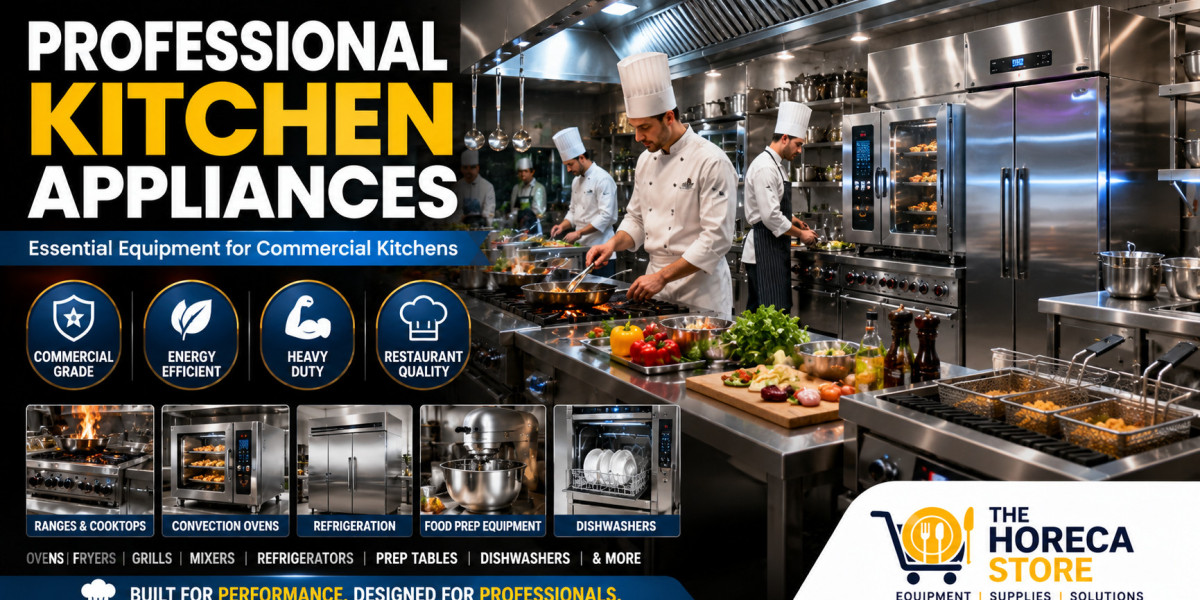

A well-equipped commercial kitchen is the foundation of every successful restaurant, hotel, café, bakery, catering company, or food service business. Investing in professional kitchen appliances not only improves cooking efficiency but also ensures consistent food quality, workplace safety, and long-term operational reliability. Unlike residential appliances, commercial kitchen equipment is designed to withstand continuous use, higher production volumes, and the demanding environment of professional food preparation.
From commercial refrigerators and convection ovens to dishwashers and food processors, professional kitchen appliances help chefs prepare meals quickly while maintaining food safety standards. Choosing the right appliances can increase productivity, reduce operating costs, and improve customer satisfaction.
This guide explains everything you need to know about professional kitchen appliances, including essential equipment, benefits, key features, maintenance tips, and buying considerations for commercial kitchens.
What Are Professional Kitchen Appliances?
Professional kitchen appliances are heavy-duty commercial machines specifically designed for restaurants and other food service establishments. These appliances are built with durable materials, powerful components, and advanced technology to handle continuous daily operation.
Professional kitchen appliances are commonly used in:
Restaurants
Hotels
Cafés
Bakeries
Catering businesses
Food trucks
Hospitals
School cafeterias
Cloud kitchens
Institutional kitchens
Unlike household appliances, commercial equipment is engineered to meet health regulations, improve efficiency, and deliver consistent performance.
Why Invest in Professional Kitchen Appliances?
Commercial kitchens require equipment that can operate reliably throughout long working hours while maintaining high food quality.
The major benefits include:
Increased productivity
Faster food preparation
Consistent cooking results
Improved food safety
Better energy efficiency
Long equipment lifespan
Reduced maintenance costs
Enhanced customer satisfaction
Professional appliances help businesses handle high customer demand without sacrificing quality.
Essential Professional Kitchen Appliances
Every commercial kitchen requires several core appliances to support efficient daily operations.
Commercial Refrigerators
Commercial refrigerators keep ingredients fresh while maintaining safe storage temperatures.
They are available as:
Reach-in refrigerators
Undercounter refrigerators
Walk-in coolers
Display refrigerators
Reliable refrigeration is essential for food safety and inventory management.
Commercial Freezers
Freezers provide long-term storage for frozen foods and prepared ingredients.
Common options include:
Upright freezers
Chest freezers
Walk-in freezers
Undercounter freezers
Proper freezing helps reduce food waste and improve inventory control.
Convection Ovens
Convection ovens use circulating hot air to cook food evenly and efficiently.
They are ideal for:
Baking
Roasting
Reheating
Cooking multiple trays simultaneously
Their efficiency makes them a favorite in professional kitchens.
Commercial Ranges
Commercial ranges combine burners with ovens to support a wide variety of cooking methods.
They are used for:
Boiling
Frying
Sautéing
Simmering
Baking
Available in both gas and electric models, commercial ranges are among the most important kitchen appliances.
Deep Fryers
Commercial fryers deliver consistent frying temperatures for high-volume food production.
Popular menu items include:
French fries
Fried chicken
Onion rings
Mozzarella sticks
Seafood
Modern fryers improve cooking efficiency while reducing oil consumption.
Dishwashers
Commercial dishwashers sanitize cookware, utensils, and dishes quickly while maintaining hygiene standards.
High-capacity dishwashers help reduce labor costs and improve kitchen workflow.
Important Features to Look For
When purchasing professional kitchen appliances, prioritize durability and efficiency.
Key features include:
Stainless steel construction
Digital control panels
Energy-efficient operation
Easy-to-clean surfaces
Heavy-duty components
Adjustable temperature controls
Safety features
Reliable warranties
Ergonomic design
High production capacity
Quality construction ensures dependable performance and lower maintenance costs.
Choosing the Right Professional Kitchen Appliances
Several factors should guide your purchasing decisions.
Kitchen Size
Select appliances that fit comfortably within your available workspace while allowing efficient staff movement.
Menu Requirements
Choose equipment based on the foods you prepare most frequently.
For example:
Bakeries require commercial ovens.
Cafés prioritize espresso machines.
Steakhouses need charbroilers.
Fast-food restaurants rely heavily on fryers.
Production Volume
Higher customer traffic requires larger-capacity equipment capable of handling continuous operation.
Energy Efficiency
Energy-efficient appliances reduce electricity, gas, and water consumption while lowering operating expenses.
Budget
Invest in high-quality appliances that provide long-term reliability rather than focusing solely on the lowest purchase price.
Maintenance Tips
Regular maintenance extends appliance lifespan and improves operational efficiency.
Recommended maintenance practices include:
Clean equipment daily.
Inspect electrical connections.
Replace worn components.
Clean refrigeration coils.
Check temperature settings.
Lubricate moving parts when required.
Schedule preventive servicing.
Follow manufacturer maintenance guidelines.
Routine maintenance reduces unexpected equipment failures and costly repairs.
Benefits of Professional Kitchen Appliances
Investing in quality commercial equipment provides long-term advantages.
Major benefits include:
Improved kitchen efficiency
Faster customer service
Better food consistency
Enhanced employee productivity
Lower operating costs
Increased equipment lifespan
Greater food safety
Improved profitability
Reliable appliances contribute directly to smoother kitchen operations and business success.
Future Trends in Commercial Kitchen Equipment
Technology continues transforming professional kitchen appliances.
Current innovations include:
Smart appliance connectivity
Touchscreen controls
Remote equipment monitoring
AI-assisted cooking programs
Energy-saving technology
Eco-friendly refrigerants
Automated diagnostics
Predictive maintenance systems
These advancements help commercial kitchens improve efficiency while reducing energy consumption and downtime.
Conclusion
Investing in The Horeca Store professional kitchen appliances is one of the most important decisions for any food service business. High-quality commercial equipment improves productivity, ensures consistent food quality, supports food safety, and helps businesses operate efficiently even during peak service hours.
Whether you're opening a new restaurant, upgrading a hotel kitchen, expanding a bakery, or launching a catering business, selecting durable and energy-efficient appliances will provide long-term value and dependable performance. By choosing equipment that matches your menu, kitchen size, and production needs, and by following regular maintenance practices, you can build a professional kitchen that supports growth, profitability, and exceptional customer service for years to come.