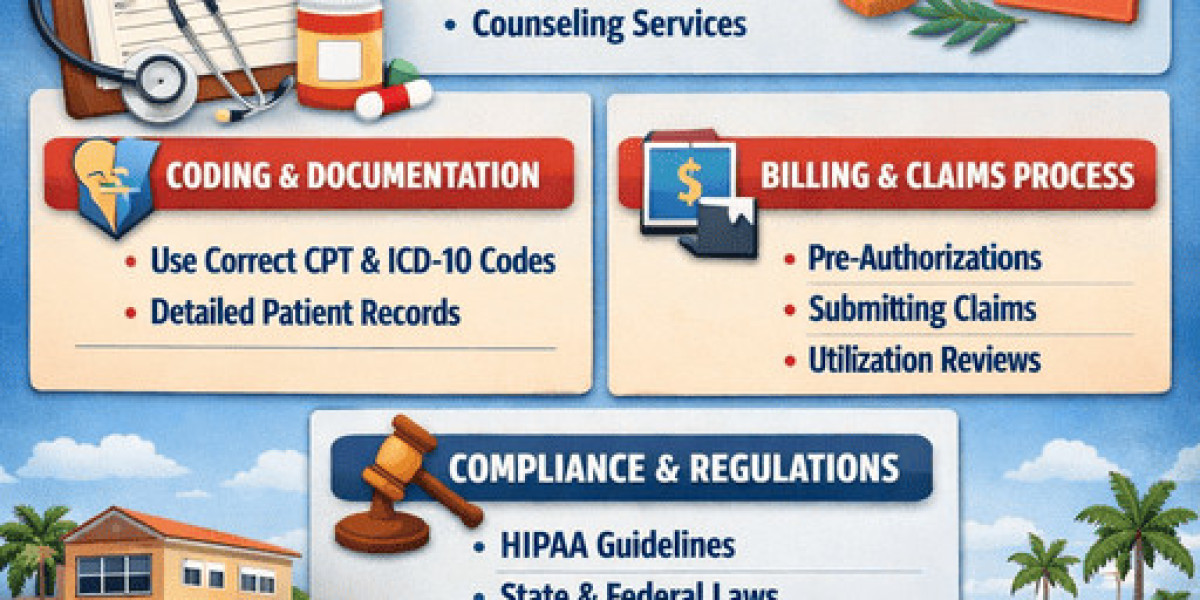

Substance use disorder (SUD) treatment plays a vital role in helping individuals recover and rebuild their lives. As the demand for behavioral health services continues to grow across Delaware, providers also face increasing administrative challenges. One of the biggest concerns is ensuring that every eligible service is billed correctly and reimbursed on time.
Choosing the right substance abuse disorder SUD billing agency Delaware can help treatment centers, therapists, outpatient clinics, and rehabilitation facilities reduce claim denials, improve cash flow, and spend more time focusing on patient care instead of paperwork.
This guide explains how specialized SUD billing works, the challenges providers face, and what to look for when selecting a billing partner in Delaware, USA.
Why SUD Billing Requires Specialized Knowledge
Substance abuse treatment billing is very different from billing for general medical services. Every treatment plan may include multiple levels of care, different payer rules, and extensive documentation requirements.
Behavioral health providers often bill for services such as:
- Initial assessments
- Individual counseling
- Group therapy
- Family therapy
- Intensive outpatient programs (IOP)
- Partial hospitalization programs (PHP)
- Medication-assisted treatment (MAT)
- Detoxification services
- Follow-up recovery programs
Each service has its own coding guidelines, documentation standards, and insurance requirements. Even small billing errors can delay reimbursement or lead to denied claims.
That is why many organizations work with specialists in medical billing services who understand behavioral health regulations and payer expectations.
Common Billing Challenges for Delaware SUD Providers
Behavioral health providers across Delaware encounter several billing obstacles that can affect revenue and operational efficiency.
Frequent Insurance Verification Issues
Insurance plans may have different coverage rules for:
- Behavioral health benefits
- Prior authorizations
- Visit limitations
- Medical necessity requirements
Verifying benefits before treatment begins helps reduce billing surprises for both providers and patients.
Coding Complexity
Behavioral health coding changes regularly. Incorrect coding can result in:
- Claim denials
- Payment delays
- Underpayments
- Compliance risks
Professional medical coding services help providers maintain coding accuracy while keeping up with industry updates.
Documentation Gaps
Insurance companies require documentation that supports every billed service.
Missing treatment notes, incomplete assessments, or inconsistent documentation often trigger claim rejections or audits.
Changing Payer Policies
Commercial insurers, Medicaid, and Medicare frequently update billing requirements.
Keeping staff trained on these changes can be difficult without dedicated billing specialists.
How a Specialized SUD Billing Agency Supports Providers
A billing agency focused on substance abuse treatment offers much more than claim submission.
Insurance Eligibility Verification
Before services begin, billing teams verify:
- Active insurance coverage
- Behavioral health benefits
- Deductibles
- Copayments
- Authorization requirements
This minimizes unexpected payment issues later.
Accurate Claim Preparation
Experienced billing professionals review every claim for:
- Correct diagnosis codes
- Procedure codes
- Modifiers
- Documentation support
- Payer-specific formatting
Accurate claims improve first-pass acceptance rates.
Denial Management
Denied claims are carefully analyzed to identify the root cause.
Common reasons include:
- Missing documentation
- Incorrect coding
- Expired authorizations
- Duplicate claims
- Eligibility issues
A structured appeals process often recovers revenue that might otherwise be lost.
Payment Posting
Payment posting helps providers:
- Track reimbursements
- Identify underpayments
- Reconcile accounts
- Monitor insurance performance
Accurate payment posting also improves financial reporting.
Revenue Cycle Management Matters More Than Ever
Successful behavioral health practices rely on strong revenue cycle management processes.
Revenue cycle management includes every financial step from patient registration to final payment.
Important stages include:
- Patient scheduling
- Insurance verification
- Authorization management
- Medical coding
- Claim submission
- Payment posting
- Denial follow-up
- Patient collections
- Financial reporting
When these processes work together efficiently, providers experience:
- Faster reimbursements
- Lower denial rates
- Improved cash flow
- Better operational visibility
- Less administrative stress
The Importance of Credentialing for Behavioral Health Providers
Many reimbursement delays occur because provider enrollment is incomplete or outdated.
Proper credentialing ensures providers are enrolled with insurance companies and eligible to receive reimbursement for covered services.
Credentialing typically includes:
- License verification
- Board certifications
- Provider enrollment
- CAQH profile maintenance
- Revalidation updates
- Payer contract management
Keeping credentials current helps avoid interruptions in billing and reimbursement.
Technology Is Improving SUD Billing Accuracy
Modern billing agencies use advanced software that helps reduce manual errors while improving workflow efficiency.
Some helpful technologies include:
- Electronic claim submission
- Automated eligibility verification
- Real-time claim tracking
- Denial analytics
- Electronic remittance advice (ERA)
- Reporting dashboards
These tools allow providers to identify billing trends and make informed financial decisions without increasing administrative workload.
Qualities to Look for in a Delaware SUD Billing Agency
Not every billing company understands the complexities of behavioral health.
When evaluating a billing agency, consider whether they offer:
Behavioral Health Experience
Choose professionals who understand:
- Addiction treatment billing
- Mental health coding
- Delaware payer requirements
- Medicaid behavioral health programs
Compliance Knowledge
Healthcare regulations continue to evolve.
Your billing partner should stay informed about:
- HIPAA compliance
- Insurance updates
- Coding revisions
- Documentation standards
Transparent Reporting
Providers should receive regular reports showing:
- Collections
- Denial rates
- Outstanding claims
- Accounts receivable
- Payment turnaround times
Clear reporting helps identify opportunities for improvement.
Responsive Support
Questions about claims often require quick answers.
Reliable communication between providers and billing teams improves workflow and reduces unnecessary delays.
Benefits of Outsourcing SUD Billing
Many behavioral health organizations choose outsourcing because maintaining an in-house billing department can be expensive and time-consuming.
Some advantages include:
- Reduced administrative burden
- Access to experienced billing specialists
- Lower staffing costs
- Better claim accuracy
- Faster reimbursement cycles
- Improved compliance
- Scalable billing support as practices grow
Outsourcing also allows clinical teams to spend more time focusing on patient recovery instead of insurance paperwork.
Supporting Better Patient Care Through Efficient Billing
Efficient billing is more than a financial process—it supports better healthcare delivery.
When providers spend less time correcting denied claims and managing paperwork, they can devote greater attention to:
- Individual treatment planning
- Recovery support
- Patient education
- Care coordination
- Family involvement
Reliable billing operations contribute to a healthier practice and a better patient experience.
Organizations like 247 Medical Billing Services understand that behavioral health providers need accurate billing solutions that support compliance while simplifying complex reimbursement processes. By combining experienced medical billing services, specialized medical coding services, expert credentialing, and efficient revenue cycle management, providers can strengthen financial stability without losing focus on quality patient care.
Frequently Asked Questions
1. What does a substance abuse disorder SUD billing agency do?
A substance abuse disorder billing agency manages insurance verification, coding, claim submission, denial management, payment posting, and reimbursement follow-up for behavioral health providers.
2. Why is SUD billing more complex than general medical billing?
SUD treatment involves multiple levels of care, strict documentation requirements, prior authorizations, and specialized coding that varies by insurance payer.
3. Can outsourced billing reduce claim denials?
Yes. Experienced billing professionals improve coding accuracy, verify insurance eligibility, review documentation, and correct claim errors before submission, helping reduce denials.
4. How does credentialing affect behavioral health reimbursement?
Proper credentialing ensures providers are enrolled with insurance companies. Without active enrollment, insurers may reject or delay reimbursement for covered services.
5. What role does revenue cycle management play in SUD practices?
Revenue cycle management oversees the entire financial process from patient registration through final payment, helping providers improve cash flow, reduce billing errors, and increase reimbursement efficiency.
6. Why are medical coding services important for addiction treatment providers?
Professional medical coding services help ensure diagnosis and procedure codes accurately reflect the services provided, reducing compliance risks and improving claim acceptance rates.
7. How can Delaware providers choose the right SUD billing agency?
Providers should look for behavioral health expertise, coding accuracy, compliance knowledge, transparent reporting, responsive customer support, and experience working with Delaware insurance payers.