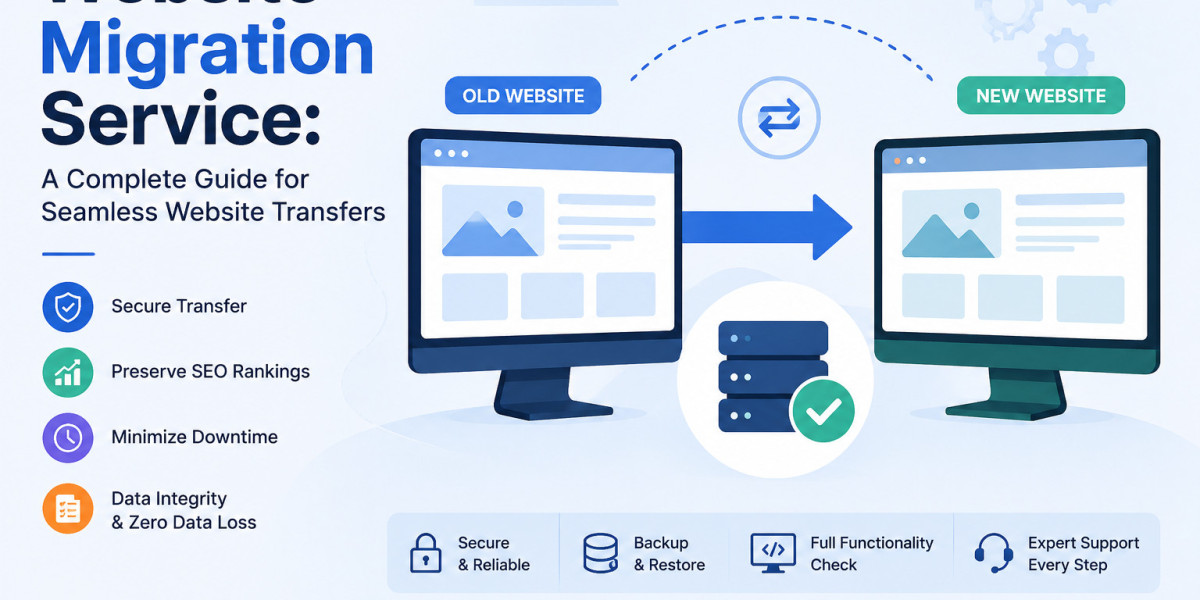

Migrating a website is one of the highest-risk operations a business can perform online. Done correctly, it opens the door to better performance, improved security, a stronger brand identity, and enhanced search visibility. Done incorrectly, it can wipe out years of accumulated organic rankings, break customer-facing functionality, and generate technical debt that takes months to resolve. Understanding what a professional website migration service involves, and what a reliable process looks like from start to finish, is essential before any migration begins.
This guide covers every critical phase of a website migration, what can go wrong at each stage, and how to ensure the transition happens without losing the search equity your site has built.
What Counts as a Website Migration
Not every website change qualifies as a migration, but many more situations do than most business owners realize. A website migration refers to any significant change to a site's structure, platform, domain, content, design, or server configuration that has the potential to affect how search engines crawl and index the site.
Common migration scenarios include moving from one domain to another (rebranding), switching CMS platforms such as moving from WordPress to Shopify or from Magento to a custom build, consolidating multiple websites into one, switching hosting providers or server environments, moving from HTTP to HTTPS, and making large-scale URL restructuring changes. Each of these carries its own specific risks and requires a tailored website migration checklist to manage effectively.
Phase One: Pre-Migration Planning
The most important work in any website migration happens before a single file is moved. Rushing through the planning phase is the single most common cause of post-migration traffic loss, and it is entirely preventable.
The first step is a full audit of the existing site. This means crawling every URL on the live site, documenting all indexed pages, recording their current organic traffic levels, mapping their inbound backlink profiles, and capturing current ranking positions for all target keywords. This data becomes the baseline against which post-migration performance is measured.
At this stage, a website migration checklist must be constructed in full. This checklist documents every URL that needs to be redirected, every piece of metadata that needs to be transferred, every piece of structured data that needs to be reimplemented, and every integration, from analytics to CRM to payment systems, that needs to be verified on the new platform.
Any credible best seo agency will insist on completing this audit before touching the new environment. Migrations that skip the audit phase have no reliable way to measure success or identify what went wrong when problems appear after launch.
Phase Two: Building and Testing on Staging
Every website migration must be built and tested completely on a staging environment before going live. The staging site is a private copy of the new site that functions identically to the live version but is blocked from search engine indexing during the testing phase.
On staging, the following must be verified without exception. All 301 redirects from old URLs to new URLs must be implemented and tested individually. No redirect should return a 302 (temporary) status when a 301 (permanent) is intended. Redirect chains, where one URL redirects to another which then redirects to a third, must be collapsed into single redirects to preserve link equity.
All canonical tags must point to the correct URLs on the new domain or structure. The XML sitemap must reflect only the new, final URLs. The robots.txt file must be configured to allow full crawling of the new site once it goes live. Title tags, meta descriptions, heading structures, and content from all high-value pages must be verified as correctly transferred.
Page speed and Core Web Vitals benchmarks must be recorded on staging and compared against the live site performance. If the new platform is slower than the current one, that issue must be resolved before launch, not after.
Phase Three: Launch Day Execution
Launch day is not the time for improvisation. Every step should be documented in the migration plan and executed in a specific sequence. DNS changes, hosting cutover, redirect deployment, and sitemap submission must follow the agreed order to minimize the window during which errors could compound.
Immediately after launch, the site must be crawled in full to verify that all redirects are functioning correctly, no orphaned pages exist without redirects, and no pages are accidentally blocked by the robots.txt file. Google Search Console must be updated with the new domain property if a domain change was part of the migration, and a change of address notification should be submitted through the Search Console interface.
Analytics tracking must be confirmed as functional. Session data gaps during migration are common when tracking codes are not transferred correctly, which creates blind spots in performance measurement during the most critical monitoring period.
Phase Four: Post-Migration Monitoring
The first ninety days after a website migration are the highest-risk period for organic search performance. Rankings will fluctuate as Google recrawls and re-evaluates the new site. Some temporary drops are normal. Sustained or severe drops indicate a technical issue that needs immediate investigation.
Monitoring during this period must track crawl coverage in Search Console, indexation rates for key pages, keyword ranking movement for priority terms, organic traffic compared to the pre-migration baseline, and backlink recrawl status to ensure link equity is flowing correctly through the redirect mapping.
A complete website migration checklist used by a professional digital marketing agency will include a monitoring schedule covering weekly check-ins for the first month and bi-weekly reviews through the third month. Issues caught early in this window are significantly easier to resolve than problems discovered three or four months after launch when the causes are harder to isolate.
SEO Discovery has managed website migrations for businesses across industries and regions, ensuring that platform transitions, rebrands, and structural overhauls are executed without sacrificing the organic visibility businesses depend on. If you are planning a migration or have already completed one and are seeing performance issues, contact us today for a migration audit and recovery assessment.
A website migration service is not a technical formality. It is a high-stakes project that requires genuine expertise, a disciplined process, and deep understanding of how search engines respond to structural change. Businesses that treat it as anything less pay the price in lost rankings, lost traffic, and lost revenue that can take a very long time to recover.