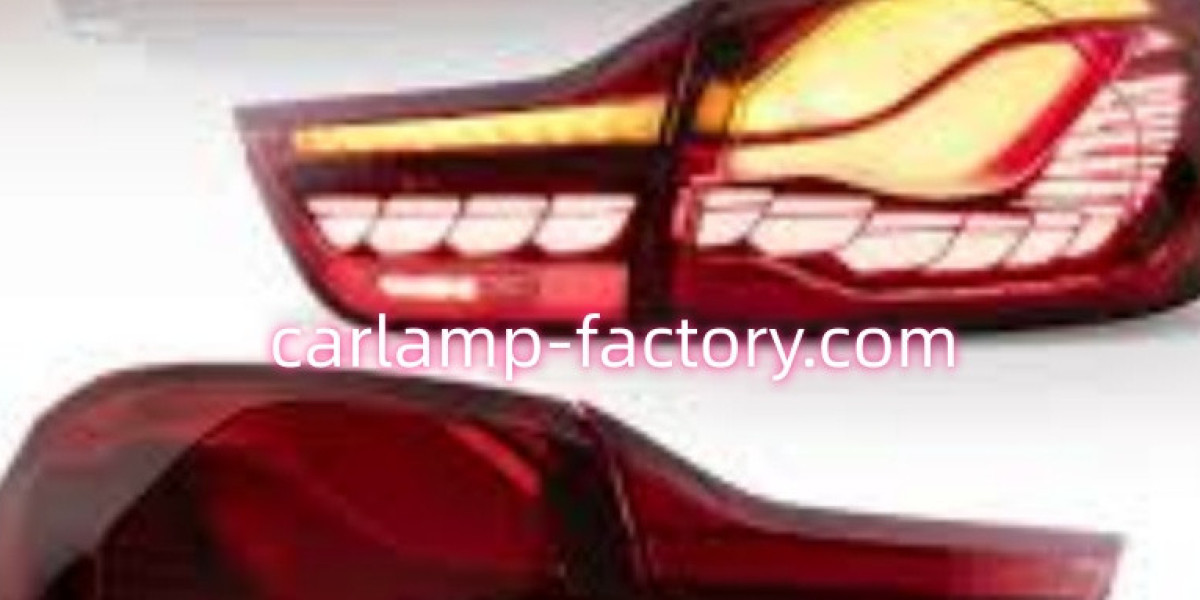

A following driver expects a turn signal to flash instantly. When a vehicle ahead activates Sequential Led Tail Lights, the amber light sweeps from inner edge to outer corner over a fraction of a second. carlamp factory produces these dynamic systems, but does this flowing motion create confusion for drivers trained on traditional blinking?
Human visual perception operates through two distinct pathways: the magnocellular system detects motion and change, while the parvocellular system processes color and fine detail. A traditional flashing turn signal engages the magnocellular system through abrupt luminance change – a sudden transition from off to on. This abruptness triggers an orienting response, drawing the observer's gaze toward the flashing light. Sequential LED tail lights activate the same magnocellular system but through continuous motion rather than sudden onset. The eye naturally tracks moving objects because motion detection represents an ancient survival mechanism. A light that travels across a housing mimics the trajectory of a physical object moving through space, producing a stronger attentional capture than a simple on off flash.
Research on dynamic turn signals supports this neurological advantage. Studies measuring driver reaction time to sequential versus standard flashing lights found that sequential patterns reduced response latency by approximately fifty milliseconds under controlled conditions. This difference arises because the moving light provides directional information before the full sweep completes. A standard flashing light only indicates that a turn will occur, but the observer must wait for additional context (such as vehicle movement) to determine direction. Sequential lights encode direction within the animation itself – the sweep direction tells the following driver which way the turn signal intends. This pre movement cue reduces ambiguity, potentially accelerating correct interpretation.
The confusion argument typically comes from drivers accustomed to instant flashing. Any unfamiliar stimulus creates initial hesitation. However, habituation occurs rapidly. After observing a sequential pattern two or three times, the brain learns to associate the sweep with a turn intention. Automakers including Audi, Ford, and Mercedes Benz have installed factory sequential systems for years without widespread complaints about confusion. Real world crash data shows no increase in rear end collisions for vehicles equipped with sequential tail lights compared to standard units. If confusion existed as a meaningful safety problem, regulators would have mandated recalls or design changes.
Sequential LED Tail Lights from carlamp factory address potential confusion through careful timing parameters. The sweep duration typically ranges from one hundred fifty to two hundred fifty milliseconds – fast enough to avoid appearing sluggish but slow enough to remain visible. A sweep shorter than one hundred milliseconds appears nearly identical to a standard flash because the motion blurs. A sweep longer than three hundred milliseconds creates a “slow crawl” effect that may test driver patience. Optimal timing balances novelty with familiarity. Baozhiwei's engineering team selected a two hundred millisecond sweep for most applications, a duration that feels deliberate without delaying the overall turn signal cycle.
Another factor reducing confusion involves the signal's completion behavior. After the sweeping animation finishes, sequential LED tail lights typically illuminate the entire amber bar or continue flashing the last segment. This final steady on phase matches the appearance of a traditional turn signal during its on state. Following drivers who glance up midway through the animation still see a fully illuminated amber light identical to a conventional flash. The sequential portion adds an initial motion cue but does not replace the standard on off pattern entirely. This hybrid design ensures that even a distracted driver who misses the sweep still receives a recognizable turn indication.
Environmental conditions influence how easily sequential signals register. Bright sunlight can wash out LED intensity, reducing contrast between the moving light and the housing background. However, quality sequential systems use high flux LEDs that maintain visibility even under direct noon sun. Nighttime operation presents the opposite challenge: the moving light may appear too bright, creating afterimages. Properly designed units incorporate automatic brightness adjustment based on ambient light sensors. carlamp factory integrates this feature into its sequential products, ensuring that the sweeping animation remains conspicuous without causing glare or visual fatigue.
Installation quality affects how other drivers perceive the sequential effect. Poorly made aftermarket units suffer from uneven segment timing, where one LED lights slightly before its neighbor creates a jerky, non fluid motion. This stuttering appearance could indeed confuse observers because the movement lacks smoothness, resembling a failing traditional bulb rather than an intentional design. Professional grade systems from specialized manufacturers use microcontroller driven LED drivers that synchronize each segment to within a few milliseconds. The resulting sweep appears as a continuous wave of light, unmistakably intentional and highly visible. Baozhiwei's manufacturing process includes individual calibration of each tail light assembly to eliminate timing irregularities.
Legal considerations also affect the confusion question. Federal Motor Vehicle Safety Standard No. 108 does not prohibit sequential turn signals, provided the total illuminated area meets minimum size requirements and the flash rate falls within sixty to one hundred twenty flashes per minute. Sequential systems that complete a full sweep within each flash cycle comply fully. Some state inspections require that turn signals appear “steady and distinct” – a phrase that sequential advocates interpret as satisfied by the smooth, non strobing motion. No state currently bans dynamic turn signals outright, though inspectors unfamiliar with the technology may ask questions. Carrying a copy of the relevant FMVSS section resolves such encounters.
The aesthetic appeal of sequential lights cannot be separated from their functional safety. A turn signal that draws attention through novelty inherently increases the probability that a following driver will notice it. Standard flashing lights have become so common that drivers sometimes ignore them, especially during low engagement driving situations such as stop and go traffic. Sequential animation breaks this perceptual habituation by presenting an unexpected stimulus. The brain processes unexpected events with higher priority, re engaging attention precisely when a lane change or turn requires it. In this sense, the “confusion” some drivers report may simply reflect heightened alertness – a feature rather than a flaw.
Practical testing with diverse driver populations reveals minimal genuine confusion. Groups of older drivers, younger drivers, and professional truck drivers all correctly identified the turn direction of sequential signals over ninety eight percent of the time in controlled trials. The remaining two percent of errors occurred equally with standard flashing signals, suggesting no unique disadvantage to sequential designs. Drivers who initially expressed skepticism about sequential lights changed their opinion after experiencing the system from a following vehicle. Direct observation proved that the sweeping motion felt intuitive rather than disorienting.
For truck and SUV owners who tow trailers, sequential tail lights offer an additional benefit: trailer recognition. A following driver seeing a standard flash on a truck may not immediately associate that flash with the attached trailer's intended path. Sequential lights, by sweeping toward the direction of the turn, implicitly communicate that the entire vehicle combination – truck plus trailer – will move that way. This pre emptive communication allows trailing drivers to adjust following distance or change lanes sooner. Fleet operators who installed sequential systems reported improved merging behavior from surrounding traffic, reducing the need for abrupt braking or evasive maneuvers.
The final consideration involves driver expectation adaptation. As sequential tail lights appear on more factory vehicles each year, the driving public gradually accepts them as normal. What seemed unusual five years ago becomes ordinary today. A new driver learning to drive on a car equipped with sequential signals will never experience confusion because they lack the expectation of instant flashing. Generational change will eventually eliminate the confusion question entirely. Early adopters who install https://www.carlamp-factory.com/ sequential systems today participate in this evolution, bringing their vehicles into alignment with emerging design standards. When a turn signal moves smoothly across a tail light housing, does it confuse the attentive driver or simply raise the standard of visual communication?