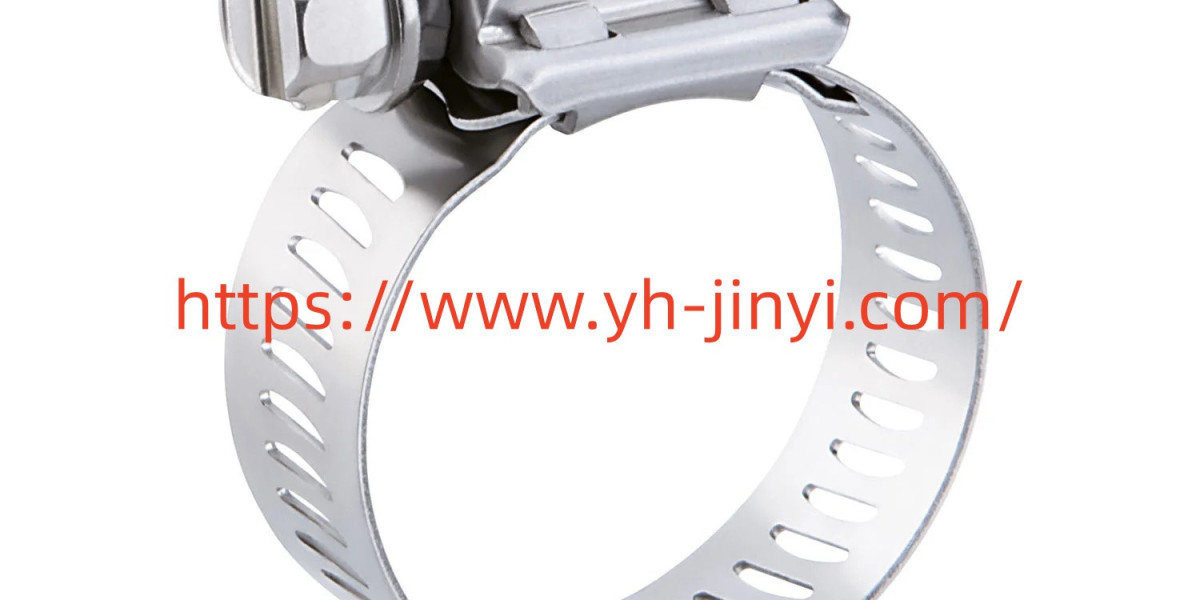

Jinyi Clamps Supplier is often involved earlier in industrial projects where coordination, timing, and clarity matter as much as the hardware itself. In these environments, clamps are not isolated components. They are part of a larger system that depends on accurate planning, predictable delivery, and smooth interaction between design teams and installers.
Early alignment supports smoother workflows
Industrial projects rarely move in a straight line. Design revisions, site constraints, and phased construction all affect material needs. When a supplier engages early, clamp specifications can be reviewed alongside layout drawings and support requirements. This reduces last minute changes that often slow installation progress.
Early communication also helps avoid mismatches between theoretical designs and real site conditions. Small clarifications at this stage often prevent larger disruptions later.
Standardization reduces on site adjustments
Repeated installations benefit from consistent clamp dimensions, mounting logic, and packaging. Standardized products allow crews to work faster because handling and positioning become familiar. This familiarity reduces trial fitting and unnecessary rework.
When clamps arrive ready to integrate with existing supports and pipe systems, teams spend more time installing and less time adapting.
Scheduling reliability matters more than speed
In industrial construction, reliability often outweighs raw delivery speed. Missed timelines can disrupt multiple trades working in sequence. Suppliers that plan production around project schedules help keep workflows steady rather than compressed.
Predictable delivery supports staged installation, allowing materials to arrive when needed instead of occupying limited storage space on site.
Documentation bridges design and execution
Clear drawings, labeling, and material descriptions help bridge the gap between engineering intent and on site reality. Installers rely on accurate information to confirm orientation, spacing, and compatibility.
Well organized documentation reduces interpretation errors and shortens the feedback loop between design offices and field teams when questions arise.
Adaptability without unnecessary complexity
Projects evolve, but constant redesign slows progress. Practical suppliers offer limited adaptation options that address real constraints without introducing excessive variation. This balance supports flexibility while keeping production stable.
Adaptability is most effective when guided by clear boundaries rather than open ended customization.
Communication keeps teams aligned
Smooth projects depend on shared expectations. Regular updates on production status, packaging details, and delivery windows help teams coordinate tasks more effectively. When information flows steadily, surprises are minimized.
Clear communication also supports faster problem resolution when adjustments are unavoidable.
Supporting installation efficiency
Clamps influence how quickly systems are secured and aligned. Products designed with installer handling in mind can reduce fatigue and improve accuracy. Simple features such as accessible fastening points and predictable orientation make daily work more efficient.
Over the course of a project, these small efficiencies accumulate into noticeable time savings.
Long term project value
Streamlining an industrial project is not about a single decision. It results from coordinated planning, consistent materials, and clear communication across all phases. When suppliers contribute to these elements, projects tend to move forward with fewer interruptions.
For teams reviewing clamp options and supplier support capabilities, relevant solutions can be referenced at https://www.yh-jinyi.com/product/clamps/