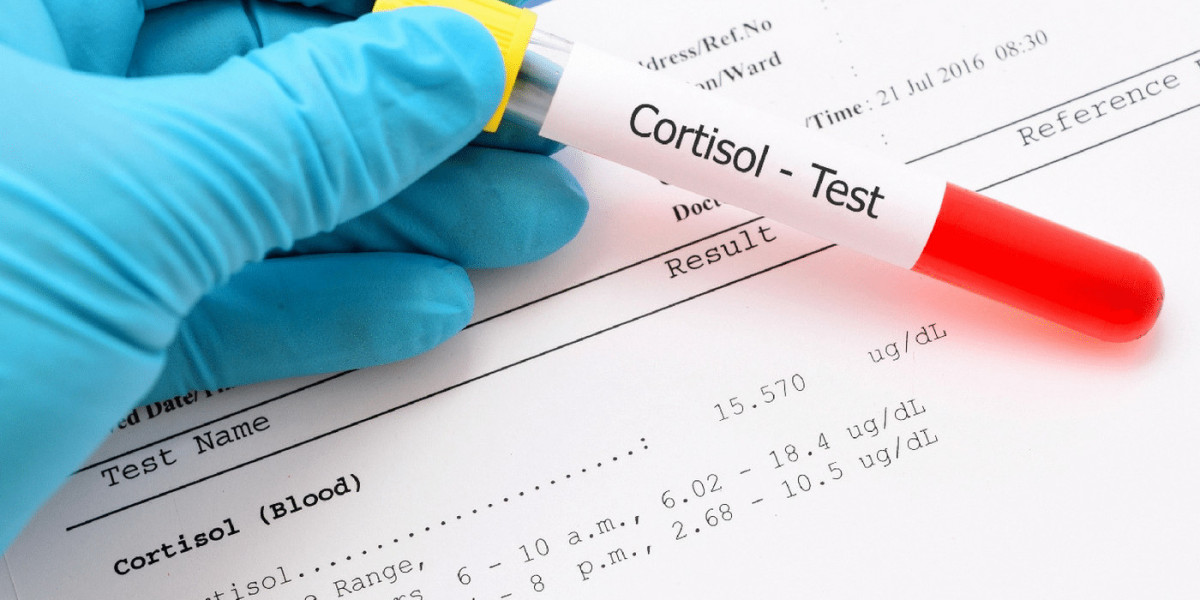

Receiving a cortisol blood test report can be confusing, especially when the result is presented as a number alongside a reference range that changes according to the time of day. It is natural to wonder whether your cortisol level is too high, too low, or within the expected range.
Cortisol Blood Test Dubai is an important hormone produced by the adrenal glands. It supports blood pressure, blood glucose regulation, metabolism, immune activity, and the body's response to physical demands. Because cortisol naturally fluctuates throughout the day, reading a cortisol test report requires more than simply looking at the number.
Start With the Basics: What Does a Cortisol Blood Test Measure?
A cortisol blood test measures the concentration of cortisol in a blood sample at the time it is collected.
Cortisol production is controlled by the hypothalamic-pituitary-adrenal axis, often called the HPA axis. The hypothalamus and pituitary gland communicate with the adrenal glands to regulate cortisol production according to the body's needs.
Cortisol has several important functions. It helps the body respond to physical stress, supports blood pressure regulation, influences metabolism, and helps maintain adequate blood glucose.
The test is therefore not simply a measurement of psychological stress. Instead, it provides information about cortisol levels that may help healthcare professionals investigate possible adrenal or endocrine problems.
The Most Important Number on the Report Is Not Always the Most Important Detail:
When looking at a cortisol report, many people immediately focus on the numerical result.
However, the time the blood sample was collected is equally important.
Cortisol follows a natural circadian rhythm. In many people, cortisol levels are relatively higher in the morning and gradually decline during the day.
This means a cortisol value that may be appropriate in the morning could be unusual later in the day.
Your report may therefore include information such as:
- Cortisol concentration
- Measurement unit
- Reference range
- Date of testing
- Collection time
- Laboratory information
Always consider the collection time before deciding whether your cortisol level is normal.
Understanding the Reference Range:
The reference range is the interval that a laboratory uses to indicate expected results for a particular testing method and population.
You may see a result displayed like this:
Cortisol: [Your result]
Reference range: [Laboratory range]
The exact numbers vary according to factors such as laboratory method, collection time, and testing circumstances.
This is why it is not appropriate to assume that one cortisol reference range applies to every laboratory or every time of day.
If your result falls within the reference range shown on your report, it generally means the measurement falls within that laboratory's expected interval for the relevant testing conditions.
However, a result within the range does not automatically rule out every possible hormonal condition.
Likewise, a result outside the range does not automatically confirm a disease.
Why the Collection Time Matters So Much?
Cortisol is one of the hormones strongly influenced by the body's internal clock.
Typically, cortisol is higher around the morning period and decreases as the day progresses. This daily variation is one reason cortisol testing often requires careful scheduling.
For example, interpreting an early morning cortisol measurement is different from interpreting a sample collected in the afternoon.
Sleep patterns can also influence cortisol rhythms. People who work night shifts or have significantly altered sleep schedules may have different cortisol patterns.
When reviewing a report, note the exact collection time and make sure the reference interval corresponds to that testing period.
What Does a Normal Cortisol Blood Test Result Mean?
A cortisol result within the stated laboratory reference range generally means the measured concentration falls within the expected interval for the testing conditions.
However, cortisol interpretation is more complicated than simply labeling a result as normal.
Healthcare professionals may also consider:
- Why the test was ordered
- Your symptoms
- Medical history
- Medication use
- Time of blood collection
- Recent illness
- Sleep schedule
- Other hormone results
- Physical examination findings
If symptoms strongly suggest a cortisol disorder despite a result that appears normal, additional evaluation may still be appropriate.
What Does a High Cortisol Result Mean?
A cortisol result above the laboratory reference range may indicate increased cortisol concentration at the time of testing.
However, a high cortisol result does not automatically mean you have a cortisol disorder.
Cortisol can temporarily increase in response to several situations, including physical illness, injury, intense exercise, emotional stress, and other physiological demands.
Certain medications can also influence cortisol production or its measurement.
Persistent cortisol excess can occur in conditions such as Cushing syndrome, but diagnosing this condition generally requires more specific evaluation.
Depending on the circumstances, a healthcare professional may recommend additional tests, such as urinary cortisol testing, salivary cortisol testing, or suppression testing.
What Does a Low Cortisol Result Mean?
A cortisol concentration below the laboratory reference range may indicate that the body is producing less cortisol than expected.
One possible cause is adrenal insufficiency, a condition in which the adrenal glands do not produce adequate amounts of certain hormones.
Symptoms associated with insufficient cortisol can include:
- Persistent weakness
- Fatigue
- Dizziness
- Low blood pressure
- Unexplained weight loss
- Nausea
- Abdominal discomfort
However, a low cortisol result does not automatically diagnose adrenal insufficiency.
The timing of the test is particularly important because cortisol is naturally lower at certain times of the day.
When adrenal insufficiency is suspected, an ACTH stimulation test may be used to determine how effectively the adrenal glands respond to stimulation.
Can Stress Affect Your Cortisol Test Result?
Yes.
Cortisol is part of the body's response to physical and psychological stress. Therefore, stress around the time of testing can influence cortisol levels.
Physical stress may include:
- Acute illness
- Injury
- Surgery
- Intense exercise
- Significant sleep disruption
Emotional stress can also affect cortisol production.
This does not mean that a stress-related increase is necessarily a laboratory error. The test may accurately measure a temporary physiological response.
The important question is whether the result reflects a temporary change or an underlying problem with cortisol regulation.
Medications Can Change Cortisol Results:
Medication history is an important part of interpreting a cortisol report.
Corticosteroids are particularly relevant because they can influence the body's cortisol system. Depending on the medication and circumstances, they may affect cortisol production or interfere with certain testing methods.
Other medicines may also influence hormone levels or laboratory measurements.
For this reason, tell your healthcare professional about all prescription medicines, over-the-counter products, and supplements you use.
Never stop or change a prescribed medication simply because you are preparing for cortisol testing.
What Other Factors Can Influence Cortisol Levels?
Several everyday and medical factors can affect cortisol measurements.
Sleep:
Changes in sleep duration, sleep timing, and shift work can influence the normal cortisol rhythm.
Physical Activity:
Strenuous exercise can temporarily increase cortisol.
Illness:
Acute illness can activate the body's stress response and alter cortisol levels.
Pregnancy:
Pregnancy causes substantial hormonal changes that can affect cortisol physiology and the interpretation of laboratory results.
Timing:
The time of blood collection remains one of the most important factors because cortisol follows a daily pattern.
These factors do not necessarily make the test inaccurate. They provide context that healthcare professionals use when interpreting the result.
Why One Cortisol Result May Not Tell the Whole Story?
Cortisol is dynamic. A blood test provides a snapshot rather than a complete picture of cortisol production throughout the day.
For some medical conditions, one blood cortisol measurement may be sufficient to guide the next step. In other situations, additional testing is necessary.
Depending on the suspected problem, healthcare professionals may use:
Salivary cortisol testing: Can assess cortisol at specific times and may help evaluate certain daily cortisol patterns.
Urine cortisol testing: A 24-hour urine collection can provide information about cortisol excretion over a longer period.
ACTH stimulation testing: Evaluates how the adrenal glands respond when stimulated.
Suppression testing: Determines whether cortisol production decreases appropriately after administration of a medication designed to suppress cortisol production.
The choice of test depends on the clinical question.
What If Your Result Is Slightly Outside the Range?
A mildly abnormal cortisol result should not automatically cause alarm.
Laboratory reference ranges are statistical tools rather than absolute boundaries between health and disease.
A result just outside a reference interval may have several possible explanations, particularly if the test was performed under unusual circumstances.
Your healthcare professional may consider whether:
- The sample was collected at the appropriate time
- You were recently ill
- You experienced significant stress
- You exercised intensely
- Medication influenced the result
- Your symptoms match the laboratory finding
- Additional testing is appropriate
Sometimes a repeat or different cortisol test is recommended to obtain more useful information.
Should You Compare Your Result With Online Cortisol Ranges?
It is better to avoid doing this.
Different laboratories may use different analytical methods, units, and reference intervals. Cortisol ranges can also vary according to collection time and the purpose of testing.
Your own report provides the most relevant reference information for that particular laboratory measurement.
If the report shows a result outside the stated range, discuss it with a healthcare professional instead of attempting to diagnose yourself based on an online comparison.
When Is Additional Cortisol Testing Needed?
Additional testing may be considered when the initial cortisol result does not adequately answer the clinical question.
For example, if cortisol excess is suspected, healthcare professionals may need to determine whether cortisol remains elevated or whether the body's normal regulatory mechanisms are functioning properly.
If cortisol deficiency is suspected, an ACTH stimulation test may provide more information about adrenal function.
Additional testing is therefore not necessarily a sign that the first test was wrong. It may simply mean that cortisol regulation is too complex to evaluate using one measurement.
A Simple Way to Read Your Cortisol Report:
When reviewing your report, work through these questions in order:
First: What is the cortisol result?
Second: What measurement unit is being used?
Third: What reference range does the laboratory provide?
Fourth: What time was the blood sample collected?
Fifth: Were you taking medications that could influence cortisol?
Sixth: Were you recently ill, under significant physical stress, or experiencing major sleep disruption?
Finally: Does the result fit your symptoms and the reason the test was ordered?
This approach is much more useful than simply asking whether the number is high or low.
Frequently Asked Questions:
What is considered a normal cortisol blood test result?
There is no single cortisol value that applies to everyone. Normal ranges vary according to the laboratory, testing method, collection time, and other circumstances. Use the reference range provided on your laboratory report.
Does high cortisol always mean stress?
No. High cortisol can occur for many reasons, including physical illness, medications, physiological stress, and certain endocrine conditions.
Does low cortisol always mean adrenal insufficiency?
No. The collection time and other factors must be considered. Additional testing may be needed if adrenal insufficiency is suspected.
Can medications affect cortisol test results?
Yes. Corticosteroids and certain other medications can influence cortisol production or measurement. Provide your healthcare professional with a complete medication history.
Can one cortisol test diagnose a hormonal disorder?
Not always. Some conditions require additional blood, urine, saliva, stimulation, or suppression testing.
Final Takeaway:
Understanding cortisol blood Lab tests results requires more than checking whether a number is above or below a reference range. Cortisol naturally changes throughout the day, and its concentration can also be influenced by stress, illness, sleep, exercise, medications, pregnancy, and other physiological factors.
When reading your report, pay attention to the cortisol value, measurement unit, laboratory reference range, and collection time. Then consider the result alongside your symptoms, medical history, medication use, and the reason the test was performed.
A high or low cortisol result is not automatically a diagnosis. If the finding is unexpected, a healthcare professional may recommend repeat testing or additional assessments such as urine cortisol, salivary cortisol, ACTH stimulation, or suppression testing.
The most reliable way to understand your report is to view the cortisol measurement as one part of the overall clinical picture. If your result is outside the laboratory's reference range or you have ongoing symptoms, discuss the findings with a qualified healthcare professional before drawing conclusions from the number alone.